
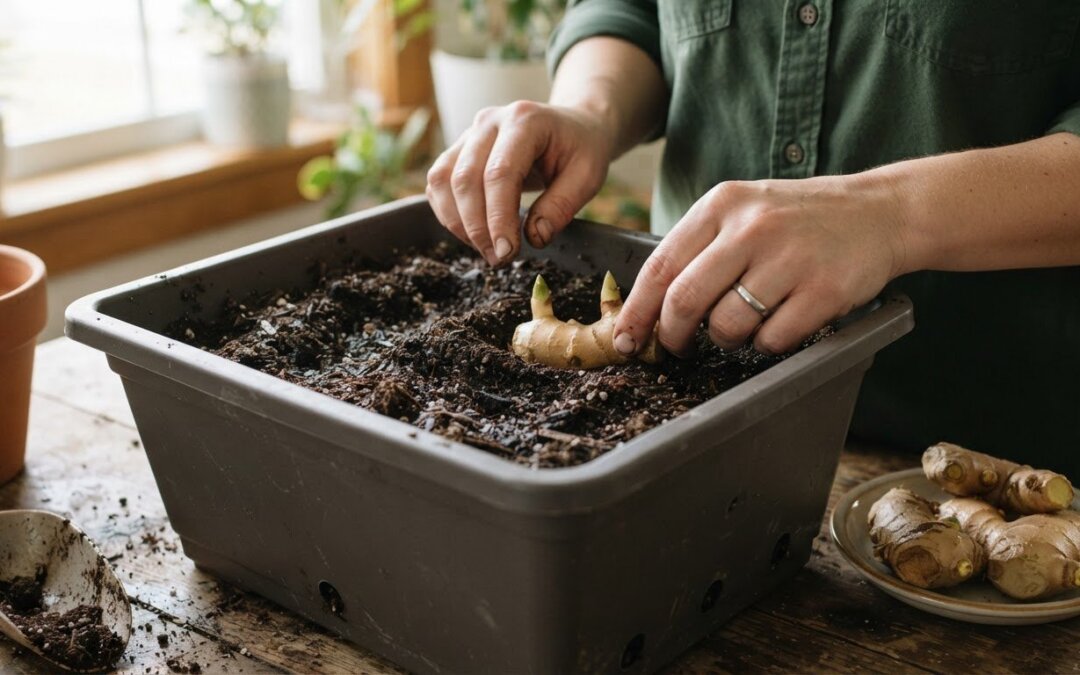
Starting ginger indoors can give a slow-growing plant a gentle head start. To learn how to grow ginger root in containers, cut a healthy rhizome into pieces about 1-1.5 inches long, with at least two eyes on each piece, then let the cuts dry for a couple of days before planting. Set the pieces with their buds facing up in warm, moist potting mix.
Ginger is worth growing for its fresh, aromatic rhizomes and the pleasure of watching new shoots emerge. It does take patience: a plant can need about 8 to 10 months to fully mature, so a container makes it easier to start indoors and tend it through changing weather.
This guide walks through why homegrown ginger is rewarding, how to choose and prepare rhizomes, and how to start them indoors in a suitable container. You’ll also get a clear first-step plan, from picking pieces with visible growth eyes to giving them a warm place to sprout. No garden bed required to get started.
Key Takeaways
- Choose firm ginger rhizomes with visible growth buds to give each planting piece a promising start.
- Cut rhizomes into manageable sections, then let the cut surfaces dry before planting.
- Use a container with room for rhizomes to spread, and keep the potting mix warm and lightly moist as shoots develop.
- Be patient while ginger establishes; starting it indoors makes it easier to nurture through its early growth.
Why Grow Ginger?
- Choose a firm ginger rhizome with plump growth buds, often called eyes. Each planting piece needs at least two eyes, which can develop into shoots. Organic ginger is a practical choice because conventional rhizomes are often treated to prevent sprouting. Growing your own gives you fresh rhizomes with bright flavor, while a container makes it easier to manage the plant through a long season.
- Select a wide container that gives the rhizome room to spread. For one piece, choose a pot at least 12 inches in diameter and 12 inches deep, with drainage holes. Plastic or glazed ceramic holds moisture longer than unglazed clay. Shape matters more than decoration: a broad pot supports sideways growth better than a narrow one. Learning how to grow ginger root in containers starts with matching the pot to the rhizome.
- Set the pot in a warm spot with bright, indirect light and humidity near 70-90%. Water deeply once or twice a week, adjusting when potting soil still feels wet. Feed container-grown ginger occasionally with balanced fertilizer during active growth. Clear drainage prevents standing water around the rhizome. These steady conditions help plants grow without leaving roots waterlogged.
- Give ginger time. It takes about 8 to 10 months to reach full maturity; small pieces of baby ginger can be harvested around 4-5 months after planting. Mature rhizomes are ready when leaves turn yellow and die back. The season and indoor warmth affect development, so use the foliage as your harvest cue rather than relying only on a calendar.
- Check the leaves and soil regularly for common container problems. Excess water and poor drainage can contribute to rhizome rot, while dry indoor air can attract spider mites. Remove damaged leaves, keep the potting soil moist but not waterlogged, and avoid crowding plants. If you’re learning how to grow ginger root in containers, these simple checks can help you catch problems early and protect the developing rhizome.
Preparing ginger rhizomes for planting
- Choose ginger rhizomes that feel firm and have plump buds rather than shriveled or damaged patches. Each planting piece needs at least two eyes, the small growth points that become shoots. Organic ginger is a practical option because conventional rhizomes are often treated to prevent sprouting. Avoid pieces that feel soft or smell rotten.
- Soak the whole rhizome in warm water for 24 hours before planting. This helps remove surface residue and rehydrates dry skin. After soaking, pat it dry and look again for clear buds. If the rhizome has no visible growth points, choose another piece instead of waiting for an uncertain start.
- Prepare a wide container with drainage holes before filling it. Ginger rhizomes spread sideways, so a pot 8-12 inches deep and wider than it is deep gives them useful growing room. Use fresh, loose potting soil mixed with compost; a 50/50 blend provides an organically rich medium while still allowing excess moisture to drain.
- Moisten the mix before planting, then let extra water drain completely. Lay each rhizome piece horizontally, with its buds facing upward, and cover it with about 1-2 inches of soil. Keep the surface lightly moist rather than saturated. This shallow placement lets a new shoot reach the light without leaving the rhizome exposed.
- Set the planted container somewhere warm indoors while the ginger begins growing. Keep it away from cold drafts, and don’t add fertilizer before shoots appear. Once the plant is actively growing, regular care can support its path toward mature rhizomes. For practical guidance on preparing container soil, explore ginger-growing educational content as you plan the next steps.
A fairly shallow, wide container suits ginger; indoors, an 18” bonsai planter is recommended. Leaving ginger in direct sunlight for a few weeks before soaking may help stimulate bud formation.
Cutting and callousing rhizome pieces
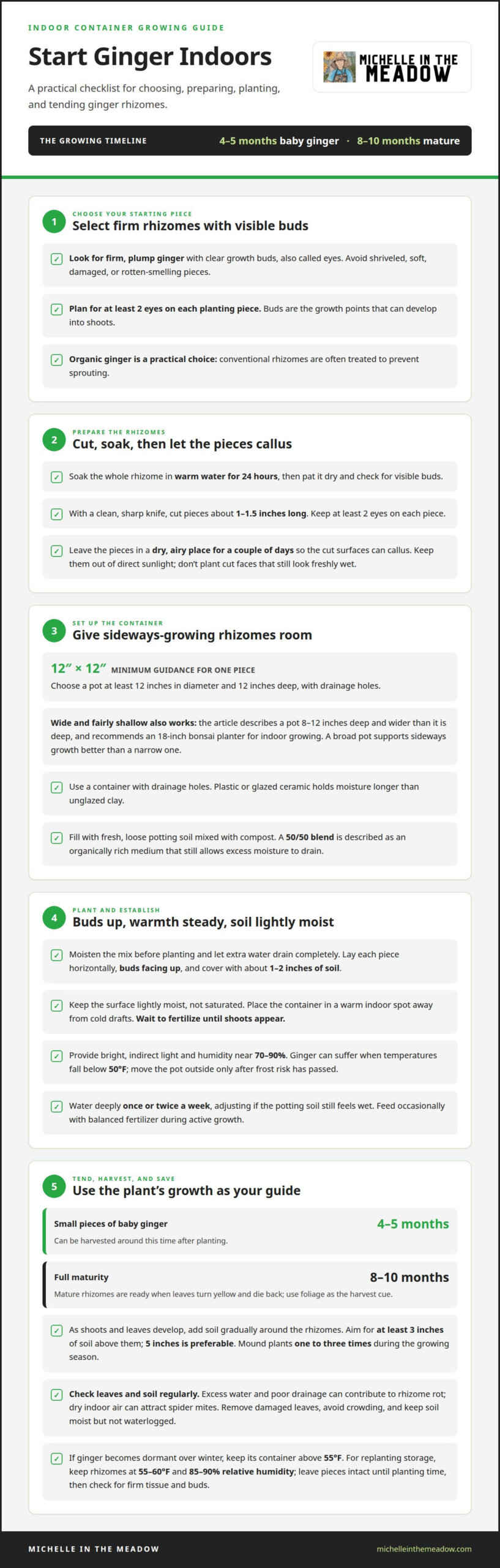
- Use a clean, sharp knife to cut ginger into pieces about 1-1.5 inches long. Keep at least two growth eyes on each piece, since buds produce the shoots and leaves that support rhizome growth. A firm grocery-store rhizome with visible buds can be divided this way. Avoid tiny pieces with no clear eyes.
- Set the cut pieces in a dry, airy place for a couple of days before planting. This gives each cut surface time to callus over, helping protect it in moist potting soil. Keep the pieces out of direct sunlight while they dry, and don’t plant them while the cut faces still look freshly wet.
- Plant each callused piece with its buds facing upward, then cover it with soil. As shoots appear and the leaves develop, add soil gradually around the rhizomes. Aim for at least 3 inches of soil above them, with 5 inches preferable; mound the plants one to three times during the growing season.
- To encourage larger rhizomes in a pot, give the plant room to spread and keep its growing conditions steady. A wide container, healthy leaves, consistent moisture, and periodic mounding can support rhizome development. Add soil around exposed rhizomes as they expand, while keeping the pot’s drainage clear.
- Ginger can grow indoors year-round in a warm spot with bright, indirect sunlight. If the plant becomes dormant over winter, keep its container above 55°F. To save rhizomes for replanting the following year, store them at 55 to 60°F and 85 to 90% relative humidity. Keep stored pieces intact until planting time, then check for firm tissue and buds before cutting. This preserves planting material for another season, whether the next harvest is for cooking or continued propagation.
Starting ginger indoors
- In the United States, start ginger indoors in early spring, especially in climates with a short warm season. An indoor container lets you begin growing before outdoor conditions are ready. If you’re learning how to grow ginger root in containers, start with a warm indoor spot and move the pot outside only after frost risk has passed. Ginger can suffer when temperatures fall below 50°F.
- Choose a pot with drainage holes and fill it with loose potting mix. Set a callused rhizome piece about 1-2 inches deep, with its buds facing upward. A small starting pot is convenient indoors, but plan to transfer the plant to a wider container as its rhizomes expand.
- Keep the soil warm while the rhizome sprouts. Ginger can sprout between 60 and 86°F, with 70 to 78°F an optimal range. Keep the potting mix moist, not soaking. Sprouting may take fifty or more days, so resist digging up the rhizome to check progress. Patience protects the developing buds.
- After shoots emerge, place the pot in bright, indirect light for 4-6 hours daily. A bright window can work well. Direct afternoon sun may stress tender indoor leaves, so shift the pot if foliage looks scorched. Rotate it occasionally to keep new growth from leaning toward one side.
- Once frost has passed, move the pot outdoors gradually if you want to grow ginger outside. Choose a sheltered spot with filtered light, then bring it inside before temperatures fall. Growing ginger root in containers lets you move the pot to follow warmth and keep the plant in a steadier environment.
Michelle In The Meadow
Michelle In The Meadow shares gardening educational content to help you plan and care for plants as your ginger grows. Curated gardening product recommendations can help you consider tools and supplies for your setup. For raised-bed projects beyond your container, the Soil Calculator for Raised Beds can help estimate soil needs.
Turn to these resources when you’re planning your next growing project or want a clearer path through a gardening question. Growing ginger is one small experiment, and the skills you develop can carry into other parts of the garden. If you’d like to talk about your gardening questions, contact Michelle In The Meadow.
Make Your First Pot a Starting Point
Treat this planting as the start of a gardening practice, not a one-season test. Notice how your ginger responds to the light and warmth in your home, and jot down changes as new growth appears. Those observations can help you adjust future plantings and build confidence with other container crops. Learning how to grow ginger root in containers is also a chance to discover which conditions work best in your space.
If you’d like a little help with your next gardening question, contact Michelle In The Meadow. Keep experimenting, stay curious, and let each growing season teach you something new.
Frequently Asked Questions
What kind of ginger root should I buy for planting in a container?
Choose a firm, plump rhizome with visible growth eyes and no soft, damaged areas. A piece at least 1 inch in size gives you usable planting material; look for eyes that can remain attached when you divide it. Organic ginger is a useful choice because conventional ginger is often treated to prevent sprouting. Grocery-store rhizomes can work if they show healthy buds.
What container size and depth are best for growing ginger?
For one ginger plant, choose a container at least 12 inches in diameter and 12 inches deep, with drainage holes. A wide shape gives rhizomes space to spread, rather than directing growth into a narrow column. If planting several pieces together, choose a larger container so they have room to develop without crowding. A pot that’s easy to move can also simplify seasonal care.
What soil mix and drainage does container-grown ginger need?
Use loose, well-draining, organically rich soil with a slightly acidic pH of 5.5-6.5. A 50/50 blend of potting soil and compost is one practical mix. Before planting, wet the blend and squeeze a handful: it should hold together briefly but crumble when touched. Choose a pot with open drainage holes, and empty collected water so the rhizome doesn’t sit in it.
How do I prepare and plant ginger rhizomes in a pot?
Soak the whole rhizome in warm water for 24 hours, then cut it into 1-1.5-inch pieces, keeping at least two eyes on each. Leave the cut pieces to callus for a couple of days before planting. Set them horizontally, buds upward, and cover with soil. Label the pot with the planting date, so you can track sprouting without disturbing the rhizomes.
How much sunlight and warmth does ginger need indoors or outdoors?
After shoots appear, give indoor ginger bright, indirect light for 4-6 hours daily. A warm spot helps sprouting, with 70 to 78°F an optimal temperature range. Outdoors, wait until after the last frost and until soil is above 55°F. Move container plants back inside before temperatures drop below 50°F, which can harm ginger.