
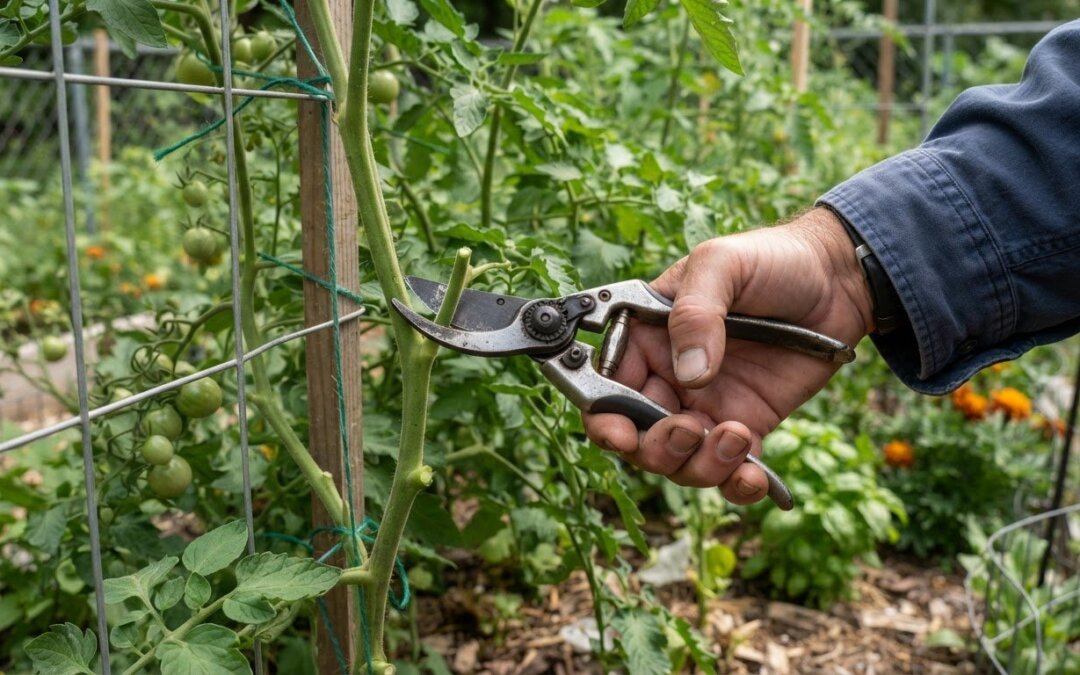
For live vegetable growth, bypass pruners are a practical starting point: they’re recommended for clean cuts on live stems and can cut stalks up to half an inch thick. Anvil pruners suit branches and stems under half an inch, so the best bypass pruning shears for vegetable plants depend on what you’re cutting and how the tool feels in your hand.
It’s easy to focus on blade style and overlook the grip, especially when a quick trim turns into a longer garden session. This guide compares bypass and anvil pruners, explains how stem thickness and hand comfort affect your choice, and helps you focus on useful features for everyday vegetable care.
Key Takeaways
- Match the pruner’s cutting action to the kind of growth you trim most often.
- Use stem thickness to decide when hand pruners are suitable and when another cutting tool makes more sense.
- Choose a grip that feels comfortable in your hand, especially for longer pruning sessions.
- Compare blade style, cutting capacity, and comfort to narrow down your best fit for vegetable garden care.
Should I buy bypass or anvil pruning shears?
For live vegetable growth, bypass pruners are a practical starting point. Anvil pruners suit different cuts, so match the blade action to the stems you’re trimming.
Bypass and Anvil Cutting Action
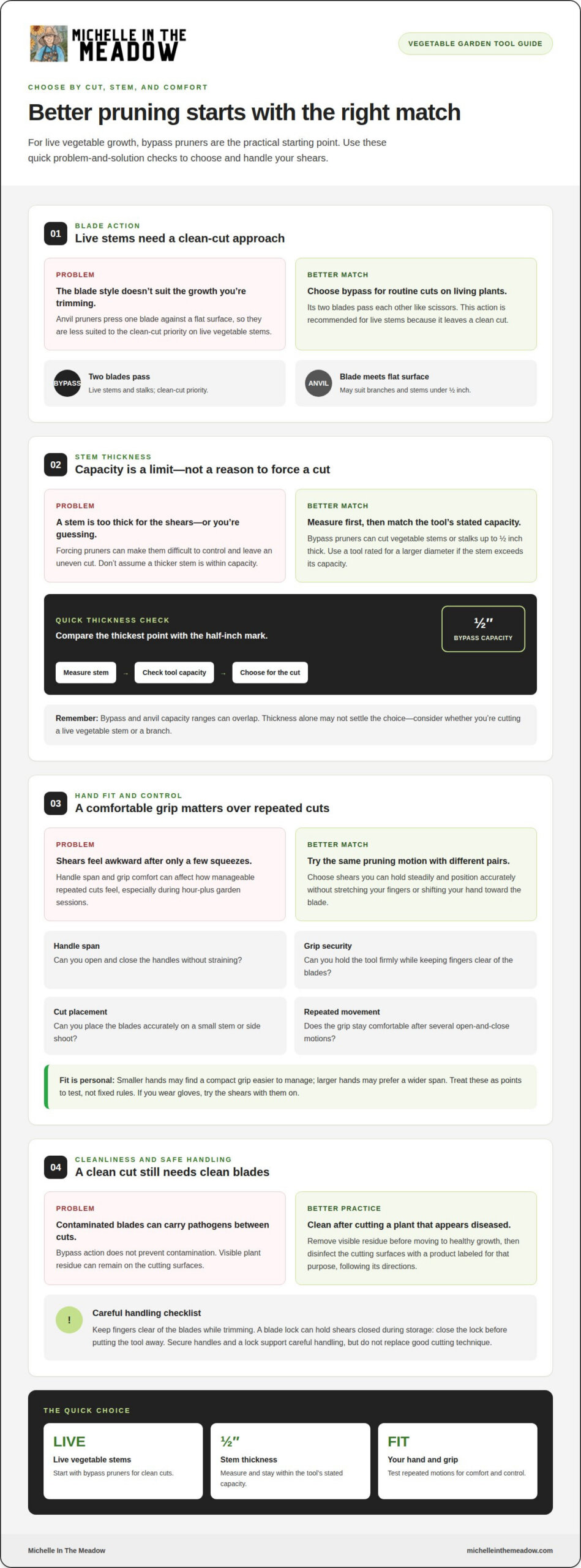
Bypass pruners use two blades that pass each other, much like scissors. This action is recommended for live stems because it leaves a clean cut. Anvil pruners press one blade against a flat surface, making them an option for branches and stems under half an inch in diameter. For tender, living growth in a vegetable garden, bypass blades are generally the better fit.
| Pruner type | Cutting action | Best fit | Trade-off |
|---|---|---|---|
| Bypass | Two blades pass each other | Live stems and stalks | Choose for clean cuts on live growth |
| Anvil | Blade presses against a flat surface | Branches and stems under half an inch | Less suited to the clean-cut priority on live stems |
Choose bypass pruners for routine cuts on live vegetable plants, and reserve anvil pruners for stems their cutting action suits.
Top-rated bypass shears in the United States don’t have one dependable price point. Cost varies by model, materials, and features. Compare those details instead of assuming every highly rated pair costs the same.
Disease Spread and Disinfection
Contaminated bypass-shear blades can carry plant pathogens from one cut to another. After cutting a plant that appears diseased, remove visible plant residue before moving to healthy growth. Disinfect the cutting surfaces with a product labeled for that purpose, following its directions. Clean blades matter with either pruner type; bypass action doesn’t prevent contamination.
For controlled handling, look for a blade lock that holds the shears closed during storage and handles that feel secure in your grip. Keep your fingers clear of the blades while trimming, and close the lock before putting the tool away. These features support careful handling but don’t replace good cutting technique.
Choosing pruners by stem and branch thickness
Stem diameter is a practical first filter. Bypass pruners can cut vegetable stems or stalks up to half an inch thick. Compare a stem with a ruler’s half-inch mark before choosing a tool, especially when trimming a sturdy stalk rather than a soft, narrow shoot. Choose a tool that can make the cut without forcing its handles.
Anvil pruners may suit branches and stems under half an inch. That range overlaps with the stated capacity of bypass pruners, so thickness alone won’t always settle the choice. Consider what you’re cutting, too: a live vegetable stem calls for a clean cut, while an anvil style may suit a branch. Keep the plant and type of cut in mind.
Use this simple check before pruning:
- Measure the stem: Compare its thickest point with the half-inch mark.
- Check the tool’s stated capacity: Match it to the stem, rather than relying on the tool’s appearance.
- Choose for the cut: For live vegetable growth within capacity, bypass pruners are the useful starting point.
A tomato stalk within the half-inch limit falls within the stated range for bypass pruners. If a stem is thicker, don’t assume the same shears can handle it cleanly or safely. Use a tool rated for that diameter instead of squeezing harder. Forcing pruners can make them difficult to control and leave an uneven cut.
Growth varies, even on the same plant. A tender side shoot and a woody, thickened stem may need different tools. Check the stem where you plan to cut, then use the pruner’s capacity as your limit. This quick comparison helps you avoid choosing by plant name alone.
Choosing pruners for hand size and grip
Blade style isn’t the only consideration. During hour-plus garden sessions, handle span and grip comfort can affect how manageable repeated cuts feel. The author uses pruning snips daily and recommends trying different pruning shears before settling on a pair. A tool that feels comfortable for one cut may feel awkward during a longer stretch of trimming.
Test the handles using your usual pruning motion. Open and close the shears several times, and notice whether your fingers reach the handles without stretching. Check that your palm can hold the grip steadily as your fingers work the handles. If the tool feels hard to control after a few practice squeezes, it may not suit your hand for repeated cuts in the vegetable garden.
Compare these practical points while trying shears:
- Handle span: Can you open the handles and close them without straining your fingers?
- Grip security: Can you hold the handles firmly while keeping your fingers clear of the blades?
- Control: Can you place the blades accurately on a small stem, such as a side shoot?
- Repeated movement: Does the grip remain comfortable after several opening-and-closing motions?
Hand size can affect how each handle feels. Someone with smaller hands may find a compact grip easier to manage, while someone with larger hands may prefer a wider span. Treat these as things to test, not fixed rules. Try more than one pair and compare the same motion on each instead of judging by appearance alone.
During an hour-plus pruning session, small discomforts can become more noticeable as you make repeated cuts across several plants. Choose shears that let you hold them steadily and reach the stem without shifting your hand toward the blade. If you wear garden gloves, test the grip with them on; gloves can change how the shears fit. A comfortable tool helps with precise placement, especially around crowded foliage.
Clean cuts on live stems
Bypass pruners are recommended for live vegetable growth because their cutting action leaves a clean cut. That matters when trimming a living stem rather than removing dry material. A cleanly cut shoot is easier to inspect than one that’s crushed or torn, so look closely at the cut surface after trimming.
Good placement helps the blades do their job. Choose the point you want to cut, move nearby leaves aside, and position the blades around the stem. Keep the stem fully inside the cutting area, then close the handles steadily. For example, when removing a crowded side shoot, take care not to catch a neighboring leaf between the blades.
After the cut, check both the remaining plant and the removed piece:
- Inspect the stem: Look for a cleanly severed surface rather than crushed or ragged tissue.
- Check nearby growth: Make sure the blades didn’t nick a leaf or another stem.
- Notice the tool’s action: If the handles feel difficult to close, reposition the blades instead of forcing them.
- Review the cut location: Confirm you removed the intended shoot without damaging the plant’s remaining growth.
A dull or dirty cutting edge can prevent a neat cut. Before pruning, wipe away plant residue and check the blades for visible damage or buildup. If a cut looks uneven, pause and examine the blade alignment and placement before cutting again. A quick check can help distinguish a technique issue from a tool that needs attention.
For a row of pepper plants, work deliberately from stem to stem instead of rushing through repeated cuts. Keep the blades aligned with each target, and pause if foliage blocks your view. These small habits make it easier to see what each cut has done. Explore practical vegetable-gardening guidance to build confidence with routine plant care.
Michelle In The Meadow
Michelle In The Meadow shares practical gardening education and curated product recommendations to help you make informed choices for your vegetable garden. When comparing bypass and anvil styles, consider cutting action, stem thickness, and grip comfort together rather than choosing by blade type alone. The gardening content helps you apply those criteria to everyday plant care, and curated recommendations offer a starting point for comparing products. For raised-bed planning, the Soil Calculator for Raised Beds helps estimate soil needs, a separate but useful part of preparing your growing space. Have a question about choosing tools or caring for your garden? Get in touch with Michelle In The Meadow.
Put Your Pruning Choice to Work
Choosing the best bypass pruning shears for vegetable plants can be the start of a more thoughtful garden routine. As your beds change through the growing season, keep a brief note of which plants you prune and how the tool feels during the work. Over time, those observations can help you decide whether your shears still suit the way you garden. Base your next tool choice on experience in your own beds, not just a label or first impression.
If you’d like a steady source of practical ideas as your garden develops, reach out to Michelle In The Meadow. Contact Michelle In The Meadow with your gardening question and take the next step at your own pace. Every season offers another chance to learn what works for your plants, your hands, and your garden.
Frequently Asked Questions
What makes a pair of pruning shears worth buying?
A worthwhile pair suits the cuts you make often and feels manageable in your hand. Before choosing, consider which plants you prune, the thickness of their stems, and whether you need precise cuts among crowded leaves. Then compare how the handles open and close. For routine vegetable-garden work, a comfortable, controlled motion matters more than features you won’t use.
What size branches can hand pruners cut?
Bypass pruners can cut vegetable stems or stalks up to half an inch thick. Anvil pruners suit branches and stems under half an inch, so their usable ranges may overlap. Check the specific tool’s stated cutting capacity before cutting a branch. If it exceeds that capacity, choose a tool intended for thicker growth rather than forcing the handles.
What are the best bypass pruning shears for vegetable plants in 2026?
The best bypass pruning shears for vegetable plants match the thickness of the stems you usually cut and feel controlled in your hand. There isn’t one model that suits every garden or gardener. To compare options, consider stated cutting capacity, handle comfort, and how accurately you can position the blades around your plants. These criteria help narrow your choice without relying on a ranking alone.
Which bypass pruning shears make the cleanest cuts on tomato stems and other vegetable plants?
Choose bypass shears that match the stem’s diameter and let you position the blades precisely. Their cutting action is recommended for live stems because it leaves a clean cut. Around a tomato plant’s dense foliage, move leaves aside so you can see the target stem clearly. After trimming, check the remaining stem and adjust your placement if the cut looks ragged.
What blade capacity is suitable for pruning vegetables, herbs, and small garden stems?
Bypass pruners suit vegetable stems or stalks up to half an inch thick. Herbs often have finer growth, so choose a tool that lets you cut accurately without catching nearby leaves. In mixed beds, consider the thickest stem you expect to prune, then compare it with the tool’s stated capacity. One capacity won’t suit every plant equally well.
How do bypass pruning shears compare with anvil pruners and garden snips for vegetable plants?
Bypass shears suit live stems when you want a clean cut; anvil pruners are another option for branches and stems under half an inch. Garden snips can be handy for fine, delicate work, such as trimming small herb tips where larger handles feel cumbersome. In a mixed vegetable bed, choose a tool for each stem and the precision required, rather than expecting one tool to handle every cut.