
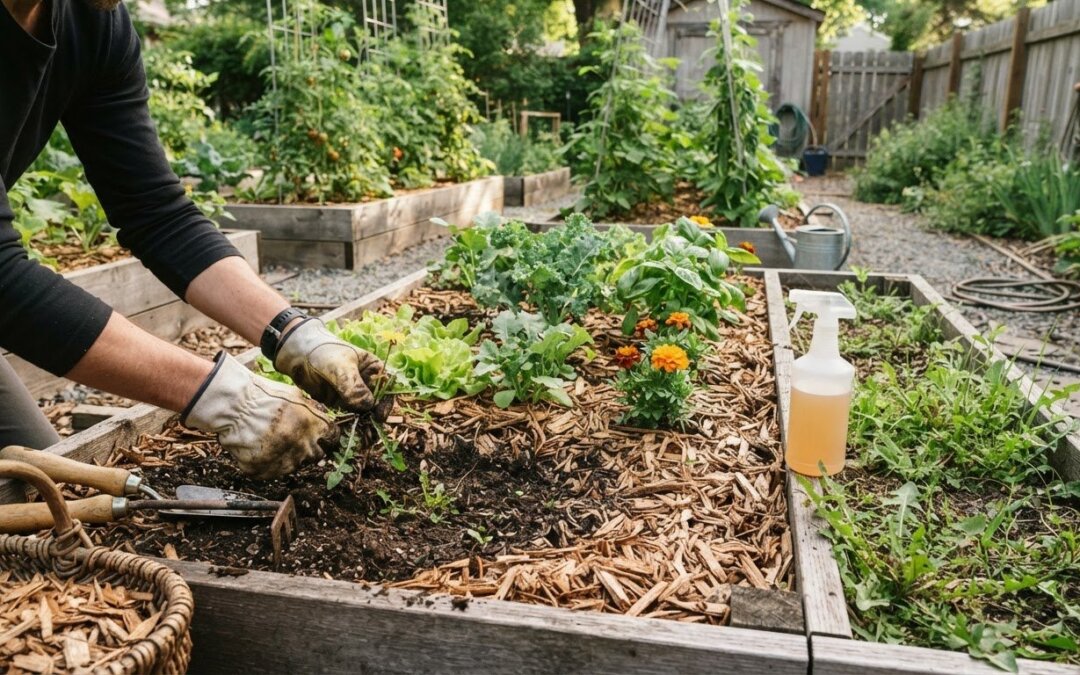
What if lasting weed control starts with fewer sprays, not stronger ones? If weeds keep returning after a quick fix, you’re not alone. Conflicting advice about homemade sprays can be frustrating, especially when you’re trying to protect nearby plants, healthy soil, and garden wildlife. A practical eco friendly weed control plan looks beyond what kills a weed today and asks what will keep the next one from taking root.
You don’t need one perfect remedy. You need a realistic mix of methods suited to your garden and the weeds you’re dealing with. In this guide, you’ll learn which lower-impact approaches can help, why vinegar and other contact sprays may disappoint on deep-rooted perennials, and which common fixes can harm plants you meant to keep.
Prevention can reduce repeat work, from mulching and maintaining healthy turf to removing weeds before they set seed. The aim isn’t a weed-free garden at any cost. It’s a manageable plan that works with your space and helps you make informed choices about what to try.
Key Takeaways
- Build eco friendly weed control around prevention and targeted removal, rather than expecting one quick fix to solve every weed problem.
- Learn to tell annual weeds from perennials so you can choose a response that fits how each one returns.
- Understand why vinegar, salt, and landscape fabric can have drawbacks, especially when weeds grow near plants or soil you want to protect.
- Use a simple identify, prevent, remove, monitor, and adjust routine to make weed management more consistent.
- Reassess your approach when weeds keep returning or your desired plants and soil show signs of harm.
What Does Eco-Friendly Weed Control Actually Mean?
Eco-friendly weed control is the thoughtful management of unwanted plants while considering the health of your soil, water, garden wildlife, and the plants you want to keep. It isn’t a promise that a method is harmless, instant, or right for every garden. “Natural” describes an ingredient or origin, while “organic” often refers to specific standards or certification. Neither label alone tells you how a method will affect the place you use it.
Weed management can include preventing weeds from establishing, physically removing them, changing growing conditions, and using targeted treatments when needed. These approaches work differently. A hoe or hand-pulling removes visible growth, while mulch can make it harder for new seedlings to take hold. For a broader overview of different methods of weed control, consider how physical, cultural, and other approaches can fit together. The key is to combine methods suited to the weed and location, then check whether they’re working.
Why a prevention-first approach matters
Weeds that produce seeds can create more work in seasons to come, so removing or cutting them before seeds mature can help limit future pressure. Some weed seeds also respond to light. Digging or repeatedly turning soil may bring buried seeds closer to the surface, where they can sprout. Disturbing soil is sometimes necessary, but avoid doing it more than the task requires. Prevention can reduce repeat work, not guarantee a weed-free bed.
What makes a method lower-impact?
Look beyond whether a method makes a weed wilt. Ask whether it could also harm nearby plants, affect soil life, reach water, or disturb garden wildlife. Consider how often you’ll need to repeat it, what materials it uses, and how you’ll handle leftover material. A method that needs frequent reapplication may not be the gentler or easier choice in practice.
Match the response to both the weed and the growing area. A small seedling in loose soil may be easy to pull by hand, while a weed among delicate groundcover calls for more careful, targeted work. In a lawn, changing mowing or turf-care habits may make more sense than treating individual weeds. Lower-impact control is a series of informed choices, not a single product or technique.
How Weeds Spread and Why Some Keep Coming Back
A weed can return for two very different reasons: it may have left seeds behind, or it may still be alive underground. Knowing which is happening helps you choose a response that lasts. A weed’s growth habit is the clue to its control: seed-spreading annuals call for stopping seed production, while persistent perennials may need attention below the soil surface.
Seeds travel in more ways than you might expect. Wind can carry light seeds into a bed, while water moves them along paths and low spots. Seeds can also hitch a ride in soil, on garden tools, or in materials brought into the garden, such as mulch. Clean soil from tools after working in a weedy area, and check new materials when practical, to help limit accidental introductions.
Annual weeds and the seed-bank problem
Annual weeds complete their life cycle in one growing season and spread mainly by seed. Some seeds fall nearby; others get carried elsewhere. Seeds that remain in the soil form a seed bank, a reserve of seeds that may sprout over time. Not every seed will germinate, and some may remain dormant, but allowing weeds to flower and set seed can replenish that reserve.
Where practical, remove young annual weeds before they mature. Timing matters: mowing or pulling after seeds have formed can leave seeds behind or scatter them. If you’re unsure whether a plant is flowering or setting seed, check it before cutting or composting it.
Perennial weeds and persistent roots
Perennials live for more than one growing season. Some regrow from roots, rhizomes, or other underground structures, so removing the leaves alone may only hide the problem for a while. A plant can also recover if pulling breaks off a portion of its root system that remains in the soil.
Identify the weed before choosing to dig, cut it back repeatedly, or cover the area to smother it. Digging may help with some plants, but disturbing a large patch can spread pieces of underground growth or expose buried seeds. Repeated cutting can prevent some weeds from flowering, yet may not eliminate established roots. For a thoughtful, site-specific approach, the University of California’s guide to weed management program components discusses monitoring alongside other management choices.
As you build your eco friendly weed control routine, note where a weed appears and whether it returns from the same spot. This can help you distinguish new seedlings from regrowth and choose a more targeted next step. For more practical ideas to support your garden, explore gardening tips and tutorials.
Eco-Friendly Weed Control Myths: Vinegar, Salt, and Landscape Fabric
Online remedies often sound simple: spray vinegar, pour on salt, or cover the bed with fabric. But a visible effect isn’t the same as lasting control, and a fix aimed at weeds can affect nearby plants or soil too. For more dependable eco friendly weed control, weigh each method by where it’s used, what it can actually do, and what it may leave behind.
| Method | What it may do | Limitations and risks | A more careful approach |
|---|---|---|---|
| Household vinegar | Contact with leaves may cause visible damage. | Leaf burn doesn’t necessarily kill established roots, so perennial weeds can regrow. Stronger products can increase handling and plant-damage risks. | Don’t assume vinegar sold for household use is approved or labeled for weed control. Check the product label and authoritative pesticide guidance; keep any treatment away from plants you want to protect. |
| Salt | Can injure plants it contacts. | Salt can persist in soil and affect desirable plants and growing conditions beyond the target weed. | Avoid scattering it through garden beds or where runoff could carry it elsewhere. Consider removal or prevention instead. |
| Boiling water | May damage a small weed where the hot water lands. | It’s a limited spot treatment, and the water can injure nearby plants. Pouring or carrying it also creates burn and splash risks. | Use caution and reserve it, if at all, for isolated spots well away from desired plants and people. |
| Landscape fabric | Can block some weeds when installed and covered appropriately. | It won’t prevent every weed, and soil or debris on top can provide a place for seeds to sprout. The fabric can be awkward to maintain as plantings change. | Think through future planting and upkeep before laying it. Don’t treat it as a permanent substitute for monitoring. |
The common thread is that a method can harm top growth without solving the cause of regrowth. Vinegar and boiling water act where they touch, so they may miss roots below ground. Salt can affect the soil around a weed, not just the weed itself. Fabric may reduce some growth, but still requires maintenance.
Skip concentrated homemade mixtures and don’t improvise pesticide use. If you choose a pesticide product, read and follow its label, including directions for use and precautions. When guidance is unclear, consult a trusted local extension or pesticide authority. A small patch may be better handled with careful hand removal, while a larger or persistent problem calls for identifying the weed and choosing a method suited to that spot.
How to Build a Practical, Lower-Impact Weed-Control Routine
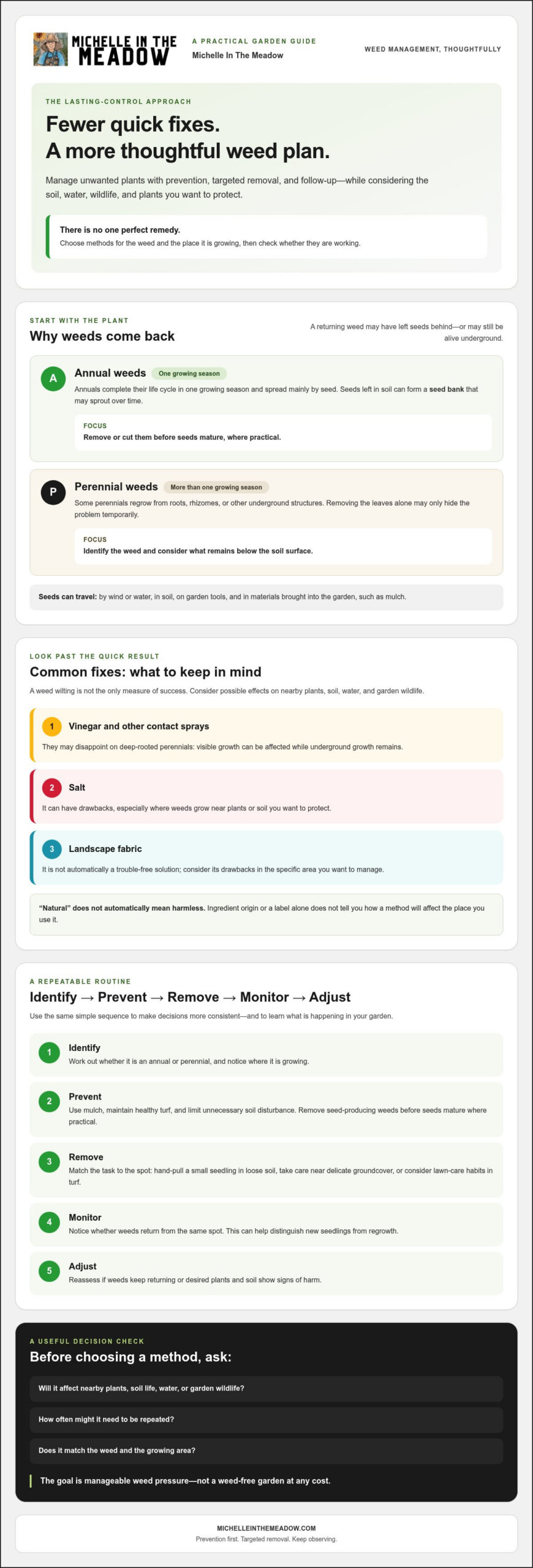
A steady routine usually works better than switching from one quick fix to another. Keep the steps simple: identify, prevent, remove, monitor, and adjust. This gives you a consistent way to respond while limiting unnecessary disturbance to nearby plants and soil.
A simple prevention and removal sequence
- Identify: Notice whether the weed is an annual that spreads by seed or a perennial that may regrow from underground parts. If you can’t identify it, avoid choosing a treatment until you know what you’re dealing with.
- Prevent: Limit open ground where practical. Mulch around established plants or use planned plantings to cover bare soil. Keep mulch clear of plant stems and tree trunks, and avoid piling it against them.
- Remove: Pull young weeds when the soil is moist enough for roots to come out more easily. Use a hoe to cut small seedlings in open beds, taking care not to chop through the roots of nearby crops or desirable plants.
- Monitor and adjust: Check treated areas again. If weeds return, look for missed roots, new seedlings, or exposed soil, then adapt the method rather than repeating it automatically.
Timing can make removal less frustrating. Small weeds are often easier to pull than mature ones, but don’t work soil when it’s so wet that digging smears or compacts it. Mowing may help keep weeds in lawn areas from flowering, though it won’t necessarily control plants that regrow from roots. Covering a patch can suppress growth, but choose a method that suits the site and won’t interfere with plants you want to keep.
Choose methods for the garden area
Different spaces call for different levels of precision. Hand-pulling is often the careful choice beside vegetable crops or delicate flowers. Along paths and lawn edges, hoeing or mowing may be more practical if you can avoid damaging nearby plants. In a suitable non-crop area, a targeted treatment may be an option, but keep it away from plants you want to protect and follow its label.
Check routinely before weeds flower and spread seed. Even a quick look during regular garden tasks can help you catch new growth while it’s manageable. If you use any pesticide, read and follow the product label, including its directions and protective measures. Lower-impact eco friendly weed control is about choosing carefully, not assuming a method is risk-free.
For more practical guidance as you shape a garden routine, explore gardening tips and tutorials.
When to Adjust Your Weed Strategy and Find Trusted Guidance
A weed that returns doesn’t always mean you chose the wrong method. It may point to a missed root, new seedlings, or an open patch of soil where more weeds can take hold. Ask what’s allowing the weed to come back. A little observation can help you change the cause, not just repeat the same removal.
Signs your current approach needs a rethink
Look closely at where and how the weed reappears. New growth spread across an area may be seedlings, while regrowth in the same spot can suggest roots or other underground parts were left behind. Bare soil, recent digging, or gaps between plants can give fresh seeds room to establish. Note the pattern before choosing your next step.
Also watch the rest of the garden. If a control method is damaging desirable plants, affecting soil, or creating runoff concerns, pause and reassess. Consider the ongoing effort, too: a method that requires repeated attention may not be a good fit for your space. Effective eco friendly weed control should be manageable as well as mindful of what you want to protect.
Where to find reliable, garden-specific advice
For an unfamiliar weed, consult a university extension service or another land-grant university resource. These sources can help you identify plants and consider controls suited to your growing conditions. Identification matters: a treatment that works on one type of weed may be ineffective or risky near another plant or garden area.
If you’re considering a pesticide, read the full product label before use. Check that the product is labeled for the intended site and weed, then follow its directions, precautions, and protective measures. Don’t rely on a social post or homemade recipe to fill in missing instructions. If you’re uncertain about a product’s use, seek current guidance from a university extension service or an appropriate pesticide authority.
Weed management takes observation, and it’s normal to adjust as you learn what grows in your garden. For approachable, practical guidance as you keep building your skills, explore Michelle’s gardening guides and optional gardening product recommendations.
Keep Your Garden Plan Simple and Steady
Lasting weed management rarely comes from one perfect fix. Start by noticing what you’re dealing with, preventing weeds from setting seed where practical, and choosing removal methods that suit the plants and soil around them. If weeds return, look for the reason and adjust rather than reaching for a stronger remedy by default.
That’s the heart of eco friendly weed control: make thoughtful, repeatable choices, and keep checking how they work in your garden. A few weeds may still appear, and that doesn’t mean your efforts have failed. Small changes can make the next round easier to manage.
For practical next steps, explore Michelle In The Meadow’s gardening guides and video tutorials, and use the raised-bed soil calculator when planning soil for a raised bed. You’ll also find curated third-party gardening recommendations, with affiliate relationships disclosed where relevant. Build a routine that feels manageable, protects what matters in your garden, and improves with each season.
Frequently Asked Questions
What is the most eco-friendly way to control weeds?
The most eco-friendly approach is usually a mix of prevention, timely removal, and targeted methods suited to the weed and location. Mulch or planned plantings can limit open soil, while hand-pulling or hoeing can remove young weeds before they set seed. Identify persistent weeds before choosing a method, and monitor the area afterward. No single approach is right for every garden, and lower-impact methods still need careful use.
Does vinegar kill weeds permanently?
Usually not, especially if the weed is established or perennial. Vinegar may burn leaves it touches, but visible damage doesn’t prove the roots are dead, so the plant may regrow. Stronger products can also pose handling and nearby-plant damage risks. Don’t assume household vinegar is approved for pesticide use. If considering a weed-control product, check that it’s labeled for the intended use and follow all directions.
Is salt a safe, natural weed killer for garden beds?
No. Salt can persist in soil and affect desirable plants and growing conditions beyond the weed you meant to target. “Natural” doesn’t mean harmless, and salt can be difficult to keep confined to one spot, especially where water may move it. Avoid adding salt to garden beds. For a small weed, careful removal may be a better fit; for recurring weeds, identify the cause and choose a targeted approach.
Can mulch prevent weeds in a vegetable garden?
Mulch can help suppress weeds by covering bare soil and making it harder for some seedlings to establish, but it won’t prevent every weed. Choose a mulch suitable for the garden and keep it from resting against plant stems. Check beneath and around it periodically, since seeds can still sprout in gaps or in material that collects on top. Combine mulch with timely removal for steadier control.
Does landscape fabric stop weeds from growing?
Landscape fabric may block some weeds, but it isn’t a permanent, maintenance-free solution. Seeds can sprout in soil or debris that builds up above the fabric, and persistent weeds may still emerge through openings or seams. Fabric can also become awkward to work around as plantings change. Before using it, consider how you’ll maintain the area and whether mulch, hand removal, or ground-covering plants may suit it better.
How do I control weeds without harming pollinators?
Start with prevention and physical removal, such as pulling weeds before they flower or spread seed, while taking care not to disturb nearby plants. If you consider a pesticide, check its label for the intended site, precautions, and potential risks to pollinators, and follow all directions. Avoid applying products to flowering plants or where pollinators are active unless the label specifically permits it. For uncertainty, consult a university extension resource.
When should I pull weeds to make removal easier?
Pull young weeds when the soil is moist enough for roots to come out more easily, but not so wet that working it damages or compacts the soil. Remove weeds before they flower and produce seed when practical. For perennials, try to remove as much of the root system as possible; simply pulling off leaves may not stop regrowth. If a weed keeps returning, identify it before repeating the same method.
Are organic weed killers always safer for the environment?
No. Organic or natural wording doesn’t guarantee that a product is harmless to nearby plants, soil, wildlife, or water. Some contact weed killers damage only the plant parts they touch and may need repeat applications, while accidental contact can injure desired plants. Check the product’s label and any relevant certification or restrictions, and follow all directions and precautions. Choose based on the weed, location, and likely effects, not the label claim alone.