
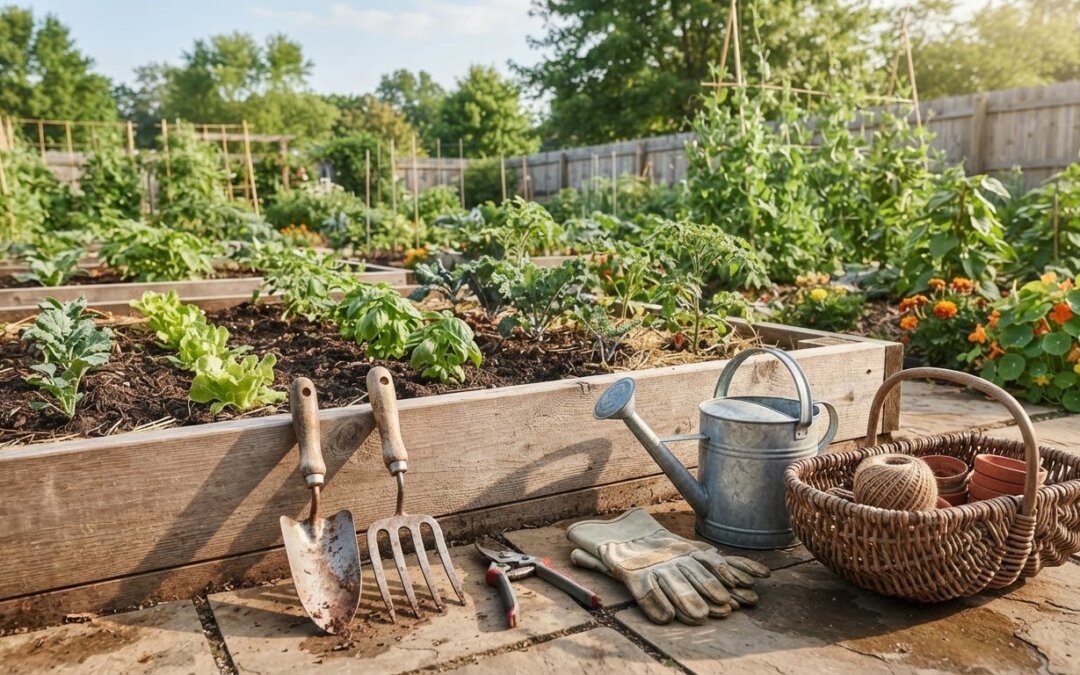
The best first garden tool might be the one you don’t buy yet. A big kit can look like a shortcut, but it’s easy to end up with tools that don’t suit your space or the jobs you actually do. If you’re sorting through unfamiliar names and endless choices, these garden tool recommendations for beginners will help you start with what’s useful, not simply what’s included in a set.
You don’t need to know every tool before you begin. The right starter kit depends on whether you’re tending containers, raised beds, or an in-ground garden, and on how comfortable each tool feels in your hand. A few versatile, durable essentials can handle early jobs while helping you avoid clutter and unnecessary waste.
This guide compares beginner-friendly tools, explains what each one does, and offers practical criteria for choosing options that feel comfortable and are easy to care for. You’ll come away with a focused shortlist and a way to decide when a specialized tool is worth adding. Let your garden set the pace.
Key Takeaways
- Use a tool’s recurring job, how often you’ll use it, and how easy it is to care for to decide whether it belongs in your starter kit.
- Compare comfort by checking grip, balance, weight, and handle length, not just the tool’s appearance.
- Match tool categories to your setup: containers, raised beds, and in-ground plots can call for different everyday tasks.
- Before shopping, list the jobs you expect to do and check what you already own. Add specialized tools only when a real need emerges.
- These garden tool recommendations for beginners help you build a practical shortlist for planting, soil work, pruning, watering, and carrying.
Garden Tool Recommendations for Beginners: What Belongs in a Starter Kit?
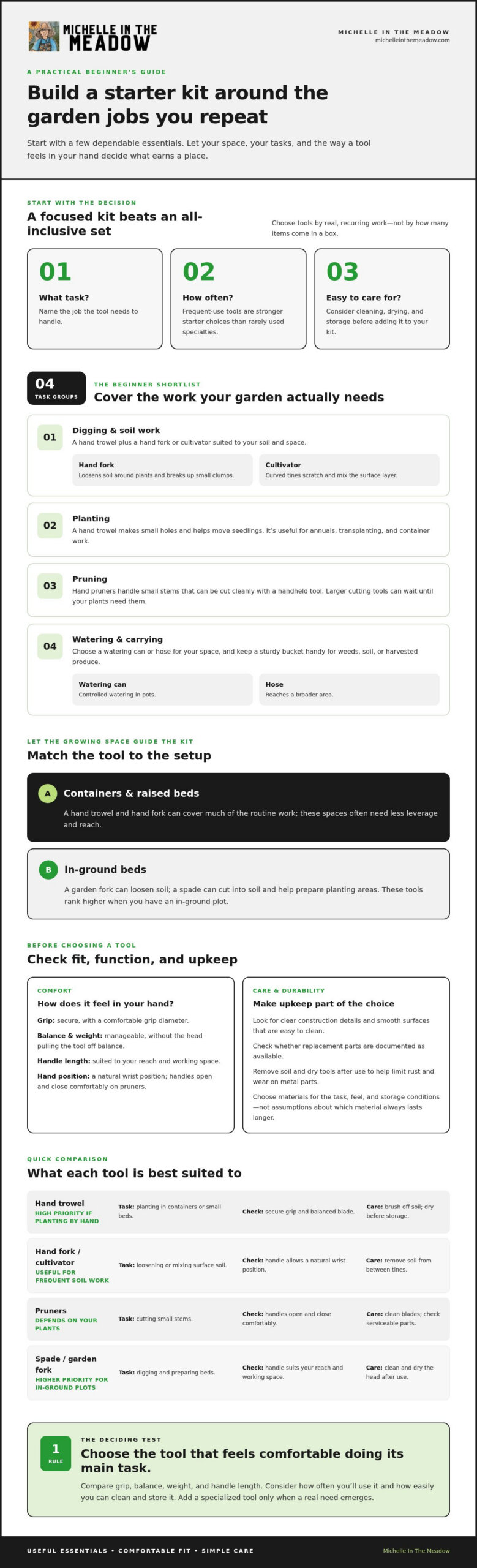
Your first garden doesn’t need a shed full of equipment. A small, useful kit can handle regular jobs and grow as your garden and confidence do. For garden tool recommendations for beginners, start with three questions: What task does the tool handle? How often will you use it? Can you clean and store it easily? A tool that earns its place through frequent use is a better starter choice than a specialty item you might rarely reach for.
A beginner garden tool kit is a task-based collection of dependable essentials, not an all-inclusive set. The Garden tools overview describes the broad range of tools available, but you can begin with a few useful categories:
- Digging and soil work: a hand trowel, plus a hand fork or cultivator suited to your soil and space.
- Planting: a trowel for making small holes and moving seedlings.
- Pruning: hand pruners for small stems you can cut cleanly with a handheld tool.
- Watering and carrying: a watering can or hose, and a sturdy bucket for moving weeds, soil, or harvested produce.
Which basic hand tools handle the most beginner garden tasks?
A hand trowel is a reliable starting point for planting annuals, transplanting seedlings, and working in containers. A hand fork has sturdy prongs for loosening soil around plants or breaking up small clumps. A cultivator’s curved tines are better for scratching and mixing the surface layer. Neither replaces a larger digging tool in a full bed. Choose a weeder by the job: a narrow, pointed tool can reach tight spaces or target a deeper root, while a broader tool suits smaller weeds in open soil. Work carefully near plants so you don’t disturb their roots.
Which larger tools are useful for beds, containers, and small yards?
For in-ground beds, a garden fork can loosen soil and help work through it, while a spade is useful for cutting into soil and preparing planting areas. Containers and raised beds often need less leverage and reach, so a hand trowel and fork can cover much of the routine work. Hand pruners handle many small-stem jobs; larger cutting tools can wait until your plants need them. Choose a watering can for controlled watering in pots or a hose for reaching a broader area. A sturdy bucket is handy in either setup, but it doesn’t need to be made specifically for gardening.
How to Compare Beginner Garden Tools for Comfort, Durability, and Value
A tool can be well made and still be the wrong choice if it feels awkward for the job. Compare options by how they work in your hands, what care they need, and whether they suit tasks you’ll repeat. These garden tool recommendations for beginners are easier to apply when you judge each tool against a real task instead of choosing by a long feature list or low upfront cost alone. NC State University Extension’s guide to basic garden tool types can also help clarify what different tools are designed to do.
| Tool | Typical task | Comfort check | Care needs | Beginner priority |
|---|---|---|---|---|
| Hand trowel | Planting in containers or small beds | Grip feels secure; blade balances in your hand | Brush off soil; dry before storage | High if you’ll plant by hand |
| Hand fork or cultivator | Loosening or mixing surface soil | Handle length allows a natural wrist position | Remove soil from between tines | Useful for frequent soil work |
| Pruners | Cutting small stems | Handles open and close comfortably | Clean blades; check for serviceable parts | Depends on plants you grow |
| Spade or garden fork | Digging and preparing beds | Handle suits your reach and working space | Clean and dry the head after use | Higher for in-ground plots |
The best starter tool is the one that feels comfortable while doing its main task. If you can handle a tool before buying, notice its grip diameter and how your fingers rest around it. Check whether the weight feels manageable and whether the head pulls the tool off balance. Handle length matters, too: a longer handle may suit reaching across a bed, while a compact tool may be easier to maneuver in a container or store in a small space. There’s no single fit for every gardener, so consider your reach, working area, and how quickly your hand tires.
What makes a garden tool a practical long-term choice?
Look for clear construction details, smooth surfaces that are easy to clean, and replacement parts when the maker documents that they’re available. Metal heads and handles made from wood, plastic, or other materials have different care needs. Choose based on the task, feel, and storage conditions rather than assuming one material always lasts longer. Removing soil and drying tools after use helps limit rust and wear, especially on metal parts. Treat broad claims such as “heavy-duty” as marketing unless specific features support them.
Value includes upkeep and fit, not just purchase cost. Before deciding, consider how often you’ll use the tool, how easily you can clean and store it, and whether parts can be replaced if needed. For practical comparisons, explore these curated gardening product recommendations alongside the needs of your own garden.
Which Garden Tools Should Beginners Choose for Their Garden Setup?
A beginner friendly vegetable garden layout shapes which tools will earn their keep. A few pots, a raised bed, and an in-ground plot may all need planting and watering, but the work differs in scale and reach. Use this comparison to tailor garden tool recommendations for beginners to your setup, then adjust as you learn which jobs come up most often.
| Garden setup | Likely recurring task | Useful tool category | Optional upgrade |
|---|---|---|---|
| Containers | Planting and tending in a confined space | Hand trowel and a small watering can | Narrow weeder for tight spots |
| Raised beds | Planting, loosening soil, and reaching across the bed | Hand trowel and hand fork or cultivator | Longer-handled tool if bed depth or reach makes it useful |
| In-ground plot | Preparing soil, weeding, and moving materials | Spade or garden fork, hand tools, and a bucket | Larger weeding or digging tool if the work repeatedly calls for it |
What tools are most useful for container and raised-bed gardening?
In containers, compact hand tools are usually easier to maneuver around plants and inside a pot. A trowel can make planting holes and shift growing medium; a small watering can helps direct water into individual containers. For raised beds, a hand fork or cultivator can loosen the surface around crops without requiring a full-size digging tool for every task. A bucket or other sturdy carrier can help move supplies, pulled weeds, or harvested produce. If the growing medium is contained and you’re not breaking ground, a large spade may have little to do.
Consider access as well as tool size. A deep or wide bed may make reach important, while closely spaced plants can call for narrower tools that are easier to guide. Match the tool to the space instead of buying a larger version just because it looks more versatile.
What changes when starting an in-ground garden?
In-ground soil brings different considerations. A small plot with workable soil may need only hand tools at first, while a larger bed or compacted ground can make a garden fork or spade more useful for loosening and preparing the planting area. The right choice depends on soil condition and how much ground you’ll work, not on a universal rule.
Garden size also affects routine jobs: a larger area may mean more carrying, more ground to weed, and a longer stretch to water. Plant choices matter, too. If you grow plants that need regular trimming, pruners may become a frequent tool; a garden with few pruning tasks may not call for them right away. Start with the jobs you can identify, and wait to add specialized tools until repeated work makes their purpose clear. Your growing conditions will tell you more than a one-size-fits-all kit.
How to Build a Beginner Garden Tool Kit Without Buying Too Much
A practical kit starts with your garden’s routine, not a preset number of tools. Before shopping, take stock of what you already own. A sturdy kitchen spoon might work for a small pot, while a bucket used for another household task can carry weeds or supplies. Check that anything repurposed is comfortable and suitable for the job, then fill only the gaps.
Use this simple plan to build a kit gradually:
- List the tasks you expect to repeat. Think about planting, loosening soil, trimming, watering, and carrying materials. Your setup and planned plants will shape the list.
- Match tools to those tasks. Choose versatile essentials that can handle more than one regular job, such as a hand trowel for planting and transplanting.
- Set priorities. Give first consideration to tools you’ll reach for often. Leave specialty tools for tasks that are occasional or haven’t come up yet.
- Reassess after using your kit. Notice what feels awkward, what you use repeatedly, and what you never touch. Add or replace tools based on that experience.
How should a beginner prioritize the first few purchases?
Let planned work determine the order, not a target kit size. A container gardener may prioritize a trowel and controlled watering, while someone preparing an in-ground plot may need a larger digging tool sooner. A bundle is useful if its pieces match recurring jobs; extra tools don’t add value just because they’re included. Compare options by their intended tasks and care needs, and use Michelle In The Meadow’s curated garden tool recommendations as one resource while weighing your choices.
That task-first approach makes garden tool recommendations for beginners easier to apply: buy for the work you can identify, then let hands-on experience reveal the next need.
How can beginners make tools last and reduce waste?
A quick routine after gardening helps keep tools ready for the next job. Brush or wipe soil from working surfaces, dry tools before putting them away, and inspect cutting edges for dirt or damage. Store sharp edges safely, away from casual contact, and keep tools in a dry spot where they’re easy to find.
If a tool becomes worn, check whether repair or replacement parts are available and make sense for its condition and intended use. Thoughtful selection can prevent duplicate purchases and reduce the chance of discarding tools that don’t suit your garden. To compare task-focused options, explore curated gardening product recommendations.
Beginner Garden Tool Recommendations: A Practical Shortlist and Next Steps
A useful shortlist follows the work you plan to do, not a prepacked kit’s piece count. Use these garden tool recommendations for beginners as categories to compare, then choose only what suits your garden and feels manageable to use.
- Planting: A hand trowel suits making small planting holes and moving seedlings, especially in containers and raised beds. Compare grip comfort and blade size for the space you’ll work in.
- Soil work: A hand fork or cultivator can loosen or mix surface soil; a spade or garden fork may suit larger in-ground jobs. Consider reach, weight, and how much soil you need to work.
- Pruning: Hand pruners are intended for small stems. Look for handles that feel comfortable to operate and blades that are straightforward to clean.
- Watering: A watering can offers control around individual pots, while a hose may suit a broader area. Match the option to your garden’s size and access to water.
- Carrying: A sturdy bucket can move weeds, supplies, or harvested produce. Choose a size that’s useful without being awkward to carry or store.
What should a beginner look for in each recommendation?
Start with the tool category and its intended task, then consider where you’ll use it. A compact trowel may be easier to guide in a pot than a larger digging tool. Compare product details such as materials, dimensions, cleaning instructions, and compatible replacement parts when provided. Treat performance or durability claims as claims, not guarantees, and separate documented features from personal preferences such as color or handle feel.
A useful recommendation explains why a tool fits a particular job and what to compare. Focus on the task, dimensions, materials, and care needs that matter for your setup, rather than letting a long feature list distract from whether you’ll actually use the tool.
How can readers use the roundup to make a confident choice?
Compare each option with your recurring garden tasks, comfort needs, and available storage space. A tool that suits a large bed may be inconvenient for a small container garden. Skip options that duplicate tools you already own or solve a task you rarely do.
When a recommendation includes a referral link, clearly disclose the affiliate relationship near that link. The practical guidance should still help you decide what kind of tool to look for, whether or not you purchase through a referral. For more task-focused ideas, explore Michelle In The Meadow’s curated gardening recommendations, then choose one tool for the next job you’ve planned. Start small, and let your garden show you what to add next.
Choose Your First Tool for the Garden You’re Growing
A useful starter kit doesn’t need to cover every possible job. The strongest garden tool recommendations for beginners start with the tasks you expect to repeat, then match tools to your growing space and comfort. Check what you already own, compare how a tool feels and how it’s cared for, and add specialty options only when your garden gives you a reason.
That thoughtful approach can help you avoid duplicate purchases and choose versatile tools you’ll reach for often. A little upkeep, like brushing off soil and drying tools before storage, can also help keep your kit ready for the next planting day.
For practical gardening tutorials and curated product recommendations grounded in an affordable, earth-friendly approach, explore Michelle In The Meadow’s gardening recommendations. Start with one tool for your next planned task. Your garden will help you decide what comes next.
Frequently Asked Questions
What garden tools does a beginner need first?
Start with tools for the jobs you expect to do regularly: planting, soil work, pruning, watering, and carrying. A hand trowel is useful for planting and transplanting; add a hand fork or cultivator if you’ll loosen soil, pruners for small stems, and a watering can or hose suited to your space. A sturdy bucket can carry supplies or weeds. Check your existing tools before buying anything new.
What is the most useful garden tool for beginners?
A hand trowel is often a useful first tool because it handles several small-scale jobs, including making planting holes, moving seedlings, and working in containers. But the best choice depends on what you’ll grow and where. If your first project involves preparing an in-ground bed, a spade or garden fork may be more immediately useful. Choose for your next recurring task, rather than looking for one tool that does everything.
Are garden tool sets worth it for beginners?
A garden tool set can be worthwhile if its pieces match tasks you’ll actually do and the tools feel comfortable to handle. Compare the contents with a task-based shortlist, and notice whether useful basics are included or whether the set adds items you’re unlikely to use. A smaller selection of suitable tools may be more practical than a larger set. Check care requirements and storage needs before choosing a bundle.
How do I choose beginner garden tools that are comfortable to use?
Check how the handle fits your hand, whether the tool feels balanced, and whether its weight is manageable for the job. If possible, hold it as you would while gardening and notice if your wrist stays in a natural position. Handle length should suit both your reach and the work area. Comfort is personal, so consider hand fatigue, grip, and available storage instead of assuming one design suits everyone.
Do I need different tools for raised beds and in-ground gardens?
Some tools work in both, but the digging needs can differ. Raised beds and containers often suit compact hand tools for planting and surface soil work. In-ground gardens may call for a spade or garden fork, depending on bed size and soil condition. Think about the jobs you repeat, too: a larger area can mean more weeding, watering, and carrying. Add specialized tools only when those tasks make them useful.
How should I clean and store garden tools?
After use, remove soil from tool surfaces and between tines, then dry the tools before storing them. Wipe pruning blades clean and inspect cutting edges for dirt or damage. Put tools away in a dry, secure place, with sharp edges positioned to reduce accidental contact. These simple habits make tools easier to reach and use next time, while helping limit rust and wear on metal parts.
Which garden tools are worth spending more on?
Prioritize tools you expect to use frequently, especially if a comfortable fit, useful construction details, or documented replacement parts matter for that task. A hand trowel used every planting day may deserve more attention than a specialty tool you rarely need. Compare care requirements and suitability, not just upfront cost or broad durability claims. A good choice is one that fits your work and is practical to maintain.
