The most important clue when choosing heirloom seeds for zone 9 may not be the zone label. A variety can suit your winter temperatures and still struggle if it meets peak summer heat, high humidity, or the wrong planting window. That’s why a list of “Zone 9 favorites” may leave you wondering what to sow, and when.
If you’ve treated your hardiness zone like a complete planting calendar, you’re not alone. The USDA Plant Hardiness Zone Map, updated in 2023, is based on average annual extreme minimum winter temperatures. It’s useful, but it doesn’t describe your full growing season. This guide explains how to choose heirloom varieties by crop, season, and garden conditions, rather than relying on a zone label alone. You’ll also learn what “heirloom” and “open-pollinated” mean, what to check before saving seed, and how to start with a manageable selection. With a few thoughtful choices and notes from your own garden, seed shopping becomes a practical experiment rather than a guessing game.
Key Takeaways
- Choose heirloom seeds for zone 9 by matching each crop to its growing season and your garden’s conditions, not just its zone label.
- Compare varieties by maturity, flavor or intended use, plant size, and the growing conditions listed on the seed packet.
- Use “heirloom,” “open-pollinated,” and “hybrid” thoughtfully. These terms describe different seed qualities, not a simple good-or-bad ranking.
- Start with a small selection of crops, then observe how they perform before choosing more varieties.
- Check local planting guidance and treat your first season as a chance to learn what suits your garden.
Zone 9 Heirloom Seeds: What They Mean for Your Garden
Choosing heirloom seeds for zone 9 starts with understanding two labels that answer different questions. “Heirloom” describes a seed’s history and how its traits are maintained. “Zone 9” refers to winter cold tolerance, not a promise that a variety will thrive through every season in your garden.
What makes a seed heirloom or open-pollinated?
Open-pollinated plants reproduce through natural pollination, such as insects, wind, or self-pollination. When a variety is grown and pollinated under suitable conditions, seeds saved from it can generally produce plants with similar traits. If you plan to save seed, preventing unwanted cross-pollination may matter, especially for crops that can cross with nearby varieties.
Heirloom is a commonly used category, not a term with one universally applied age cutoff. Seed sources may define it differently, often emphasizing a variety’s history and preservation across generations. Heirlooms are generally open-pollinated, but not every open-pollinated variety is considered an heirloom. For background on the term’s history and role in crop diversity, see Heirloom plant.
Hybrid seeds come from crosses between selected parent plants. A hybrid can offer useful traits, just as an heirloom can. However, seeds saved from a hybrid may not reliably produce plants with the same combination of characteristics. The better choice depends on your priorities, such as consistent traits, a particular flavor, or the option to save seed.
What Zone 9 tells you, and what it leaves out
The USDA Plant Hardiness Zone Map describes average annual extreme winter minimum temperatures. The current map, released in 2023, divides zones into subzones and can help you identify your area’s winter hardiness category. It doesn’t provide a planting calendar or predict how a crop will handle summer conditions.
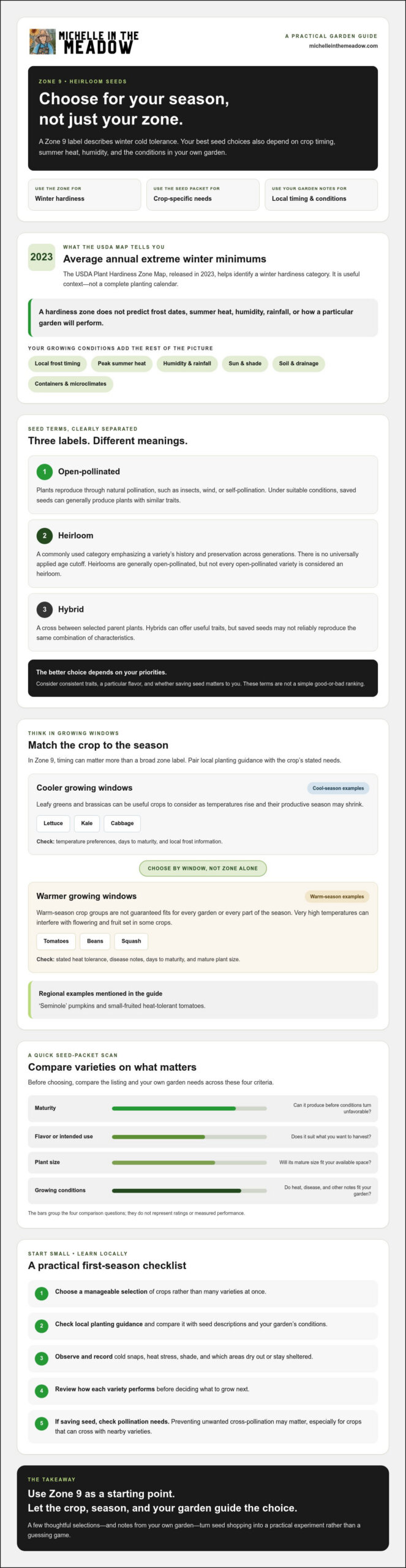
A hardiness zone measures the average annual extreme winter minimum. It cannot predict frost dates, summer heat, humidity, rainfall, or how a particular garden will perform.
That distinction matters in Zone 9, where conditions and growing seasons vary. Local frost timing, prolonged heat, humidity, and rainfall can all affect when seeds germinate and plants produce. Sun exposure, soil quality, drainage, containers, and sheltered or exposed microclimates create more variation, even within the same subzone.
Before choosing sowing dates, check guidance from your local Cooperative Extension and compare it with recent observations in your garden. Note when cold snaps occur, when heat becomes stressful, and which parts of your yard dry out or stay shaded. This record helps you use a zone label as a starting point, not a verdict on which heirlooms will grow well.
Matching Heirloom Seeds to Zone 9 Seasons
In Zone 9, timing often matters more than a broad zone label. Instead of following one calendar for every garden, think in terms of cooler and warmer growing windows. Local frost patterns, heat, and the needs of each crop can shift those windows, so use seed descriptions and local guidance together.
Zone 9 alone can’t determine the best sowing date because it doesn’t show when your garden’s frost risk ends or when heat will stress a crop. A variety’s cold tolerance is only part of the decision. Heat tolerance and days to maturity matter too. Maturity estimates can help you judge whether a crop may have time to produce before conditions become unfavorable, though actual timing varies with growing conditions.
Which heirloom crops suit cooler growing windows?
Leafy greens and brassicas, such as lettuce, kale, and cabbage, are useful examples to consider for cooler periods. Their productive season can shrink as temperatures rise. Look for variety descriptions that explain temperature preferences, compare days to maturity, and use local frost information to plan sowing or transplanting. Agricultural extension guidance can help you adjust the timing for your area.
Which heirloom crops suit warmer growing windows?
Tomatoes, beans, and squash are familiar warm-season crop groups, but they aren’t guaranteed fits for every Zone 9 garden or every part of its growing season. Check each listing for stated heat tolerance, disease notes, days to maturity, and mature plant size. A sprawling squash may need more room than a compact bean, while tomato varieties can differ in their stated growing needs. Regional gardening resources often highlight successful warm-climate selections, including dependable regional varieties like ‘Seminole’ pumpkins and small-fruited heat-tolerant tomatoes.
Very high temperatures can interfere with flowering and fruit set in some crops, reducing the number of fruits that develop. Heat can also affect harvest quality. A warm-season label alone is not enough: a variety may grow vigorously yet struggle to produce during a stretch of extreme heat. Compare the seed listing with your garden’s seasonal patterns, and note when plants flower and set fruit.
To make a practical shortlist, group crops by the season you expect to grow them. Then check frost guidance, maturity, and space before sowing. For help planning, explore practical gardening guidance alongside your local planting resources.
How to Compare Heirloom Seeds Without Getting Stuck on the Label
The word “heirloom” can catch your eye, but it won’t tell you whether a variety fits your garden, season, or dinner table. When comparing heirloom seeds for zone 9, check the details behind the label: when the crop grows best, how long it takes to mature, how much room it needs, and what you want to harvest. A listing that clearly identifies the crop and variety is a stronger starting point than broad promises about performance.
Which details should you check on a seed packet or listing?
Look for the botanical name and variety name, along with growing instructions such as sowing depth, spacing, light needs, and whether to direct sow or transplant. Days to maturity can help with planning, but check how the seller counts them. Estimates may start at sowing or at transplanting. If saving seed matters to you, confirm that the variety is open-pollinated and look for guidance on isolation or preventing cross-pollination. The Chicago Botanic Garden explains the connection between heirlooms and genetically unique, open-pollinated plants.
| What to compare | Question to ask | Why it helps |
|---|---|---|
| Season and conditions | Does the listing describe conditions that match my planned growing window? | Helps screen for a possible fit before sowing. |
| Maturity | How is the days-to-maturity estimate counted? | Makes timing estimates easier to interpret. |
| Flavor or use | Is the crop suited to how I plan to eat or preserve it? | Connects variety choice to what you’ll actually harvest. |
| Plant size and care | Are spacing, light, and support needs clear? | Helps you plan bed or container space. |
| Pollination and seed saving | Is it open-pollinated, and are saving instructions provided? | Clarifies whether saving seed may suit your goals. |
Are heirloom seeds harder to grow than hybrid seeds?
Not automatically. Growing difficulty depends on the crop, variety, garden conditions, and your experience. Heirlooms may appeal if you want to save seed or grow traits with local or family significance. Hybrids may appeal if you’re prioritizing particular selected traits or uniformity. Neither type is universally more productive, resilient, or flavorful. Weigh the listing against your needs instead of treating the label as a verdict.
Be cautious with sweeping performance claims. Results depend on growing conditions, so a seller’s description is a starting point, not a promise for every garden. Compare specific instructions, keep notes on what works, and use those observations to refine your next seed choices.
A Practical Checklist for Choosing and Starting Zone 9 Heirloom Seeds
A small, well-chosen seed shortlist is easier to manage than a packet drawer full of untested varieties. Use this sequence to plan your first round of heirloom seeds for zone 9: identify the growing window, choose a crop, compare variety traits, and make sure you have room and time to care for it.
How do you build a first-season seed shortlist?
Start with foods your household enjoys, then consider what your garden can support. Check available sunlight, bed or container space, and how consistently you can water. Choose one or two varieties per crop so you can compare their performance without making the season feel like a trial of too many variables.
- Choose the season: Use local planting guidance and the crop’s instructions to identify a suitable window.
- Pick the crop and variety: Compare maturity, growing conditions, and plant size.
- Plan the space: Follow the listing’s spacing guidance and allow for the plant’s mature size.
- Decide how to start: Direct sow when crop guidance recommends sowing outdoors, or start seeds indoors when the instructions call for transplanting. Let the crop’s needs and local timing guide the choice.
For indoor starts, gather clean containers, a suitable seed-starting medium, labels, and a way to keep the medium consistently moist without leaving it waterlogged. Follow crop-specific instructions for sowing depth and care. In warm, humid conditions, starting seeds in Florida humidity also calls for attention to airflow and careful watering to help reduce mold and damping-off risks. If you need a more detailed timeline, use a dedicated seed-starting schedule alongside this selection checklist.
Keep a brief garden record. Note sowing dates, germination, weather conditions, and harvest observations. Those details can help you work out whether a variety suited your conditions or whether timing, space, or care needs adjusting next season.
How should you store leftover seeds and plan seed saving?
For many seeds, cool, dry, dark storage can help maintain quality, but no single storage method guarantees a fixed lifespan. Keep packets labeled with the variety name and purchase or harvest year, and check for crop-specific storage advice before planting older seed.
Saving seed takes planning. Before collecting it, confirm that the crop is open-pollinated and check its pollination and isolation needs. Nearby plants of the same crop may affect whether saved seed comes true to type. If you’re unsure, grow the variety for a season first and learn its habits before setting seed aside.
Ready to put your shortlist into practice? Explore practical seed-starting and gardening guidance as you prepare your first small planting.
Your Next Steps for Growing Heirloom Seeds in Zone 9
You don’t need a perfect plan before you begin. For heirloom seeds for zone 9, start with three steps: check local planting guidance, shortlist a few varieties that fit your conditions, and grow a manageable amount. Treat that first planting as a chance to observe, not a promise of a particular harvest. Weather, pests, and garden conditions can all shape the results.
What should you track during your first growing season?
A few notes can make next season’s decisions easier. Keep a simple notebook or garden log and record:
- Sowing and transplant dates, along with whether seeds were started indoors or outdoors.
- How well seeds germinated and how seedlings developed.
- Weather patterns, including notable heat, rain, or cold spells.
- Pests or other challenges, and what you tried in response.
- Flowering, fruiting, and harvest observations, including flavor or quality.
Compare what you see with the variety description, but don’t judge a seed’s full potential from one season. A slow start or small harvest might reflect timing or unusual weather as much as the variety itself. Use your notes to adjust sowing dates, growing methods, or variety choices in your next planting cycle.
How can you keep the garden plan affordable and manageable?
Pick a few crops you’re excited to eat and that fit your available space and care routine. Reuse suitable containers and labels when they’re clean and in good condition. You can also wait to buy specialized equipment until you know what your setup needs. A small trial gives you useful information without asking you to manage more plants or supplies than you can comfortably handle.
Michelle In The Meadow publishes approachable gardening posts and videos. If you explore recommended tools or supplies, check whether each recommendation suits your setup and look for a clear affiliate disclosure, since the site may earn a commission from qualifying purchases. Seed choice and performance remain your own garden experiment, not a guaranteed result.
Ready to keep learning as you plan your next planting? Explore practical gardening guidance and use your observations to shape what you grow next.
Let Your Garden Guide the Next Season
Choosing heirloom seeds for zone 9 is less about finding a perfect label and more about matching a variety to its season, growing conditions, and the space you can give it. Check local planting guidance, compare seed details, and begin with a manageable shortlist. Your first harvest may teach you as much as your seed packet does.
Keep notes on timing, weather, and how each crop grows. One season won’t tell the whole story, but those observations can help you make more confident choices next time. Small adjustments can make a garden plan feel more personal and practical.
Michelle In The Meadow shares gardening education through blog posts and videos, along with a raised-bed soil calculator to help plan soil quantities. Explore practical gardening guides and use the raised-bed soil calculator to plan your next planting.
Frequently Asked Questions
What vegetables grow well from heirloom seeds in Zone 9?
Several familiar vegetables may suit Zone 9 gardens, but the best fit depends on your season and local conditions. Tomatoes, beans, and squash are warm-season options to evaluate, while leafy greens and brassicas can suit cooler growing windows. Check each variety’s growing instructions, heat tolerance, maturity estimate, and space needs. A crop that thrives during one part of the year may struggle during another, even in the same garden.
When should I plant heirloom seeds in Zone 9?
Plant according to the crop’s preferred growing conditions and your local frost and temperature patterns, not the Zone 9 label alone. Use local Cooperative Extension planting guidance, then compare it with the seed packet’s sowing instructions. Cool-season crops and warm-season crops have different timing needs, and weather can shift the ideal window from year to year. Record sowing dates and results to help refine your next planting.
Does Zone 9 mean I can grow vegetables year-round?
No. Zone 9 describes average annual extreme winter minimum temperatures, not a guarantee of year-round vegetable production. Frost risk, summer heat, humidity, rainfall, sunlight, and soil conditions still affect what can grow and when. Some crops may have a suitable window during cooler weather and others during warmer periods, but a particular garden may have pauses between them. Check local planting guidance and observe conditions in your own yard.
Are heirloom seeds better than hybrid seeds for a Zone 9 garden?
Neither seed type is automatically better for every Zone 9 garden. Heirloom varieties are generally open-pollinated and may appeal if you’re interested in saving seed or growing particular traditional traits. Hybrids can be chosen for selected characteristics, though saved seed may not reliably reproduce the same combination. Compare the specific variety’s growing needs, flavor or use, maturity, and plant size. Your priorities and conditions matter more than a good-versus-bad label.
Can I save seeds from heirloom vegetables and plant them next season?
Often, yes, if the variety is open-pollinated and its flowers haven’t crossed with a different compatible variety. Heirloom seeds are generally open-pollinated, but check the seller’s description and crop-specific pollination guidance before saving. Isolation needs vary by crop, so don’t assume seed from nearby plants will remain true to type. Label saved seed with the variety name and harvest year, and store it cool, dry, and dark.
How do I know if an heirloom seed variety can handle heat?
Look for explicit heat-tolerance information and stated growing conditions in the seed listing. Also compare days to maturity, disease notes, and the variety’s suggested season with local planting guidance. Broad claims aren’t a guarantee for every garden. Extreme heat, humidity, water availability, and sun exposure can affect flowering and fruit set. If details are limited, start with a small planting and record how the variety performs in your conditions.
Do heirloom seeds need to be started indoors in Zone 9?
No. Whether to start indoors depends on the crop, variety instructions, and your local planting window, not simply on being in Zone 9. Some seeds can be sown directly where they’ll grow; others may be started indoors for later transplanting if the crop guidance recommends it. Check sowing depth, transplant instructions, and frost information before choosing a method. Clean containers, suitable seed-starting medium, labels, and consistent moisture help with indoor starts.
How long do heirloom seeds remain viable?
There isn’t one reliable lifespan for all heirloom seeds. Viability varies by crop, seed condition, and how the seeds have been stored, so avoid relying on a fixed number of years. Keeping seeds cool, dry, and dark can help preserve many types. Label packets with the variety and purchase or harvest year, and check crop-specific guidance. If you’re unsure about older seed, test a small sample before planning a full planting.
