Your first vegetable garden doesn’t need to fill the backyard or demand hours of care. Learning how to start a vegetable garden can bring up a long list of choices, from finding the right spot to picking vegetables that suit your climate, space, and experience. It’s easy to worry that one wrong decision will spoil the whole season.
The good news is that a first garden can be small, simple, and shaped around the time you have. Start with a manageable plan, follow your local growing season, and treat each step as a chance to learn. You don’t need to get everything perfect to enjoy your first harvest.
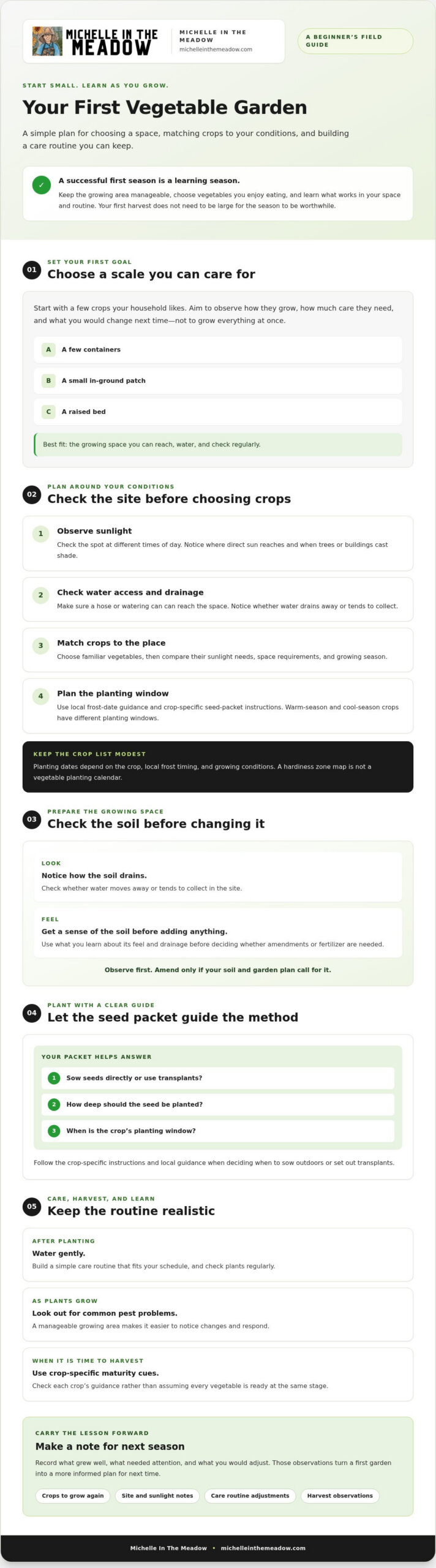
This beginner-friendly guide walks you through choosing a growing space, selecting vegetables that fit your conditions, preparing the soil, and planting at the right time. You’ll also find practical ways to water, check for common pest problems, and keep care realistic when life gets busy. By the end, you’ll have a clear starting plan and useful lessons to carry into next season.
Key Takeaways
- Learn how to start a vegetable garden by matching crop choices to your available sunlight, space, water access, and planting window.
- Check how your soil drains and feels before deciding whether it needs amendments or fertilizer.
- Use each seed packet’s instructions to choose between direct sowing and transplanting, and to guide planting depth.
- Build a simple care routine that fits your schedule, with gentle watering after planting.
- Use crop-specific maturity cues to guide harvests, then note what you’d change for next season.
How to Start a Vegetable Garden: Choose a Manageable First Goal
Your first vegetable garden can be small, flexible, and a little imperfect. You don’t need a large plot or a steady supply of vegetables to call it a success. A first season can be about learning what grows well in your conditions, how much care your plants need, and which parts of gardening you enjoy.
A beginner vegetable garden is a planned space where you grow edible crops from seeds or young plants, at a scale you can care for consistently. That space might be a few containers, a patch of in-ground soil, or a raised bed. Each can be a good starting point. The best fit is the one that works with your space and routine. For a broader overview of vegetable gardening basics, you can also explore how gardening brings together site, soil, and crop choices.
Set a learning goal instead of expecting a large or constant harvest. For example, aim to grow a few vegetables your household likes, observe how they respond to your garden’s conditions, and record what you’d adjust next time. That’s a useful first season, even if the harvest is modest.
What counts as a vegetable garden for a beginner?
Containers, in-ground plots, and raised beds all count if they give edible crops a suitable place to grow. You don’t have to settle every setup question before you begin. Choose a scale you can water and check regularly: a small growing area that fits your routine is more useful than a larger one that feels like another chore. If you’re considering a raised bed, compare its setup and filling needs before committing.
What should you decide before planting?
Begin with what you actually enjoy eating. Growing a vegetable that sounds exciting but rarely makes it onto your plate may not feel rewarding. Then take an honest look at your available time, space, and access to water. These everyday limits help you plan a garden you can maintain.
- Which vegetables does your household reach for most?
- Where could you grow them, and is water easy to access there?
- How much time can you realistically spend checking and caring for plants?
Choose a few crops for your first attempt instead of trying to grow everything at once. A smaller plan makes it easier to notice what each plant needs and catch problems early. As you work out how to start a vegetable garden, remember that the aim isn’t to master every crop in one season. It’s to create a manageable place to learn, harvest what you can, and make a better-informed plan next time.
Plan Your Vegetable Garden Around Sunlight, Space, and Planting Time
A little observation before planting can save time later. Use this sequence to match your garden plan to the conditions you actually have:
- Observe sunlight. Check the growing area at different times of day. Note where direct sun reaches it and when trees or buildings cast shade.
- Check water access. Make sure a hose or watering can can reach the spot without making regular watering difficult.
- Select crops. Start with vegetables you like to eat, then compare their sunlight needs, growing season, and space requirements.
- Check planting windows. Use local frost-date guidance and crop-specific seed-packet instructions to plan when to sow or transplant.
How do you choose a suitable garden site?
There isn’t one perfect location for every garden. As you observe a possible site, check whether water drains away or tends to collect, whether you can reach the area comfortably, and whether nearby shade changes over the day. These details help you judge how well the spot suits the crops you’re considering. Clemson University Cooperative Extension’s Planning your garden resource offers more guidance on weighing your goals, space, and crop choices.
How do you choose vegetables and planting dates?
Choose a few familiar vegetables and check their needs before deciding where each will go. Sunlight requirements vary by crop, so look for reliable, crop-specific growing guidance rather than assuming every vegetable needs the same conditions. Warm-season and cool-season crops also have different planting windows. Local frost timing and the conditions in your garden affect when it makes sense to plant each group.
Planting dates depend on the crop, local frost timing, and growing conditions. Use seed packets and trusted local guidance to decide when to sow seeds outdoors or set out transplants. The USDA Plant Hardiness Zone Map can help you understand which perennial plants are likely to survive winter in a location, but it isn’t a vegetable planting calendar. Annual vegetable timing needs crop-specific and local guidance.
As you plan how to start a vegetable garden, keep your first crop list modest and let the site guide your choices. A short record of sunlight, shade, drainage, and planting dates can help you understand how the garden performs. For more approachable ideas as you plan, explore vegetable gardening guides.
Prepare Garden Soil Without Overcomplicating Your First Setup
Good soil gives roots room to grow, helps water move through the growing area, and holds nutrients plants can use. Preparing soil doesn’t mean automatically adding fertilizer or buying a stack of amendments. First, look at what you already have. A little observation can help you avoid spending effort on a problem your garden doesn’t have.
Compost is decomposed organic material that can be added to soil to improve its structure and contribute organic matter. It can be useful, but it isn’t a substitute for understanding your growing area. For a first garden, start with what you can see and feel.
What should you check before improving garden soil?
Look at the ground after watering or rain. Does water drain away, or does it stand in the same place? Notice whether the soil seems compacted, and remove visible debris such as stones or bits of plastic. When the soil is moist, pick up a small handful. Is it very hard to break apart, or does it crumble easily? These are useful clues, not a complete diagnosis.
If you need to know the soil’s pH or nutrient levels, a soil test can provide more specific information. Use the results, along with reliable local guidance, before choosing amendments or fertilizer. Avoid adding products just because a garden needs to be “improved.” The right step depends on what the soil test shows and what you plan to grow.
How do you prepare a bed or container for planting?
Preparation depends on your setup. For an in-ground garden, clear weeds and unwanted debris, then disturb only as much soil as needed to prepare the area. For a raised bed or container, choose a growing medium intended for that use and follow its directions. Existing garden soil and container mix don’t necessarily need the same preparation.
Keep it simple: clear the planting area, check that water can drain as expected, and make sure the growing medium suits the setup. If you’re filling a raised bed and want to estimate how much material it needs, Michelle In The Meadow’s raised-bed soil calculator can help with fill-volume calculations. You don’t need to solve every soil question before taking the next step in learning how to start a vegetable garden. Make evidence-based adjustments as you learn more about your soil and plants.
Plant Seeds or Transplants, Then Set a Simple Care Routine
Once your growing area is ready, follow the instructions for each crop rather than guessing. This sequence keeps planting manageable:
- Read the seed packet or plant label. Check the recommended timing, spacing, depth, and whether the crop should be sown directly or transplanted.
- Prepare the spot. Clear small weeds and debris, then moisten the soil if it’s dry.
- Plant at the stated depth. Cover seeds as directed, or make a planting hole suited to the transplant’s roots.
- Water gently. Moisten the planting area without washing seeds away or leaving the soil waterlogged.
When should you sow seeds or transplant seedlings?
Some crops are commonly sown directly where they’ll grow, while others can be started indoors or planted as seedlings. The crop’s instructions help you choose and provide the right depth, spacing, and timing. If you’ve raised seedlings indoors, harden them off before transplanting when appropriate. This means gradually introducing them to outdoor conditions so the move isn’t abrupt. Follow reliable crop-specific guidance for how to do this in your conditions.
Want to grow your own transplants? Explore the seed-starting guide for help with that next step.
What does a beginner’s weekly garden check include?
A brief, regular look around the garden can help you notice changes before they become bigger problems. Check whether the soil is drying out, whether weeds are emerging, how plants are growing, and whether leaves show visible signs of stress or damage. Look at both sides of leaves when you see marks or holes, and try to identify the cause before deciding how to respond. A few minutes of attention can help you decide what needs care.
Keep moisture steady, but don’t assume every bed or container needs water on the same schedule. Weather, soil, and container conditions all affect how quickly the growing area dries. Check the soil before watering and adjust after rain or hot, dry weather. If watering is needed, aim near the soil where practical, rather than routinely wetting the leaves.
As you learn how to start a vegetable garden, let your observations guide your routine. A container may dry out differently from an in-ground plot, and a stretch of rain can change what plants need. Look often enough to catch wilting, dry soil, new weeds, or signs of pest damage, then respond to what you see. Regular attention is more useful than a rigid schedule that ignores the garden’s actual conditions.
Harvest Your First Vegetables and Learn What to Adjust Next
Your first harvest is a chance to enjoy what you’ve grown and learn how your garden performed. Vegetables don’t all reach readiness in the same way, so don’t rely on one date or sign for every crop. Check the seed packet or trusted crop-specific guidance for cues such as expected size, color, or stage of maturity, then harvest when the produce matches those cues.
How can you tell when vegetables are ready to harvest?
Look for the crop’s described maturity signs, and check plants regularly as they approach that stage. Some produce is ready at a particular size, while other crops are easier to judge by color or another crop-specific cue. Paying attention to these signs helps you learn how each plant changes as it matures.
Use your hands only when the crop’s guidance indicates it can be picked that way. If a vegetable should not be twisted or pulled, use a clean, suitable cutting tool to remove it without tugging at the plant. For details on harvesting or storing a particular crop, consult a focused guide for that vegetable.
How do you make next season easier?
Keep a few simple notes as you go. They don’t need to be formal. Record what you planted and when, which crops grew well, what needed extra attention, and any care challenges you noticed. A quick note that a spot dried out often, for example, may help you reconsider the placement or care routine next season.
Use those observations to make a manageable plan for next season. Repeat crops you enjoyed growing, and change only a few things at a time. If you alter the location, crop choices, and care routine all at once, it can be harder to tell which change helped. Gardening is a process of noticing, trying, and adjusting.
As you put what you’ve learned about how to start a vegetable garden into practice, let your own harvest guide the next steps. If a specific need comes up, such as finding a tool for a task, explore relevant gardening product recommendations and review any affiliate disclosure before purchasing. Michelle’s educational articles and videos can also help you plan what to grow next.
Take the First Step Toward Your Garden
Your first vegetable garden doesn’t need to be large or perfect to teach you something. Choose crops you enjoy, match them to your available sunlight and planting window, and check soil moisture as they grow. Harvest according to each crop’s maturity cues, then note what worked and what you’d change next season.
Learning how to start a vegetable garden is an ongoing process, and a small first step can be enough: choose a growing spot, check its conditions, and make a realistic plan. You can build your skills with Michelle’s gardening tutorials in blog and video formats, find earth-friendly ideas, and use the raised-bed soil calculator to estimate growing media quantities.
Explore Michelle’s practical gardening guides and resources to plan your first growing space and take the next step.
Frequently Asked Questions
How do I start a vegetable garden for the first time?
Start by choosing a small growing area you can check and water regularly, then pick a few vegetables you enjoy eating. Notice how much direct sunlight the spot gets and how easily you can reach it with water. Check crop-specific planting guidance for timing and instructions. Learning how to start a vegetable garden is a step-by-step process, so keep notes and use your first season to learn what suits your space and routine.
What vegetables are easiest to grow for beginners?
Radishes, leaf lettuce, bush beans, and zucchini can be approachable choices, but what grows easily depends on your climate, season, and growing conditions. Start with vegetables you already like, then check their space, sunlight, and planting needs. A crop that suits your local growing window is more likely to be manageable than one chosen from a generic “easy” list. Try a few kinds first, and add more after you see how they do.
How much sunlight does a vegetable garden need?
Many vegetables grow best with several hours of direct sunlight, while leafy crops such as lettuce may tolerate some shade. Needs vary by crop, so check reliable guidance for the vegetables you plan to grow instead of assuming one rule fits them all. Observe your garden spot at different times of day and note where direct sun falls. Nearby buildings or trees can create shade that shifts with the season.
When should I start planting my vegetable garden?
Planting time depends on the crop, your local frost timing, and growing conditions. Cool-season vegetables and warm-season crops have different planting windows, so check local frost-date guidance and the seed packet or plant label. Those directions can help you decide when to sow seeds outdoors or set out transplants. Avoid relying on a date from another region, since its frost patterns and season may not match your garden’s conditions.
Can I start a vegetable garden without a raised bed?
Yes. You can grow vegetables in an in-ground plot or in containers; a raised bed isn’t required. Choose the setup that fits your available space and that you can water and check consistently. For containers, use a suitable growing medium and make sure excess water can drain. For an in-ground area, observe the soil and drainage before planting. The right choice depends on your space, crops, and everyday routine.
How often should I water a vegetable garden?
There isn’t one watering schedule that works for every garden. Check soil moisture and adjust for recent rain, warm or windy weather, soil type, and whether plants are in containers or in the ground. Water when the root area is drying, aiming near the soil when practical. Containers can dry faster than garden beds, so check them closely. The goal is steady moisture, not soil that stays waterlogged or repeatedly dries out.
What is the best soil for a beginner vegetable garden?
Choose soil or growing media suited to your setup that allows roots to grow and water to drain. In-ground soil and container mixes aren’t interchangeable, so follow guidance for the type of garden you’re preparing. Before adding fertilizer or amendments, observe how the soil drains and feels; consider a soil test if you need information about pH or nutrients. Make changes based on test results or reliable local advice, rather than guesswork.
