
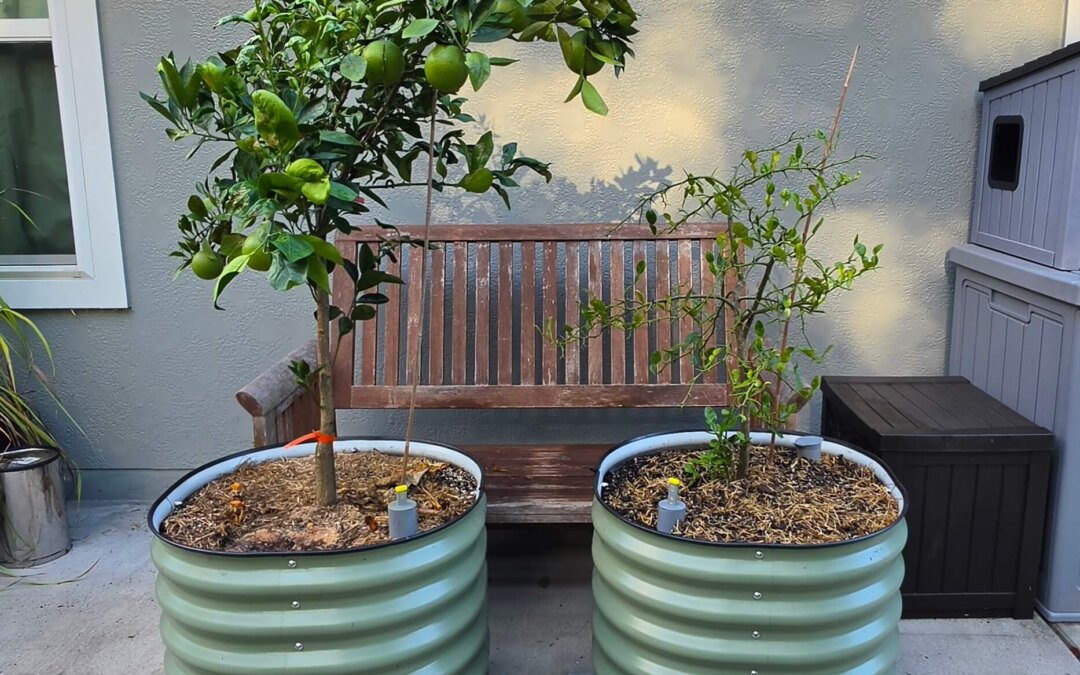
This post contains affiliate links, and if you buy through them I may earn a small commission at no extra cost to you. Vego Garden sent me this planter free in exchange for an honest review, and they sent me the previous version a year before that, which has been in my garden ever since. I only write about things I actually use here in northeast Florida.
The part that stopped me
This planter costs more than the tree going into it. I live in northeast Florida, where you can pick up a citrus tree at any garden center on a Saturday, so spending more on the container than the plant felt backwards to me. If it feels backwards to you, I'm not going to pretend otherwise.
When Vego Garden offered me their latest citrus planter I said yes for one reason: I already had one of these, and I had complaints. Three of them. The gauge never read full, the overflow drained straight over one of the wheels, and I couldn't work out how much water the thing was supposed to hold.
You can watch the previous Vego Garden Gen 2 review here, but keep reading, first.
What I wanted to know, and what this whole post is really about, is whether those three complaints were their fault or mine.
So let's get into the Vego Garden Self-Watering Rolling Citrus Tree Planter Gen 3 review.

What is a self-watering planter?
A self-watering planter is a container with a sealed water reservoir underneath the soil, and the plant drinks from below as it needs to rather than waiting for you to turn up with a hose. The more accurate name is a sub-irrigated planter, usually shortened to SIP.
Here's how it works in this one. Underneath the soil sits the reservoir, and bridging the two is what Vego calls a wicking cell, which is essentially a column of soil standing in the water. Moisture travels up out of it into the root zone, and the tree takes what it wants.
You still have to fill it, so this isn't hands off. Doing it less often is what the reservoir buys you, and you probably waste less water too. The wheels buy you something else, and for a lot of people that's the bigger half.
The build, and the first thing I got wrong
Assembly took me about an hour and a half, though that included stopping to move the camera and set up shots, so the real build is quicker than that.
The box includes a hex key and small hand socket, you'll need your own screwdriver, and if it's battery-powered, even better.
The only genuinely fiddly part is getting the metal body down onto the caster frame, because the body sits outside the little guides rather than inside them, and everything in me wanted it inside.
Before inserting the wicking tray, make sure the bottom row of screws are tight, you can't reach them once it's in place.


The gauge, and the second thing I got wrong
The water gauge is a float on a rod that reads Refill near the bottom and Max at the top, and on the Gen 2 it never once reached Max, which I said on camera at the time while guessing I probably hadn't seated it properly.
Side by side you can see the tops of the water gauge tube in my Gen 2 (on the left) is not seated as far down into the planter as the new Gen 3 (on the right). My mistake. You have to fidget it in, until you can actually see the refill label showing, before you ever put water in.


The tree, and why the pot it came in lied to me
The tree going into this one is a kaffir lime, sold in some places as makrut lime, which had been sitting in a twenty gallon grow bag. Vego recommends this planter for trees currently in ten to twenty-five gallon containers, so twenty sat comfortably in the middle of that, and I expected a root ball I'd have to wrestle out of the bag.
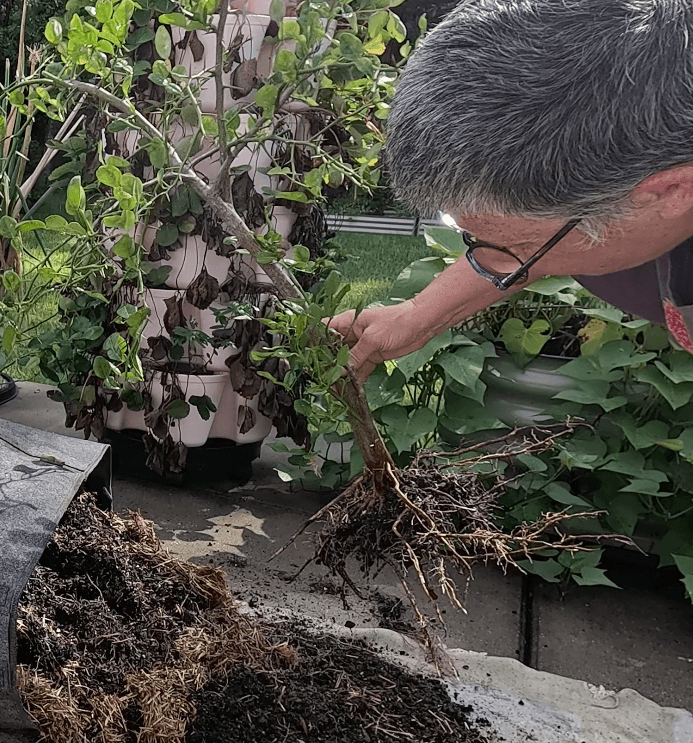
I laid the bag on its side to slide the tree out, and the tree came out on its own. The soil stayed behind. What I was holding looked like something you'd order by mail in a cardboard box: roots, not much else, going down about seven inches. In a planter that's fourteen inches deep, that's half.
So a container sitting squarely inside the manufacturer's own recommended range handed me a bare root tree, which is worth knowing if you're about to size one of these by the pot your tree happens to be in. Look at the roots instead.
Too much water is the whole risk with citrus
Here's the risk. All that soil holds water, and a tree with seven inches of root can only reach a fraction of it, so the rest just sits there. Citrus hates that. Waterlogged soil has no air left in it, and citrus kept that way get Phytophthora root disease 1. In a self-watering planter you're not guarding against drought, you're guarding against drowning.
Which is why the manual says to skip any mix with peat in it. Peat holds fifteen to twenty times its own weight in water 2, and this planter is already pulling moisture upward on purpose. I used FoxFarm's Bush Doctor Coco Loco instead, coir based and peat free, with about a month of feed built in.
I also scooped up what native soil I could from the old grow bag and planted the lime back in with it, the way I would have if the root ball had held together. Some of that is structure. The rest is the fungi: mycorrhizae live on the roots and reach much further out than the roots manage alone, trading minerals for the plant's sugars, and they don't take kindly to having their world tipped out and shaken 3.
Planting it
Vego's instructions cover the fill and I followed them, including packing the wicking cups before anything else goes in, which is the one step you genuinely cannot come back to later.
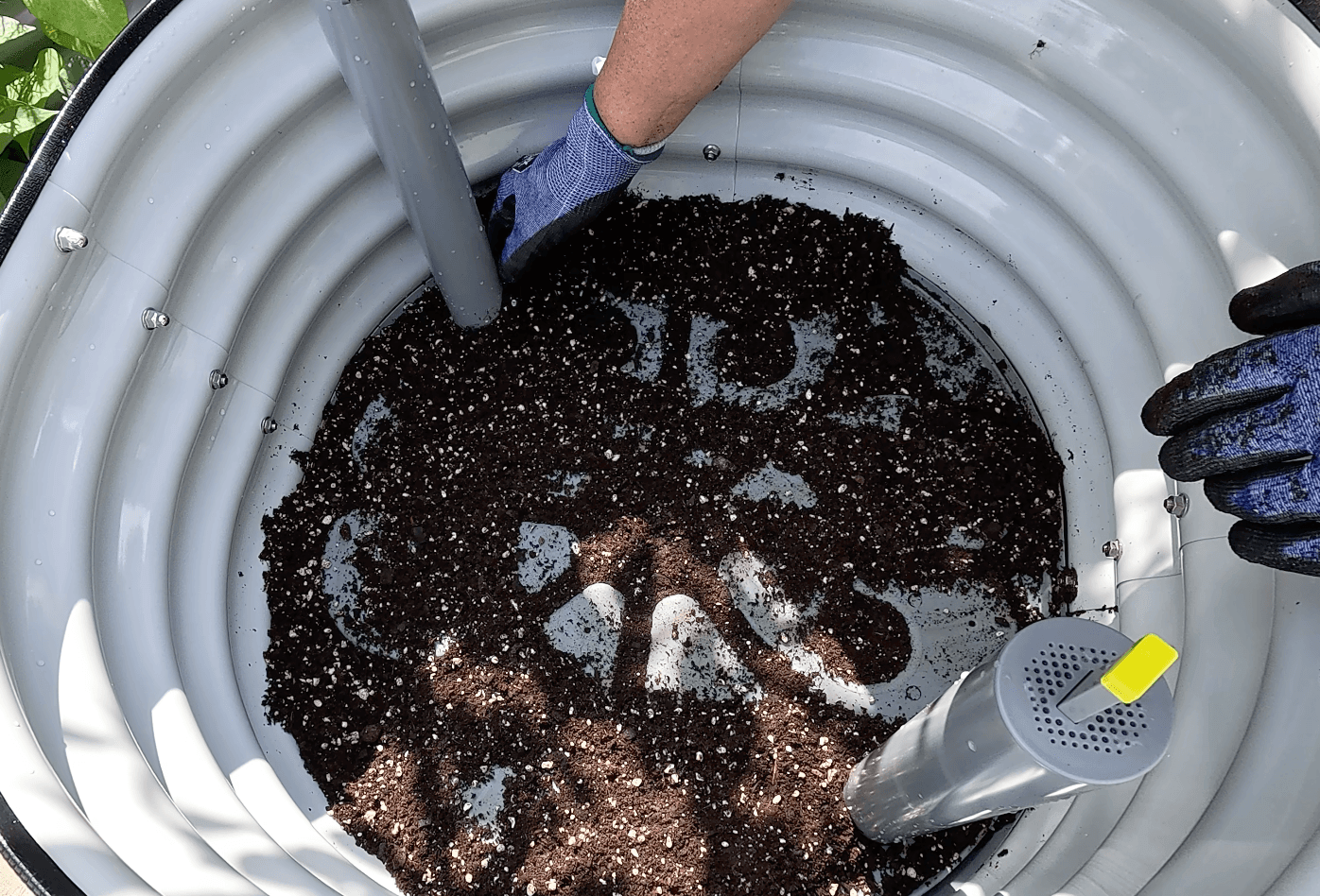
One tip I would add: put a cup over the tubes before you start shovelling. I got a tiny amount of soil down mine, and the float still moves freely so no harm done, but an upturned plastic cup over each opening would have saved me the worry.
Watering it in
Filling the reservoir and watering the tree are two different jobs. Until the tree is established Vego recommends top watering, and for my poor bare root kaffir lime that is probably six months or more, because the few roots it has left can't reach down to the reservoir yet.
After that it's the tube, and this is where the one real difference between the Gen 2 and the Gen 3 earns itself. On the older one you watered from the top and hoped, because you were pouring blind. The Gen 3 carries water straight down to the wicking cell, so the gauge moves while you fill and you can see exactly where you are. That's my third complaint answered, and it's the only thing on the product that genuinely changed.
Rolling it, and why a plant caddy won't do
I can roll it anywhere on my patio, loaded. Last winter I backed it up against the wall and put a frost blanket over it, and in spring it came back out.
The lock holds, which matters more than it sounds like it should. Locked, it stays where you put it. Unlocked, you can push it, pull it, or spin it in place.
Weight is what decides this. Thirty gallons of wet soil with a tree in it is a serious load, and moving it comes down to having casters built for that job and bolted to the planter itself. The alternative most of us have tried is a big pot on a plant caddy, which is really a houseplant accessory, and the pot just balances on top of it, unattached to anything. Even with a sturdy one the best I've managed is to drag it, and more than once I've pulled the pot clean off and left the caddy sitting where it was. One of mine went over completely when a cat chased a lizard up a cucumber plant.
What I can't tell you is how it behaves on your ground. I've got thick St. Augustine and I know without trying that it isn't crossing that, but somebody with short Bermuda over hard-packed clay might get away with it easily. The casters don't care what's growing, they care whether the surface takes the load without letting them sink.
Living with it
A reservoir is standing water, and standing water in Florida is a mosquito nursery. The good news is that the vented cap's holes are small enough to keep a mosquito out, but the cap only protects you once it's actually on, and mine sat on the patio with water in it for a week. I'm adding Bti to mine regardless, which is the standard recommendation for a reservoir you can't simply tip out and comes sold as dunks or bits 4. It goes after the larvae, and the EPA states it isn't harmful to fish, waterfowl, pets or people when used according to label directions 5.
Which brings up cleaning, and here the two generations genuinely differ. The Gen 2's reservoir can't be reached at all without taking the planter apart, because you water it from the top and that's the end of the conversation. The Gen 3's tube is wide enough to take a garden hose, so you can at least get clean water down there.
There's no drain, though, and the overflow is the only way out, so you can add clean water but you can't get the dirty water out. Any bucket of dirty water only gets so clean by adding more clean water to it. Better than not being able to reach it at all, but not a fix.
Soil is more straightforward, because you don't replace it. You top it up. Compost on the surface for feeding, or more coco as the mix settles over time, and the tree carries on.
Root pruning is the one people may wonder about, and the honest answer is that it isn't happening. Between the corrugated walls, the weight and the sheer size of the thing, you're not tipping it over and sliding the tree out to have a look, which means the root ball isn't coming out and neither is the soil around it. It's a shape problem, and you can see it from here.
Ten months on, and an orange tree I did not deserve
Back to the Gen 2 for a minute, because it's the entire reason I trusted this design enough to plant a second one.
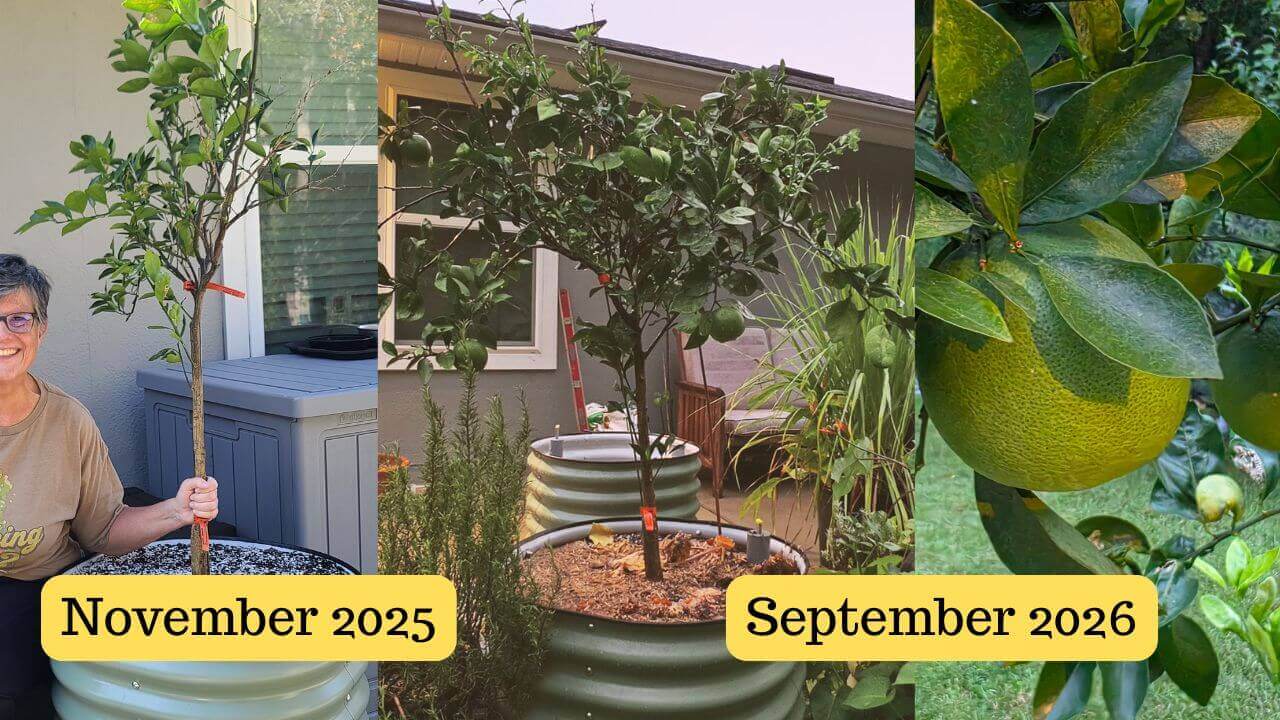
The navel orange went into it last November, moved up from a fifteen gallon pot, and it is now the best producing citrus I have. More fruit than we've ever had off it. And I'm not going to stand here and pretend I earned that, because I didn't feed it properly and I didn't water it enough, and it's out there outgrowing every tree I've fussed over. Whatever is happening in that container is beating my bad habits.
As for that gauge over ten months, it wasn't perfect. But it told me when the water was low, every time. It fails at the top of its range and it works at the bottom, and the bottom is the reading that actually matters.
So was it me, or was it them?
Time to settle up, and it's a split decision.
The Gen 2 gauge that never reached Max was a seating problem, and I'm the one who seated it. My mistake and I own it.
Not being able to tell how much water the thing wanted was theirs, and the Gen 3's tube fixes it properly, because you can watch the gauge while you fill instead of guessing.
The overflow draining over a caster was theirs too, and they haven't touched it. A moving part is still a poor place to keep pouring water, and I've dealt with it by turning the base so the overflow sits above a wheel that doesn't lock.
Which leaves two things I'd ask them for, and they're really the same request. Vego has solved getting water into this planter and hasn't solved getting water out of it. Move that overflow hole off the caster, and give the basin a drain so it can actually be emptied.
Who this is for, and whether it's worth it
The person I keep picturing is my mother-in-love, who is in her seventies and hauls frost-sensitive trees in and out every single winter. That's the problem this solves, and if that's your problem too then the rest of this is just details.
On the money, which is where we started: I'm never going to talk anybody into spending what they haven't got. But it's worth comparing against what you'd otherwise buy, because a barrel-style planter or a terracotta pot at this size is real money as well, and terracotta cracks, wooden barrels rot out from the base, and neither one of them goes anywhere once it's full. What you get from metal tree and fruit planters instead is something that shrugs off a Florida summer and still rolls when it is loaded.
Vego says these last twenty years and more. That's their claim, not my finding. I have ten months. But if you have the budget and want an easy way to keep your trees rolling all year long, you may just want to check out the Vego Rolling Citrus Planter for yourself.
The numbers
| Product | Self-Watering Rolling Citrus Tree Planter 30 Gallon, Gen 3 |
|---|---|
| Dimensions | 24 in. diameter x 22 in. high |
| Capacity | 30 gallons |
| Recommended tree size | Trees currently in 10 to 25 gallon containers |
| Soil depth | 14 in. |
| Colors | Olive Green, Modern Gray, Pearl White |
And remember, drink plenty of water, wear that high quality sunscreen, and always have a fantastic day.
Sources
- UC Master Gardeners of Placer County, Growing citrus in the Sierra Nevada foothills - "Citrus do not tolerate waterlogged roots and are susceptible to Phytophthora root disease when they are overirrigated" and "A saturated soil has all its pore spaces filled with water, which deprives the roots of oxygen."
- NDSU Extension, For peat moss' sake - peat's water-holding capacity.
- UC ANR, Mycorrhizae: an underground support network for trees - the carbon-for-nutrients exchange, reach beyond the root zone, and avoidance of soil disturbance.
- UF/IFAS Extension, publication IN1315 - Bti for mosquito larvae.
- US EPA, Bti for mosquito control - not harmful to fish, waterfowl, pets or people when used according to label directions.
