
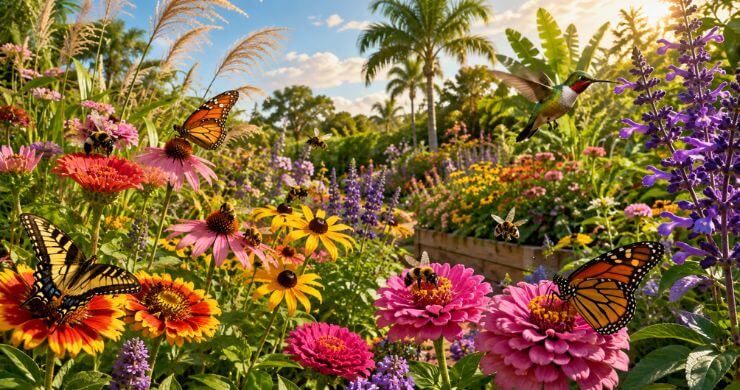
Key takeaways
Late summer challenges Northeast Florida pollinator gardens because heat, humidity, and a mid-season nectar lull can push bees and butterflies elsewhere for food. This guide covers three levers that keep a Zone 9b garden active from August through fall: native late-season bloomers, sustained water and shelter, and organic habitat.
Spring in Northeast Florida arrives loud, with citrus blossoms, azaleas, and the first buzz of returning bees. By August, the show has thinned, and any pollinator garden Northeast Florida homeowners tend hits a mid-season stretch that requires more thought than the spring push. Heat pushes into the nineties, afternoon storms flatten softer perennials, and many home gardens hit a nectar lull just as monarchs begin drifting south. Late-summer success leans on plants built for the climate, on water and shade that ease pollinator stress, and on organic habitat practices that protect the insects raising next season's generation.
Why late summer tests every pollinator garden in Northeast Florida
Northeast Florida's late summer combines sustained heat and daily afternoon thunderstorms that soak the ground and knock petals off softer flowers. Many spring-planted annuals slow their bloom cycle or stop flowering entirely during this stretch. That creates a nectar lull between the spring flush and the fall wildflower push.
Resident bees, however, are still active. So are butterflies. And by the second half of September, monarchs begin filtering through Northeast Florida on their way to central Mexico, a migration tracked seasonally by Journey North and other citizen-science programs. These insects need food when they arrive.
Zone 9b's growing season also runs later than gardeners in cooler zones may expect. First frost typically holds off until late December or early January, meaning pollinators remain active well past Labor Day. That extended window is an advantage for gardeners willing to plan for it. Three levers matter most: what to plant, what to add, and what to stop doing.
Native plants Northeast Florida gardens rely on for late-season nectar
Established Florida natives are the workhorses of a Zone 9b late-summer garden. They tolerate heat, sandy soils, and irregular rainfall better than most imported cultivars. And they support pollinator species that co-evolved with them.
Four natives carry heavy weight from August through October.
Firebush (Hamelia patens) is a warm-season champion that hummingbirds and butterflies visit repeatedly. According to UF/IFAS Gardening Solutions, it thrives in Zone 9 and blooms until cool nights arrive. It handles full sun and takes very little coaxing once established.
Tropical sage (Salvia coccinea) is a reliable self-seeder documented by the Florida Native Plant Society as a nectar source for hummingbirds and native bees. It fills gaps in beds where annuals have faded and returns on its own each year with almost no intervention.
Beach sunflower (Helianthus debilis) is a low-growing native groundcover profiled by UF/IFAS as drought-tolerant and heat-hardy. Its yellow blooms feed native bees through the hottest weeks of the year.
Established plants outperform freshly planted annuals in August. Root systems already in the ground pull moisture from deeper soil layers. That resilience translates directly into steady nectar production when pollinators need it most.
Wildflower gardening Florida gardeners can lean on when it's hottest
Wildflowers hold up in August heat when many cultivated flowers wilt or stop blooming. Wildflower gardening Florida homeowners embrace typically leans on species evolved for sandy soils, sun, and drought.
Blanketflower (Gaillardia pulchella), profiled by the Florida Wildflower Foundation, blooms from spring straight through fall in red-and-yellow rosettes that native bees and butterflies work all day. It tolerates poor soil and reseeds itself readily.
Black-eyed Susan (Rudbeckia hirta) and coreopsis, Florida's state wildflower, extend the nectar window further. The Xerces Society publishes regional plant lists that back up these species as strong Southeast pollinator supporters.
Letting a corner of the yard go semi-wild adds habitat value beyond nectar. Ground-nesting native bees, which make up the majority of North American bee species, need bare soil and undisturbed patches to nest.
Light pruning keeps woody perennials producing new blooms. A clean pair of Fiskars Hedge Shears handles firebush and salvia shaping without stressing the plant. Deadheading spent flowers on wildflowers, however, can be a mistake. Seed heads feed goldfinches in fall and reseed next year's stand naturally.
Water, shelter, and organic habitat that bring pollinators back
Late-summer gardens need more than flowers. Pollinators overheating in Zone 9b afternoons look for water almost as often as they look for nectar. A shallow dish filled with pebbles or marbles gives bees and butterflies a steady landing surface that keeps them from drowning.
Afternoon shade also matters. Trellised vines, a shade cloth stretched over the most sun-exposed beds, or simply placing new plantings on the east side of a fence can lower plant surface temperature by several degrees. Cooler plants produce nectar longer.
Shelter is the third piece. Leaf litter, hollow plant stems, and undisturbed ground provide overwintering sites for native bees. The Xerces Society documents that most native bee species nest in the ground or in cavities, not in hives. Raking every leaf and cutting every stem to the ground removes that habitat.
Organic methods complete the picture. Composted mulch, natural habitat structure, and healthy soil practices support pollinators directly. Mulching with pine straw or leaf mulch retains soil moisture and buffers root temperature.
Frequently Asked Questions
Northeast Florida gardeners tend to ask a similar set of questions about supporting pollinators through the hottest months of the year.
What flowers attract pollinators in Florida during late summer?
Florida natives handle late-summer conditions better than most cultivated annuals. Firebush, tropical sage, beach sunflower, blanketflower, and coreopsis remain in bloom through the heat and continue attracting bees, butterflies, and hummingbirds. Adding a mix of these species creates overlapping bloom windows rather than a single peak followed by a gap.
How can gardeners help pollinators survive Florida heat?
Water and shade are the two fastest interventions. Shallow water dishes with pebbles give bees reliable drinking spots, and afternoon shade lowers plant surface temperatures enough to extend nectar production. Mulching soil around plant roots also buffers heat stress and holds moisture between rain events.
Do pollinator gardens in Zone 9b need different care than other regions?
Yes. Zone 9b's growing season stretches later than most of the country, with pollinators active well past Labor Day and monarchs migrating through in late September and October. Gardeners in cooler zones can wind down after August, while Northeast Florida gardens are still producing food for insects.
More gardening tips from my Northeast Florida garden
Late summer is when my pollinator garden in Northeast Florida really earns its keep. I love seeing what other Zone 9b gardeners have planted to keep bees, butterflies, and hummingbirds coming back. Drop a comment about what is blooming in your garden right now, and check out more gardening tips for seasonal updates from my beds.