
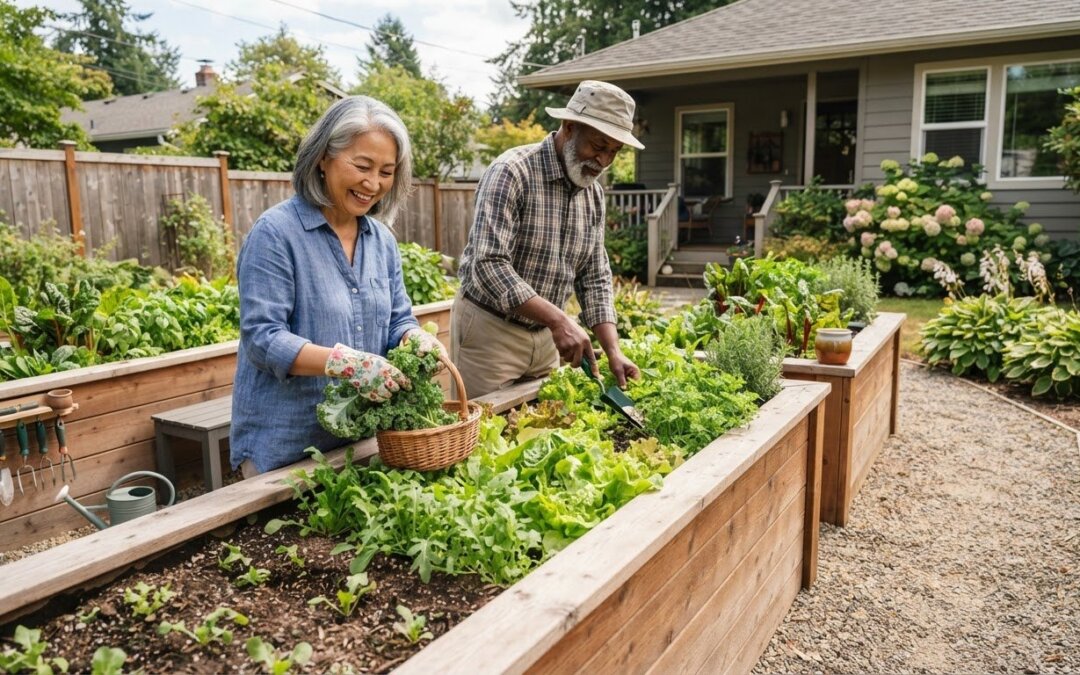
You don’t have to give up your favorite outdoor ritual just because stiff knees and an aching back protest every time you kneel in the dirt. When ground-level weeding and digging start to feel like an uphill battle, raised bed gardening for seniors offers a welcoming way to stay active without the physical strain. After all, true gardening longevity isn’t about working harder; it’s about elevating the soil to meet your body’s needs.
If you’ve ever worried that weary joints might force you to abandon a lifelong passion, or felt exhausted by lugging heavy water cans across the yard, you’re in good company. In this guide, you will discover how to design and maintain a beautiful garden that respects your joints and keeps you growing for years to come. We’ll walk through ergonomic bed dimensions, accessible layouts, and low-maintenance plant choices that let you enjoy the soil with comfort and confidence.
Key Takeaways
- Mastering raised bed gardening for seniors starts with choosing the right ergonomic height, from an 18-inch seated setup to a 30-inch standing design that spares your back and knees.
- Applying the four-foot “Reach Rule” guarantees you never overextend your spine while planting, weeding, or harvesting.
- Planning stable, slip-resistant pathways alongside wide perimeter bench caps creates a secure environment with built-in resting spots.
- Opting for cut-and-come-again greens and hardy perennial herbs cuts down on repetitive digging and replanting throughout the season.
- Using a dedicated soil calculator takes the guesswork out of bed preparation, preventing over-ordering and unnecessary heavy lifting.
Why Raised Bed Gardening is the Best Choice for Seniors
Traditional in-ground plots ask a lot from your body. Between hauling tools, kneeling on hard ground, and constantly bending over to tackle aggressive weeds, conventional rows often turn a relaxing afternoon into days of muscle soreness. In the context of accessibility, raised bed gardening for seniors transforms growing from an endurance test into an inviting, manageable pastime. Elevating the planting plane brings the soil up to you, removing the physical friction that keeps so many passionate growers out of their backyards.
The primary advantage comes down to structural ease and better growing conditions. Bringing your soil into contained, above-ground beds gives you significant physical and practical advantages:
- Reduced spinal load and knee pressure: Elevating your plants eliminates the deep squatting and ground kneeling that wear down vulnerable joints.
- Superior soil control: Filling beds with a customized mix of compost and loose potting soil prevents compaction, making stray weeds slide out effortlessly with minimal wrist strain.
- Extended seasonal warmth: Contained soil warms earlier in spring and drains excess rain faster, letting you plant sooner without dealing with soggy, heavy mud.
- Natural pest barriers: Raised walls deter low-crawling critters, slugs, and pets from trampling tender greens.
The Ergonomics of Elevation
Tending a garden should feel restorative, not punishing. By tailoring your planter height to match your preferred posture, whether sitting on a supportive bench or standing upright, you protect vulnerable discs from repetitive stress injuries. Raising the growing plane directly spares the lumbar spine by eliminating the prolonged forward flexion that triggers disc compression and lower back spasms. Beyond physical comfort, cultivating your own fresh vegetables without assistance preserves a profound sense of self-reliance and daily purpose.
Safety First in the Garden
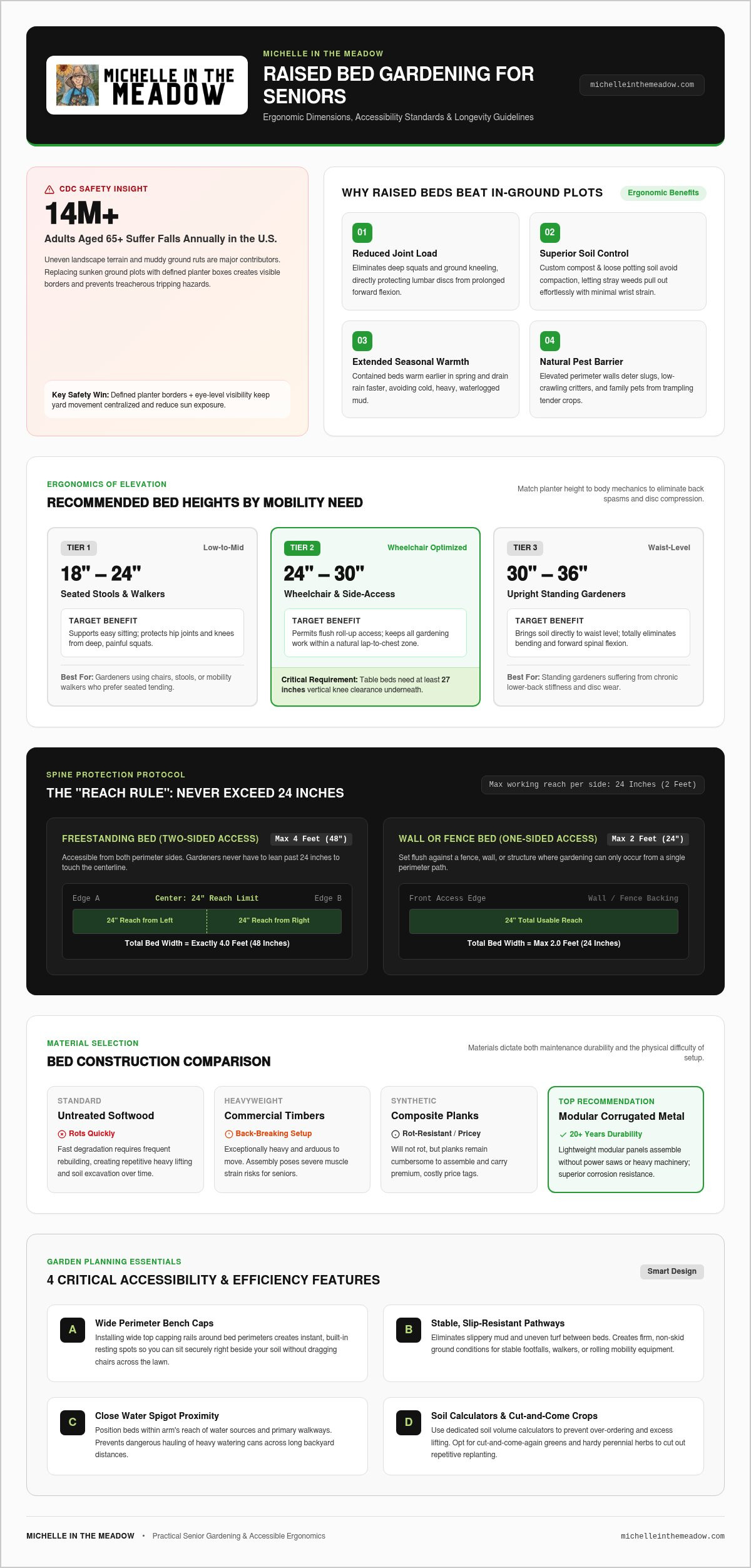
Safety is just as vital as ease. According to the CDC, more than 14 million adults aged 65 and older suffer a fall each year in the United States, and uneven landscape terrain often contributes to those risks. Replacing muddy ground ruts with distinct planter boxes establishes crisp, visible borders that dramatically reduce tripping hazards.
Elevated systems also improve overall visibility. If your eyesight isn’t quite what it used to be, bringing plants closer to eye level makes it far simpler to spot pests, inspect leaf undersides, and monitor soil moisture. Because everything stays centralized in a defined footprint, you spend less time trudging across a sprawling yard under the midday sun, keeping heat exhaustion at bay while enjoying raised bed gardening for seniors at your own pace.
Designing Your Senior-Friendly Raised Bed
A successful design balances body mechanics with smart backyard layout. Instead of building beds out in the open where you have to haul hoses hundreds of feet, position your structures within easy reach of a water spigot and main walkways. Planning raised bed gardening for seniors means crafting a layout where every reach feels natural, stable, and completely pain-free.
Finding the Perfect Height and Width
Getting your planter dimensions right prevents awkward stretching. The golden rule for depth is never exceeding a 24-inch reach from any working edge. That means a freestanding bed reached from both sides should measure four feet wide at most, while beds set against walls or fences should stick to a two-foot maximum width. For standing gardeners, a 30- to 36-inch height eliminates bending entirely; seated growers and wheelchair users benefit from an 18- to 30-inch range, with forward-approach seated table beds requiring at least 27 inches of vertical knee clearance underneath.
| Bed Height | Primary Mobility Setup | Target Physical Benefit |
|---|---|---|
| 18 to 24 inches | Seated stools, chairs, and standard walkers | Supports easy sitting; protects hip joints and knees from deep squats. |
| 24 to 30 inches | Wheelchair users and seated side-access gardeners | Permits flush roll-up access; keeps work within natural lap-to-chest reach. |
| 30 to 36 inches | Upright standing gardeners with lower-back stiffness | Brings soil to waist level; eliminates stooping and forward spinal flexion. |
Material Selection for Easy Assembly
Materials dictate both maintenance needs and setup difficulty. Untreated softwoods rot quickly, while thick commercial timbers are back-breaking to move. Heavy composite planks offer rot resistance, but they can be cumbersome during assembly and often carry hefty price tags. Lightweight corrugated metal modular systems provide an exceptional balance, delivering 20-plus years of corrosion resistance without requiring saws or power equipment.
Modular kits assembled panel-by-panel reduce the physical strain of setup. Choosing Birdies raised garden beds gives you lightweight components with smooth, rubber-capped safety edges that protect vulnerable skin from scrapes. Opting for lighter-colored metal panels also helps reflect harsh summer heat, keeping root zones cooler and the exterior panels comfortable to touch as you tend your plants.
Essential Features for Accessibility and Ease
A truly functional layout pairs ergonomic heights with accessibility features that take the struggle out of daily chores. In thoughtful raised bed gardening for seniors, small structural tweaks turn routine garden work into a safe, leisurely experience. Instead of treating resting spots as decorative afterthoughts, you can build comfort directly into your existing or new planters.
Consider these high-impact modifications for smoother garden days:
- Integrated edge seating: Securing smooth, horizontal 2×8 or 2×10 cedar capping boards to the top rim of wooden beds creates a broad eight- to ten-inch bench. This gives you a stable resting ledge to perch on while potting or pruning, eliminating the need to haul heavy chairs outside. If you use metal beds, placing an inexpensive two-in-one folding kneeler bench nearby gives you the same benefit with sturdy support handles.
- Eye-level vertical trellises: Securing rigid cattle panels or A-frame trellises across your beds trains pole beans, climbing peas, and small squash upward. Harvesting fruit at chest level keeps you standing tall, so you never have to crouch under dense foliage.
Paths and Perimeters
A garden path must be completely dependable beneath your feet. Under Americans with Disabilities Act standards, accessible walking routes require a clear minimum width of 36 inches, though master gardeners recommend 48 inches between planters so walkers and garden carts glide through without catching corners. To accommodate a full 180-degree turn in a mobility device, plan a 60-inch diameter circular clear space at pathway intersections.
Ground surfaces should be exceptionally stable. Accessible outdoor walkway standards require a firm, stable, and slip-resistant surface that does not shift, compress, or yield under the weight of footsteps or wheels. Skip deep pea gravel and thick wood chips, which shift underfoot and catch walker tips. Opt instead for interlocking concrete pavers, flat flagstone set in mortar, or heavily compacted, decomposed granite with stabilized binder.
Watering Without the Weight
Carrying a two-gallon watering can means hauling around 16 to 17 pounds of dead weight with every trip. That repetitive strain is tough on aging wrists, shoulders, and hips. Ditch the buckets entirely by weaving 1/2-inch drip irrigation tubing or porous soaker lines through your soil, connecting them to a basic battery-operated spigot timer. The system delivers deep, targeted moisture right to the root zone while you sit back with a cool glass of iced tea.
When hand-watering pots or quick container plantings, swap heavy rubber hoses for ultra-lightweight, kink-free expandable hoses with shutoff levers on the spray nozzle. If you travel or want to cut watering chores to once every couple of weeks, look into sub-irrigated wicking beds. These internal water reservoirs use natural capillary action to pull moisture upward into the soil, keeping the root zone consistently hydrated without daily labor.
Low-Maintenance Planting for Senior Gardeners
Plant selection plays a massive role in how much physical labor your garden demands. Sowing crops that require endless staking, deep digging, or heavy lifting works against the ergonomic benefits of an elevated planter. By focusing on crops that produce steadily with minimal fuss, raised bed gardening for seniors remains a relaxing outdoor retreat rather than a strenuous chore.
Ground covers like clean straw or shredded leaves spread two inches thick across your soil lock in moisture and block sunlight, virtually eliminating the need to weed by hand. Pair this mulch with resilient, long-lasting crops:
- Cut-and-come-again greens: Varieties like loose-leaf lettuce, kale, and Swiss chard let you harvest outer leaves continuously all season, removing the need to clear beds and replant every few weeks.
- Perennial herbs: Rosemary, thyme, oregano, and chives establish deep root systems and return reliably every spring, saving your wrists from repetitive seasonal digging.
- Perennial vegetables: Hardy options like asparagus crowns establish permanent beds that produce fresh spears year after year with zero seasonal re-tilling.
Best Crops for Easy Harvesting
The goal is to avoid heavy, sprawling plants that pull down trellises or hide produce at awkward angles. Large winter squashes, sprawling indeterminate field tomatoes, and massive pumpkins demand too much reaching and heavy lifting. Instead, choose compact “patio” or determinate bush tomatoes, which stay tidy and produce fruit at waist height. Bush green beans and radishes are equally forgiving.
Loose, fluffy soil in deep raised planters makes harvesting root vegetables completely pain-free. In heavy clay ground, pulling carrots or beets often requires a garden fork and significant back leverage. Inside an elevated planter, the loose soil allows carrots, radishes, and tender turnip roots to slide out cleanly with a gentle tug.
Succession Planting Made Simple
Harvesting should never feel like a high-stress race against time. Sowing an entire bed at once leads to a “harvest crush,” forcing you to pick, clean, and process dozens of pounds of produce over a single tiring weekend. Staggering your seed sowing by two to three weeks spaces out the yield, keeping picking sessions light and manageable.
Practicing “no-dig” gardening also protects your spine. Instead of turning over compacted soil with heavy shovels each spring, simply layer two inches of fresh organic compost right onto the surface. Microorganisms and earthworms do the aeration work for you. To plan your amendments without guesswork, use our soil calculator for raised beds to calculate exact compost volumes, saving you from purchasing or hauling heavy excess bags.
Step-by-Step: Starting Your Senior Garden Journey
Embarking on a garden refresh should never feel overwhelming. You don’t need expensive contractors or complex landscape blueprints to begin raised bed gardening for seniors. By tackling the project in bite-sized, logical stages, you protect your body from exhaustion while creating a growing space tailored to your daily routine.
- Conduct a sun and mobility audit: Track how sunlight moves across your yard throughout the day, ensuring chosen spots receive at least six hours of sun. Confirm that paths from your back door to the planters remain flat, wide, and free of steps or roots.
- Calculate your soil needs accurately: Avoid buying too many heavy bagged materials that end up sitting around your yard waiting to be shifted.
- Assemble with care: Opt for simple modular metal kits that screw together quickly with basic fasteners. If turning wrenches strains your fingers, recruit an enthusiastic neighbor or local handyman to help with the build.
- Hook up automated lines and accessible tool storage: Run basic drip lines to the beds early and attach a weatherproof tool holster directly to the planter frame.
- Start small with one or two beds: Test your spacing, bed height, and morning routines before committing to a larger backyard transformation.
Planning Your Bulk Soil Order
Shoveling dirt is notoriously tough on aging vertebrae. To avoid moving heavy wheelbarrows back and forth across the lawn, run your bed measurements through our raised bed soil calculator. Knowing your precise volume needs keeps you from spending money on surplus materials. When ordering bulk mix, always request “tailgate delivery to site” so the driver drops materials as close as possible to your garden perimeter.
For deep, waist-high metal beds, adopt the traditional hügelkultur method to reduce soil volume. Fill the bottom 40 to 50 percent of the structure with rotting logs, thick tree branches, and dry leaves. This organic base breaks down into rich humus over several seasons. Top the remaining 12 to 15 inches with an airy, lightweight blend of compost, peat moss or coconut coir, and coarse perlite.
Selecting Ergonomic Tools
Standard trowels force your hands into awkward, clenched grips that aggravate arthritis. According to the CDC, doctor-diagnosed arthritis affects 47.3% of U.S. adults aged 65 and older, making joint-friendly handles a necessity rather than a luxury. Upgrade to ergonomic hand trowels featuring curved, non-slip handles that keep your wrists locked in a neutral, straight position.
Pair those hand tools with long-handled cultivators so you can stir the upper soil while standing upright. A sturdy folding garden kneeler bench with assist side handles gives you reliable physical leverage when sitting down or standing back up. Mount a weatherproof tote or lockable plastic caddy directly to the bed frame to store your pruners and gloves, cutting out tiring extra trips back to the garage.
Keep Growing With Comfort and Joy
Aging does not mean stepping away from the plants and soil you love. By embracing raised bed gardening for seniors, you can protect your back and knees with comfortable planter heights, secure pathways, and low-maintenance cut-and-come-again greens. A few practical adjustments let you continue harvesting fresh vegetables right outside your door without aches or exhaustion.
You don’t have to tackle the math or heavy lifting alone. We focus on affordable, earth-friendly methods and real-world testing of ergonomic tools featured on major gardening platforms, helping you bypass expensive trial and error. Plan your stress-free garden with our Soil Calculator! It takes the guesswork out of your layout so you only order what you truly need. Grab your favorite gloves, set your own pace, and look forward to your most relaxing growing season yet.
Frequently Asked Questions
What is the best height for a raised garden bed for seniors?
The ideal height depends entirely on whether you prefer to sit or stand while working. Standing beds between 30 and 36 inches high let you tend crops without bending your back or neck. If you prefer sitting on a stool or garden bench, an 18- to 24-inch height keeps soil comfortably within lap level while eliminating deep, painful knee squats.
Can I garden from a wheelchair with a raised bed?
Yes, raised bed gardening for seniors can be completely wheelchair accessible with the right planter style. Elevated “table” style planters require at least 27 inches of vertical clearance underneath so your chair rolls in flush with the edge. Keeping bed widths under 24 inches ensures every plant stays comfortably within an arm’s reach without straining your shoulders or twisting your spine.
How do I keep weeds out of my raised beds without bending over?
Layering a two-inch organic mulch blanket of clean straw, dried leaves, or wood shavings over your soil blocks sunlight and prevents weed seeds from sprouting. You can also use long-handled collinear or stirrup hoes, which slice young weed roots just below the surface while you remain standing tall. The loose, fluffy soil inside elevated planters also allows stray weeds to slide out easily with minimal pulling effort.
What are the most lightweight materials for building a raised bed?
Corrugated zinc-aluminum coated steel panels provide the lightest, most durable option for DIY assembly. Individual panels weigh only a few pounds each, making them far easier to carry than heavy wet timbers or dense composite planks. They fasten together with simple wingnuts or bolts, sparing your hands from heavy power drills and eliminating rot worries for over two decades.
Do raised beds require more watering than in-ground gardens?
Raised planters drain water much faster than compacted yard dirt, meaning they dry out quicker during hot summer stretches. You can easily manage this moisture loss by installing an automated micro-drip hose connected to a simple battery timer. Adding a thick top layer of straw mulch or opting for sub-irrigated wicking reservoirs also keeps soil moisture steady without requiring daily hose dragging.
What are the best tools for gardeners with arthritis?
Ergonomic hand tools featuring contoured, non-slip handles keep your wrists in a neutral position, significantly cutting down on joint pressure. Lightweight bypass pruners equipped with internal ratchet mechanisms or easy squeeze springs multiply your grip strength without exhausting sore hands. In addition, dual-purpose folding kneelers provide solid side handles that offer stable push-up support whenever you need to rise to your feet.
How can I make my garden paths safer for those with mobility aids?
Keep your paths at least 36 to 48 inches wide to provide ample clearance for walkers, cane tips, and garden carts. Surface materials must be firm, flat, and slip-resistant; compacted crushed stone with a stabilizing binder or smooth, level concrete pavers work best. Avoid loose pea gravel and thick wood bark, as both shift underfoot and present significant tripping hazards.
Is it cheaper to build or buy a raised garden bed kit?
Building your own bed from untreated local lumber may save a bit upfront, but pre-cut modular metal kits usually provide better long-term value for raised bed gardening for seniors. Kits include pre-drilled holes, protective safety edges, and lightweight modular panels that eliminate measuring, heavy power sawing, and timber hauling. They also outlast standard pine lumber by decades, saving you significant rebuild labor down the road.
