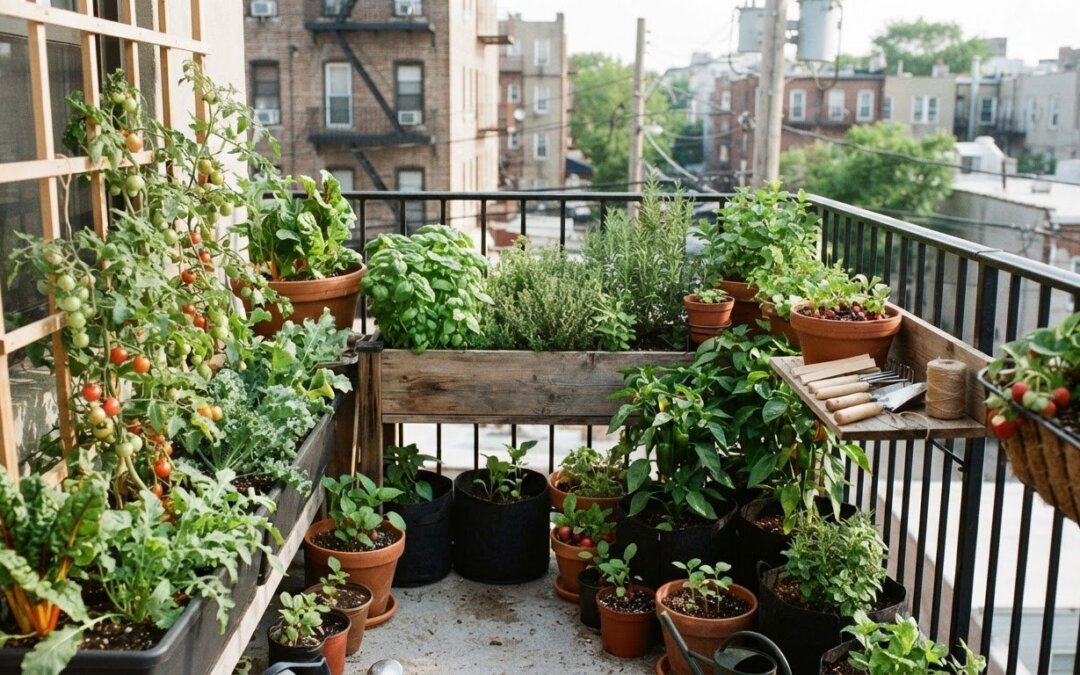
What if a balcony, patio, or narrow sunny corner could grow more than a pot of herbs? Small space vegetable gardening works best when you match each crop to the light, room, and growing method you actually have. Containers can limit root space, and partial shade affects which crops are likely to do well. Plant spacing matters, too: filling every gap can make watering and harvesting harder. A small garden can still be useful, and you don’t need to plan every inch before you begin.
This guide will help you choose vegetables suited to your sunlight and growing area, then build a manageable plan around them. Compare containers, compact raised beds, and vertical supports, and use practical checks to avoid crowding. You’ll also find guidance on growing media, including a raised-bed soil calculator to estimate how much soil your bed needs. Start with the space you have, choose a few crops you enjoy eating, and expand as you learn what works.
Key Takeaways
- Match crops to the sunlight and growing room you have instead of trying to squeeze in every vegetable you like.
- Compare containers, raised beds, and vertical supports to find a setup that fits your space and preferred crops.
- Explore small space vegetable gardening plans for sunny patios, partly shaded spots, and narrow growing areas.
- Measure your space and check each plant’s mature size and spacing before filling every gap.
- Begin with one or two suitable crops and a few essentials, then add tools or growing space as you learn.
Small Space Vegetable Gardening: What Can You Grow in a Compact Area?
A vegetable garden doesn’t need a traditional plot of soil. Small space vegetable gardening means growing edible crops in containers, compact beds, or vertical spaces, with a setup shaped around the room you have. A few leaves for lunch or fresh herbs within reach can make a small harvest worthwhile, even if it won’t supply all your vegetables.
A compact garden is a focused growing space planned around the light, room, and crops available, not a full-size plot squeezed into miniature. That distinction helps you choose a useful selection instead of trying to fit too many plants into too little space. Before picking crops, consider three practical limits: how much direct sun reaches the spot, how much growing medium a container can hold, and how large each plant gets at maturity.
Which small spaces can become vegetable gardens?
A balcony, patio, narrow side yard, or sunny windowsill could support some kind of edible growing. The label matters less than the conditions. Notice when direct sun reaches the area, whether containers can sit securely, and whether you can reach them safely to water and harvest. A high balcony may have room for pots but feel exposed to wind, while a windowsill may suit a small herb pot better than a larger vegetable plant.
Every spot has different limits, so there’s no single harvest to expect from every compact garden. Vertical growing can make use of upward space; Vertical Growing describes the broader idea of growing crops in stacked layers. At home, supports or shelves can help organize plants, but they don’t replace the light and root space each crop needs.
What makes a vegetable suitable for a small garden?
Look for plants with a compact growth habit, a mature size that fits your container or bed, and a harvest your household will use. Herbs, leafy greens, radishes, and compact tomatoes are possibilities to consider, not guaranteed fits for every spot. A tomato, for instance, may need a larger container and support than a shallow-rooted leafy green.
Check seed packets or plant labels for mature height and spread, along with recommended spacing. Those details help you decide whether a plant suits a pot, bed, or vertical support. Check container volume, too: a small pot gives roots less room and can dry out faster than a larger one. Match the container to the crop rather than choosing by appearance alone. Once you know your light and space, narrow the options to a few plants that suit your conditions.
Small Space Vegetable Gardening Methods: Containers, Beds, and Vertical Growing
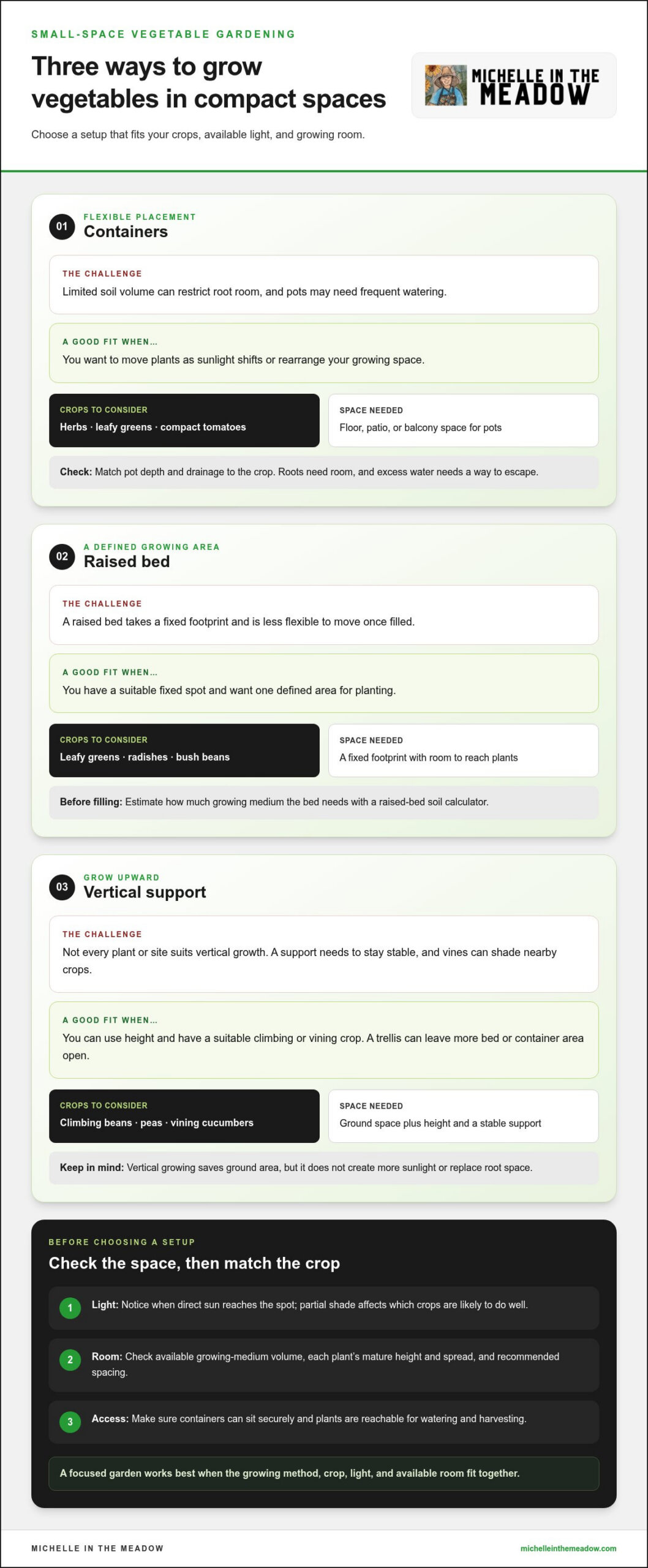
There isn’t one setup that suits every corner. The best small-space garden depends on the crops you want to grow and the light your space receives. Containers are flexible, raised beds create a defined growing area, and vertical supports help suitable plants grow upward. Penn State Extension also shares practical ideas for Small Space Vegetable Gardening Methods.
| Method | Useful crops | Space needs | Common limitation |
|---|---|---|---|
| Containers | Herbs, leafy greens, compact tomatoes | Floor, patio, or balcony space for pots | Limited soil volume; pots may need frequent watering |
| Raised bed | Leafy greens, radishes, bush beans | A fixed footprint with room to reach plants | Less flexible to move once filled |
| Vertical support | Climbing beans, peas, or vining cucumbers | Ground space plus height and a stable support | Not every plant or site suits vertical growth |
When do containers or a raised bed make sense?
Choose containers if you want to move plants as sunlight shifts or rearrange your growing space. Match each pot’s depth and drainage to the crop: roots need room, and excess water needs a way to escape. A raised bed makes sense when you have a suitable fixed spot and want one defined area for planting. Before filling it, use the raised-bed soil calculator to estimate the amount of growing medium you’ll need.
How can vertical growing add usable planting space?
A trellis can guide climbing beans, peas, or vining cucumbers upward, leaving more of the bed or container area open. Bush varieties tend to stay more contained and may suit a spot without room for a tall support. Vertical growing saves ground area, but it doesn’t create more sunlight or make every crop suitable for a tight footprint.
Plan for the support as well as the plant. Make sure the structure can stay stable as growth develops, and leave room for vines to spread without shading neighboring crops. For more practical ideas as you compare containers, growing media, and supports, browse approachable gardening tutorials.
Small Space Vegetable Garden Examples for Different Sunlight and Space
A useful layout starts with the spot you have, not an idealized garden plan. These small space vegetable gardening examples are starting points to adapt to your climate, the light your space actually receives, and each plant’s mature size. Harvests vary with growing conditions and care, so begin with a few crops and adjust as you learn.
Sunny patio: a compact tomato with herbs or greens
Give a compact tomato its own appropriately sized container, then place herbs such as basil or a pot of leafy greens nearby if their needs suit the spot. Separate containers let you reposition plants as you observe how sunlight falls, and make it easier to notice when each pot needs water. Varieties differ, so check seed packets or labels for mature size and growing guidance. Virginia Tech’s Guide to Container Gardening offers further advice on choosing and caring for container crops.
Partly shaded spot: leafy greens and suitable herbs
Where sunlight is less intense, try a small container or bed with leafy greens and herbs suited to the conditions. Put the pots where they receive the best available light, and observe how it changes through the day. Shade tolerance varies by crop and variety; it doesn’t mean a plant can grow without light. Check growing instructions before planting, then adjust the mix if a crop struggles in your spot.
Narrow growing area: a practical row with room to reach
In a narrow side yard or along a patio edge, line up a few pots of greens or herbs while keeping a clear path for watering and harvesting. If there’s enough light and a stable place to anchor it, add a trellis for a suitable climbing crop. Keep taller growth from crowding or shading nearby plants, and leave room to reach every container comfortably.
Think of each plan as a sketch, not a promise. Climate, light, container size, variety, and care all affect how plants grow and what you harvest. Start with crops you enjoy eating, follow the spacing and care guidance on their labels, and change the arrangement if plants compete for light or become difficult to reach. For more practical ideas as you shape your own setup, explore gardening inspiration and tutorials.
How to Plan a Small Space Vegetable Garden Without Overcrowding
A little planning can prevent common gardening mistakes to avoid, such as crowded pots, hard-to-reach plants, and crops that don’t get the light they need. For small space vegetable gardening, make a simple map first, then let plant labels and real growing conditions guide your choices.
- Measure the growing area. Note its width and length, and mark doors, paths, railings, or other places that need to stay clear.
- Observe the light. Check where direct sunlight falls at different times of day before deciding which crops belong there.
- Choose a short crop list. Pick vegetables or herbs your household will use, and compare their light needs with what you observed.
- Place containers with care. Leave room to reach each plant for watering and harvesting, and make sure excess water can drain without creating a slippery or inconvenient area.
- Review as plants grow. Recheck spacing, shade, and access as crops mature. Move flexible containers or adjust supports if plants begin competing for room or light.
Before filling every gap, check each crop’s recommended spacing, mature height, and spread on the seed packet, label, or trusted growing guidance. Adequate spacing leaves room for airflow around foliage, helps you reach plants to water and harvest, and limits crowding between neighboring leaves. It may feel tempting to fit in one more plant, but open space makes ongoing care easier.
How should you assess light and choose crops?
Watch the growing area at different times instead of relying on a quick glance. Nearby buildings, railings, or trees can change how much direct sun reaches a spot. Compare your observations with crop guidance on seed packets or trusted resources, then make a short list that fits both the conditions and your kitchen. Shade tolerance varies, so “partly shaded” doesn’t mean every crop will thrive there.
How can succession planting keep a small garden productive?
Succession planting means sowing or planting another crop after an earlier one has been harvested. For example, you might follow a harvest of quick-growing greens with another sowing if the season and conditions allow. Timing varies with weather, variety, and care, so keep a simple calendar with sowing dates and expected harvest windows. Staggering plantings can spread out the work and avoid filling every container at once.
Use the plan as a guide, not a rigid rule. Explore practical gardening tutorials for more ideas as your compact garden takes shape.
Start Small Space Vegetable Gardening with a Simple First Setup
You don’t need a complete kit or a complicated layout to begin. For small space vegetable gardening, a single container with one or two crops suited to your light and available room is a solid first step. Starting simply makes daily care easier and gives you a chance to learn what works before adding more.
What do you need for a manageable first planting?
Start with the essentials, and choose them to suit the crop rather than buying a standard set of supplies:
- An appropriately sized container: Check the plant’s mature size and root needs, and make sure the container has drainage.
- Suitable growing medium: Choose a growing medium intended for container use, following the crop’s growing guidance.
- Seeds or starts: Pick one or two crops that fit your available light and that you’ll enjoy harvesting.
- Watering access: Place the container where you can reach it easily and provide water as needed.
That’s enough to begin. Optional additions might include a support for a climbing plant or a watering tool that makes regular care easier. Add them only if they solve a real need in your setup. Container recommendations can help you compare features such as drainage and ease of moving a pot. Growing-medium recommendations can help you find an option suited to container planting.
How can you learn from the first growing cycle?
Keep a few notes as your plants develop. Record when you planted, where direct sunlight fell, when you watered, and how the plants changed. Those observations can help you decide whether a crop needs a different position, more room, or a change in care. If a plant struggles, change one part of the setup at a time. That makes it easier to notice what helped instead of adjusting everything at once.
At the end of the growing cycle, note what you enjoyed eating, what was easy to care for, and what felt crowded or awkward to reach. Use those observations to choose your next crop or adjust your container placement. A modest first planting is useful even if it teaches you more than it produces.
For more practical ideas as your garden grows, explore Michelle In The Meadow gardening resources.
Make Room for Your First Harvest
Small space vegetable gardening starts with a simple match: choose crops that suit your sunlight, growing area, and the space they’ll need as they mature. Containers offer flexibility, raised beds create a defined planting area, and vertical supports can help suitable crops grow upward. A few well-chosen plants are a more manageable beginning than a crowded garden.
Measure your space, observe its light, and check plant labels for mature size and spacing before planting. Then give your first setup time to teach you what works. Keep notes on sunlight, watering, and plant growth, and adjust one thing at a time in your next growing cycle.
For a raised bed, the soil calculator can help estimate how much growing medium to plan for. You can also explore approachable gardening tutorials, inspiration, and curated product recommendations for practical growing needs. Explore more practical gardening guides and take your next small step toward a garden that fits your space. Every harvest begins somewhere, even in one pot.
Frequently Asked Questions
What vegetables grow well in small spaces?
Leafy greens, radishes, herbs, bush beans, and compact tomato varieties can be good choices for small spaces. The right fit depends on available sunlight, container or bed size, and how large each plant grows. Check seed packets or plant labels for mature dimensions and spacing before planting. In small space vegetable gardening, choosing a few crops you enjoy eating often makes more sense than trying to grow a little of everything.
Can you grow vegetables in containers without a yard?
Yes, you can grow vegetables in containers on a balcony, patio, or other suitable spot without a yard. Choose a location with enough light for your crops, safe access for watering, and a way for excess water to drain. Match the container’s depth and volume to the plant’s needs. Start with one or two crops, and keep pots where you can easily check their growth and care for them.
How much sunlight does a small vegetable garden need?
The amount of sunlight depends on what you’re growing. Fruiting crops such as tomatoes generally need a brighter, sunnier position than leafy greens, which may tolerate some shade. Herbs also vary in their light needs. Observe your space at different times of day, then compare what you see with the growing directions on seed packets or labels. Even shade-tolerant crops need suitable daylight to grow well.
What is the easiest vegetable to grow in a small space?
Leafy greens or radishes can be approachable first crops because they can grow in containers and don’t need a tall support. Still, ease depends on your light, climate, and care routine. Choose something you like to eat, follow the packet’s instructions for planting depth and spacing, and check the container requirements. Starting with one crop makes it easier to learn how watering and light affect plants in your particular space.
Can you grow tomatoes in a small space?
Yes, tomatoes can grow in a small space if you select a compact variety and provide a container suited to its mature size and root needs. Tomatoes also need adequate light, regular attention to watering, and support if the plant’s growth habit calls for it. Check the seed packet or label for expected dimensions and spacing. A compact tomato in its own pot can be easier to manage than fitting it into a crowded container.
How do you grow vegetables vertically in a small garden?
Use a stable trellis or other suitable support for climbing crops such as peas, beans, or vining cucumbers. Set it up so you can reach the plant, water its base, and harvest without squeezing past other pots. Leave room for mature growth and avoid shading neighboring crops. Vertical supports save ground area, but they don’t suit every plant, and they can’t make up for insufficient light or root space.
Are raised beds or containers better for small-space gardening?
Neither is always better; choose based on your space and the crops you want to grow. Containers are flexible and can be repositioned, while a raised bed creates a defined growing area with room for several plants. For either option, consider drainage, access, and the root space crops need. If you choose a raised bed, the soil calculator can help estimate how much growing medium you’ll need to fill it.
