
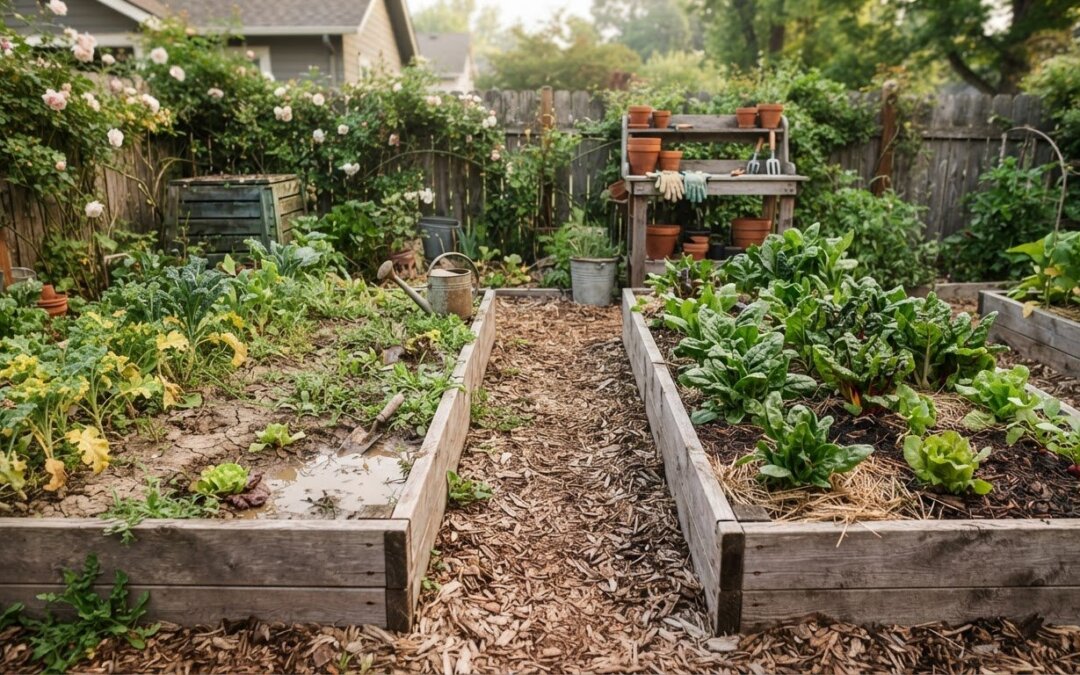
What if your struggling plants don’t need more attention, but care that’s better timed or simpler? When leaves yellow or seedlings stall, it’s easy to wonder whether one early slip has spoiled the whole garden. The most useful gardening mistakes to avoid often come down to mismatches in timing, soil, water, and observation, not a lack of effort.
It’s understandable to feel unsure when advice about watering, planting dates, and soil seems to conflict. Most setbacks can be investigated one step at a time, and a rough start doesn’t mean the season is lost. This guide explains why common gardening mistakes happen, how to spot and correct them, and how to build a manageable, earth-friendly routine that gives plants a better chance to thrive.
We’ll cover ten frequent problems, from planting too early or too closely to overwatering and overlooking soil health. You’ll also find practical fixes and a straightforward way to diagnose what’s happening before changing several things at once.
Key Takeaways
- Common gardening mistakes to avoid often involve planning, soil, water, timing, spacing, and overlooking changes in your plants.
- Wilting or yellowing can have several causes. Check soil moisture, drainage, and growing conditions before deciding what to change.
- Planting depth, timing, and spacing all affect how well plants establish and compete for room, light, and water.
- Before starting over, look for healthy growth and work through a simple diagnosis: observe, check conditions, identify likely causes, then adjust.
- A few notes on planting dates, varieties, locations, and results can help you make more confident choices next season.
What gardening mistakes do beginners make most often?
A garden that struggles isn’t proof you’re bad at gardening. Setbacks are common and often correctable, though not every plant will recover. Start by noting what’s happening and checking the conditions around the plant instead of changing everything at once.
Many beginner problems fall into a few connected groups: planning, soil, water, timing, spacing, and observation. A plant may be in the wrong spot, receive too much or too little water, or have too little room to grow. These gardening mistakes to avoid often begin with a reasonable impulse, such as planting enthusiastically or following advice that worked for someone else.
Gardening brings together a living plant and its changing environment. A high-level overview of essential gardening principles can offer useful background, but the conditions in your own growing space still matter. A plant that wilts during a hot afternoon and looks better later may be experiencing a short-lived change. A problem that persists or worsens deserves a closer look. Treat symptoms as clues, not proof of a single cause.
Why do common gardening mistakes happen?
It’s easy to choose seeds or plants before noticing how much sun a bed receives, where water collects, or how much space is available. Enthusiasm can also make a busy planting plan feel exciting at first, then difficult to keep up with.
Advice can disappoint when it’s copied without accounting for weather, soil, season, and the needs of a particular plant. A watering schedule that suits one garden may leave another too wet or too dry. Treat the result as useful information, not a personal failure. Try one small change, observe what follows, and adjust based on what you see.
Match care to the plant and its growing conditions, and you’ll prevent many avoidable setbacks.
Which early planning mistakes are easiest to prevent?
Before choosing what to grow, look at the site. Note how much direct sunlight reaches it, estimate how much room plants will need as they mature, and check growing-season information for your area. Then compare those conditions with each plant’s needs. A favorite crop may not suit every bed or container.
Starting with too many crops can make watering and monitoring harder, especially when plants have different needs. Begin with a modest planting and a short list of achievable priorities. For example, choose a few crops you’re genuinely interested in, leave enough room to tend them, and build from what you learn. A smaller, well-observed garden gives you clearer feedback than a crowded one that’s difficult to manage.
How do soil and watering mistakes affect garden growth?
Watering and soil problems can look alike at first. A plant may wilt in dry soil because it needs water, but roots in saturated soil can also struggle to take up what they need. Yellowing or slow growth can point to other issues too, so treat symptoms as clues rather than a diagnosis.
Watering frequency depends on soil, weather, and plant needs, not a universal calendar. Sandy soil usually drains more quickly than dense clay, while containers may dry out differently from garden beds. Check moisture below the surface before watering again, and notice whether the bed drains after rain or irrigation. If a plant keeps wilting despite damp soil, inspect its growing conditions and roots where practical before adding more water.
How can you tell if watering is the problem?
Soil that stays wet may suggest slow drainage or overly frequent watering. Soil that’s dry below the surface can mean roots aren’t receiving enough moisture, even if the top looks damp. Wilting alone doesn’t settle the question. Check the soil around the root zone, consider recent weather, and look for other signs of stress before changing your routine.
What soil mistakes should gardeners avoid?
Using the wrong growing medium can make it harder to manage moisture and support healthy roots. Garden soil, potting mix, and raised-bed blends aren’t interchangeable: garden soil is suited to in-ground beds, potting mix is formulated for containers, and raised-bed blends are intended for elevated beds. Before adding amendments, look at how the soil holds water, drains, and feels when moist. This overview of common landscape mistakes includes reminders about planting too deep and piling mulch against trunks, two choices that can affect plant health.
Adding fertilizer before finding the cause of poor growth may not help. If the issue is waterlogged soil, compacted ground, or unsuitable conditions, extra nutrients won’t correct the underlying problem and may add further stress. First check moisture, drainage, and the plant’s needs. Then decide whether a soil change or feeding is appropriate.
For a raised bed, estimate how much growing medium the space needs before filling it. Michelle In The Meadow’s raised-bed soil calculator can help with that planning. For practical guidance on growing conditions and soil care, explore more gardening education.
Which planting, spacing, and timing mistakes can limit a harvest?
A promising crop can get off to a slow start if it’s planted in cold soil, sown too late for its growing season, or buried at the wrong depth. Crowding creates a different problem: nearby plants compete for light, water, and room, while limited airflow can make them harder to inspect and care for. These are practical gardening mistakes to avoid, and each calls for a different check.
Planting date, seed depth, and spacing are three separate decisions, so check the guidance for each one. A seed packet’s instructions are a useful starting point for sowing depth and spacing. For timing, pair crop-specific guidance with frost information and current conditions. There’s no single calendar date that works across the United States.
Why can planting at the wrong time set plants back?
Seeds germinate and young plants establish best when conditions suit their crop. Planting too early can expose tender growth to cold or unsuitable soil; planting too late may leave a crop with less time to mature before seasonal conditions change. Use frost dates as one clue, not a guarantee, and follow crop-specific planting guidance. The USDA Plant Hardiness Zone Map, updated November 15, 2023, helps gardeners assess where perennial plants are likely to survive winter. It isn’t a substitute for vegetable sowing dates or frost information.
What happens when seeds or seedlings are planted incorrectly?
A seed sown too deeply may struggle to reach the surface; one planted too shallowly may dry out or fail to establish, depending on the crop and conditions. Seedlings set too deep can also have trouble settling in. Follow the packet or reliable crop guidance rather than assuming every seed should be covered by the same amount of soil.
Overcrowding can shade leaves, restrict airflow, and make watering, weeding, and harvesting more difficult. Check mature spacing recommendations, not just how small plants look on planting day. If seedlings emerge too close together, thinning may be the gentlest option. Transplant only when the crop tolerates it and the seedlings are healthy enough to handle the move; not every plant responds well to being disturbed.
Before planting, check the crop’s recommended depth and spacing, then confirm that the timing suits your growing conditions. That small pause can make the garden easier to manage and give each plant a better chance to develop.
Can you fix a struggling garden without starting over?
A struggling bed can feel discouraging, but it doesn’t always need a full reset. First, notice what’s still growing well. Healthy leaves, sturdy stems, or new growth can help you decide what to keep and where to focus. Some plants may not recover, but a closer look can reveal whether the problem affects one plant, a particular spot, or the whole bed.
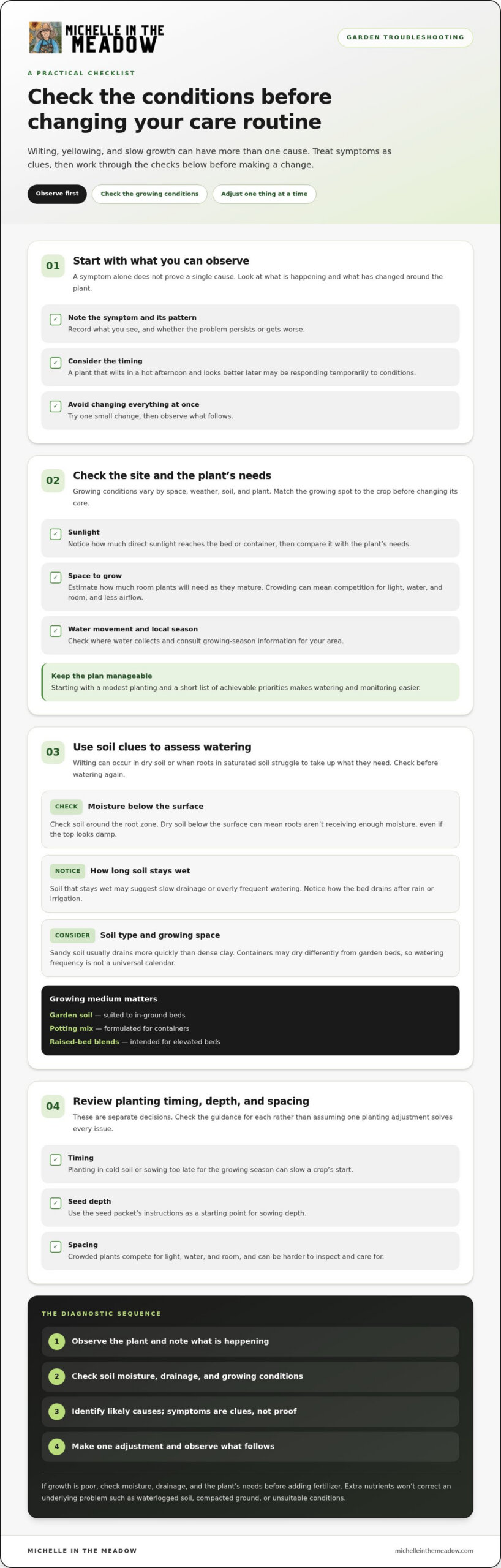
Use this simple sequence before making changes:
- Observe. Note which plants are affected, which parts look different, and whether symptoms are spreading or staying the same.
- Check the soil and conditions. Feel the soil below the surface, look for standing water or poor drainage, and consider recent changes in weather, sunlight, or care.
- Identify likely causes. Compare affected plants with nearby healthy ones. Check leaves and stems for visible pest activity, and consider whether their location or treatment differs.
- Adjust one thing. Choose a change that addresses a clue you’ve observed, then watch what happens before adding another intervention.
What should you check first when plants look unhealthy?
Look for patterns. Are the leaves changing color at the edges or across the whole plant? Are stems firm or damaged? Is the soil consistently wet, dry beneath the surface, or slow to drain? Check for insects or other visible signs of pests before choosing a control method. If one plant is struggling beside a healthy one, compare their light, spacing, soil moisture, and recent care. The difference may point toward a useful next check, though it doesn’t prove the cause on its own.
How can you test a fix without creating new problems?
Pick one plausible correction, such as adjusting watering if the root-zone soil is dry, and give the plant a reasonable chance to respond based on its condition and growth. Keep a brief note of what you changed and what you observe. Avoid changing watering, adding fertilizer, and applying pest treatments all at once. If the plant improves, you’ll have a clearer idea of what helped. If it doesn’t, reassess instead of automatically adding another treatment.
Starting over may make sense if a plant is dead, badly damaged, or continuing to decline despite a careful assessment. It can also be sensible to remove a plant when an ongoing problem threatens nearby healthy growth. But don’t discard an entire bed just because some plants are struggling. These gardening mistakes to avoid include reacting too quickly and making several changes before you understand the clues.
For more practical, approachable ideas as you assess your garden, explore gardening guidance and tutorials.
How can you avoid repeating gardening mistakes next season?
You don’t need a complicated schedule to learn from your garden. A brief, regular check can help you notice changes in plant health, soil moisture, weather, and visible pest activity before a small concern becomes harder to understand. The goal isn’t to prevent every setback. It’s to spot patterns and make next season’s choices with a little more confidence.
What should you keep track of in a garden notebook?
A notebook can be a page in a paper journal or a simple note on your phone. Record the details that help explain how a plant did:
- What and when: Note the crop or variety and its planting or sowing date.
- Where: Record the bed, container, or spot where it grew, along with notable conditions such as shade or exposure.
- What changed: Jot down adjustments to watering or soil, and any noticeable weather shifts or pest activity.
- What happened next: Note outcomes such as steady growth, wilting, or a harvest that came later than expected.
Keep entries short. If a plant improved after a watering adjustment, that observation may help you recognize a similar pattern later. If it didn’t, the note can stop you from repeating the same response without checking other possible causes. Use your records to refine the plan, not to chase a perfect season.
Which small habits make gardening easier over time?
Choose a manageable routine that fits your garden. On regular visits, look over leaves and stems, feel the soil below the surface, and notice changes in weather or visible pest activity. A quick check is most useful when it helps you catch a change and decide whether closer inspection is needed.
Prepare only what the next step calls for. Before sowing, gather the needed supplies and ready the planting space. Before taking on a recurring task, consider whether a garden tool recommendation for beginners would make it easier. A tool is optional, not a cure-all, so choose one only when it solves a specific job you do often.
These small habits help turn gardening mistakes to avoid into useful lessons instead of reasons to give up. For a new raised bed, the raised-bed soil calculator can help estimate the fill volume for planning. You can also continue with related beginner gardening guides for practical ideas to carry into your next planting.
Grow a Better Garden One Small Step at a Time
A thriving garden doesn’t depend on getting everything right the first time. The most useful gardening mistakes to avoid often start with rushing past the basics: match plants to their growing conditions, check soil before changing your watering routine, and give crops the timing and space they need.
If plants struggle, pause before starting over. Notice what’s healthy, look for patterns, and test one practical adjustment at a time. A few simple notes about planting dates, varieties, and results can make next season’s decisions clearer without turning gardening into homework.
Keep learning at a pace that feels manageable. Michelle In The Meadow offers approachable educational blog posts and video guides, plus a raised-bed soil calculator to support garden planning. Explore practical gardening guides and planning tools to find helpful next steps for your garden.
Every season offers new clues. Start small, stay curious, and let your garden teach you as it grows.
Frequently Asked Questions
Is overwatering worse than underwatering?
Neither is always worse; the impact depends on the plant, soil, weather, and how long the condition lasts. Soil that stays too wet can limit healthy root function, while too little moisture can stress plants and slow growth. Before changing your watering routine, check moisture below the surface and notice how well the soil drains. Avoid watering by the calendar alone, since conditions can change from week to week.
Can a garden recover after common gardening mistakes?
Many gardens can recover, especially when you identify the cause early and choose a correction that fits the plant’s condition. First, note what’s still healthy, then assess moisture, soil, light, spacing, and visible pest activity. Make one reasonable adjustment and observe the response before trying something else. Some severely damaged plants may not recover, so there’s no guaranteed fix. A careful diagnosis can still help you protect nearby healthy growth.
How often should I water my garden to avoid mistakes?
There’s no single watering schedule that works for every garden. Needs vary with the plant, soil, weather, whether it’s growing in a container or bed, and its stage of growth. Check moisture near the root zone and water when conditions call for it. If the soil remains wet for long periods, investigate drainage rather than adding more water. Regular checks are more useful than following a fixed calendar regardless of conditions.
What happens if I plant seeds too deep?
Seeds planted too deep may struggle to reach the soil surface, while seeds sown too shallowly may dry out or fail to establish well. The right depth depends on the crop, so check the seed packet or a reliable crop-specific guide before sowing. If seedlings don’t emerge as expected, review planting depth alongside moisture, temperature, and seed quality. Avoid assuming depth is the only possible cause of poor germination.
Can I use regular garden soil in a raised bed?
It depends on the soil’s texture, drainage, and the plants you plan to grow. Dense or poorly draining soil may not work well by itself in a raised bed, so consider the bed’s depth and the soil already in place before choosing a growing mix. Estimate how much material the bed needs with a raised-bed soil calculator, then plan a blend suited to the site and intended plants.
Why are my garden plants growing slowly?
Slow growth can have several causes, including unsuitable light, inconsistent moisture, compacted or poorly draining soil, crowding, or conditions that don’t suit the plant. Look for patterns among affected plants and check one factor at a time. Don’t add fertilizer automatically. It may not address the underlying issue and can create additional problems. First review the growing conditions and recent care, then decide whether a specific change is warranted.
Should I remove a plant with yellow leaves?
Not necessarily. A few yellow leaves may be part of natural aging or a temporary stress, while widespread or continuing yellowing can signal a problem worth investigating. Check the plant’s overall condition, soil moisture, drainage, light, and recent care before deciding. If symptoms keep spreading or the plant continues to decline, consider whether a targeted correction is appropriate or whether removal would help protect nearby healthy growth.