
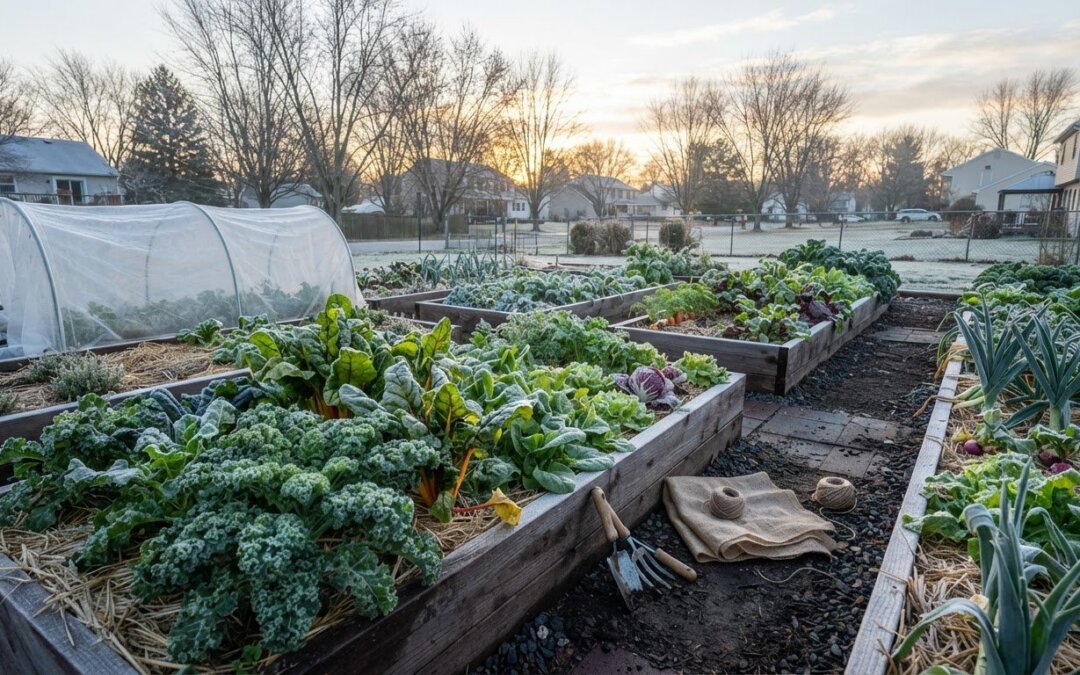
What if a hard frost didn’t mean the end of your harvest? The right winter garden vegetables can keep your beds productive through colder months, but success depends on more than choosing crops that tolerate a chill. Timing, plant maturity, and the conditions in your garden all matter.
If you’re unsure what will survive frost, when to sow, or whether you need a cold frame, start by checking your local frost dates and the growing information for each variety. Short days slow growth, and a hardiness zone doesn’t tell you exactly when frost will arrive. A little planning helps you choose crops that fit your conditions without overcomplicating your garden.
In this guide, you’ll find 11 cold-hardy vegetables, from leafy greens to roots and alliums, along with practical ways to match them to your winter growing conditions. Learn how to plan sowing around local frost dates and crop maturity, why late summer or early fall is often the time to get started, and when mulch, frost cloth, or a simple tunnel may help protect your harvest.
Key Takeaways
- Choose winter garden vegetables by the harvest you want, from quick-picking greens to roots and alliums.
- Match crops to your climate, sowing window, available space, and time to maturity.
- Use local frost dates and seed-packet maturity information to plan sowing.
- Choose mulch, frost cloth, or a simple cover based on your garden’s winter conditions.
- Start with a few suitable crops and record sowing dates, frost events, protection, and harvests to improve next season’s plan.
What makes winter garden vegetables different from summer crops?
Winter gardening isn’t summer gardening carried into colder weather. It means growing or harvesting crops during cool temperatures and shorter days, when sunlight is limited and soil may stay cold. Some vegetables are planted earlier, then harvested through winter. Others can be sown in late summer or fall and picked after the cold season begins. This distinction matters because a crop that survives winter may not grow quickly, or at all, in the middle of it.
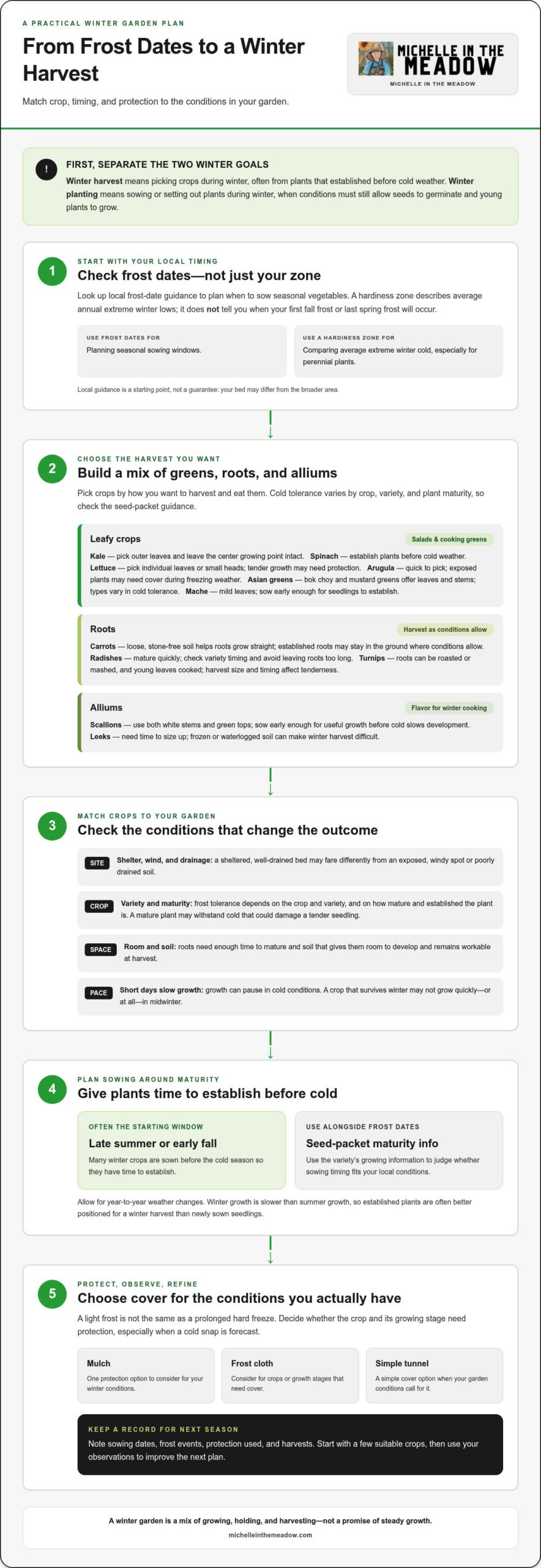
Winter harvest means picking crops during winter; winter planting means sowing seeds or setting out plants during winter. A winter harvest often depends on crops that had time to establish before cold weather. Winter planting, by contrast, depends on conditions that allow seeds to germinate and young plants to grow.
Winter garden vegetables aren’t a single, fixed group. Frost tolerance depends on the crop and variety, how mature and well-established the plant is, and the conditions around it. A sheltered bed with well-drained soil may fare differently from an exposed spot where wind strips away warmth. A light frost also isn’t the same as a prolonged hard freeze. For general background on winter growing spaces and cultivation approaches, see this winter garden overview.
Does winter gardening mean plants keep growing all season?
No. Shorter days and cold temperatures slow plant growth, and growth can pause in some conditions. A mature plant with an established root system may withstand cold that would damage a tender seedling, but it won’t necessarily keep producing new leaves at a summer pace. Think of winter gardening as a mix of growing, holding, and harvesting, not a promise of steady growth. In colder conditions, plants may need protection, and the harvest may end when the weather becomes too severe.
How do frost dates and hardiness zones help gardeners plan?
Use both, but for different purposes. The USDA Plant Hardiness Zone Map, updated in November 2023, groups areas by their average annual extreme winter low, using 30-year climate data. It helps you compare the winter cold a perennial plant may face, but it doesn’t tell you when your first fall frost or last spring frost will occur. Local frost dates are more useful for planning when to sow seasonal vegetables.
Look up frost-date guidance for your area, then consider your specific garden. A low spot, windy bed, or poorly drained soil can create conditions that differ from the broader local forecast or zone. The USDA map is a useful climate guide, not a planting calendar or guarantee. Pair it with seed-packet maturity information and your own observations, and allow for year-to-year weather changes.
11 Winter garden vegetables for a harvest of greens, roots, and alliums
These eleven crops offer a mix of salad leaves, cooking greens, roots, and alliums. No list guarantees an outdoor harvest everywhere: results depend on local climate, sowing date, crop variety, plant maturity, and whether you add protection. Some crops may keep producing in mild weather, while others are best grown before winter and harvested after growth slows.
Which leafy winter vegetables are worth trying?
For salads, consider lettuce, arugula, Asian greens, and mache. Kale and spinach can be picked leaf by leaf or cooked, and their young leaves also work in salads. Cold tolerance varies by variety and plant maturity, so check seed-packet guidance. If a cold snap is forecast, decide whether the crop and its growing stage need protection.
- Kale: Use leaves cooked or raw. Harvest outer leaves and leave the center growing point intact for continued growth.
- Spinach: Tender leaves work in salads and cooked dishes. Sow in time for plants to establish before cold weather.
- Lettuce: Harvest individual leaves or small heads for salads. Choose a suitable variety and protect tender growth in colder conditions.
- Arugula: Peppery leaves add bite to salads. It’s quick to pick, but exposed plants may need cover during freezing weather.
- Asian greens: Leaves and stems, including those of bok choy and mustard greens, work in stir-fries or soups. Types differ in cold tolerance and may bolt when conditions shift.
- Mache: Also called corn salad, it has mild leaves often eaten fresh. Sow early enough for seedlings to establish before winter.
Which winter roots and alliums can round out the bed?
Roots can add variety to winter meals and, in suitable conditions, can be harvested as needed. They need enough time to mature and soil that gives them room to develop and remains workable at harvest. Alliums bring flavor to winter cooking, though their establishment and harvest timing vary by type.
- Carrots: Use the roots in cooked dishes or salads. Loose, stone-free soil helps them grow straight, and established roots may be left in the ground where conditions allow.
- Radishes: Crisp roots add crunch to salads or can be roasted. They mature quickly, so check variety timing and avoid leaving roots in the ground too long.
- Turnips: Roast or mash the roots, and cook young leaves. Harvest size and timing affect tenderness.
- Scallions: Both white stems and green tops season soups and other dishes. Sow early enough for useful growth before cold weather slows development.
- Leeks: The pale stems are excellent in soups and braises. They need time to size up, and frozen or waterlogged soil can make winter harvest difficult.
How can gardeners get more from each crop?
For kale, spinach, and some other leafy crops, pick outer leaves gradually while protecting the central growing point. Harvest roots selectively if the soil remains workable, rather than lifting the whole row at once. Choose winter crops by the harvest you want: quick salad leaves, repeat-picked greens, or roots and alliums for hearty meals.
For help matching sowing plans to your season, explore seasonal gardening guidance alongside your seed-packet instructions.
How to choose winter garden vegetables for your conditions
The most useful crop is one that fits your meals, planting window, available space, and likely winter conditions. Don’t choose by cold tolerance alone. A crop also needs enough time to reach a harvestable size before short days and cold slow its growth. Check the variety’s days to maturity and count backward from your expected harvest, leaving time for the plant to establish.
Which crops suit quick salads, cooked greens, or roots?
Start with what you like to eat. For quick salads, consider arugula, lettuce, spinach, or mache. Kale and Asian greens can supply leaves for cooking, while carrots, radishes, and turnips offer roots for raw or cooked dishes. Scallions and leeks bring allium flavor to soups and other meals. These are different harvest goals, not a ranking of crops that will succeed in every garden.
| Crop | Edible part | Planting consideration | Protection note |
|---|---|---|---|
| Kale | Leaves | Allow time for plants to establish before winter. | Cover if exposure or forecast cold threatens leaves. |
| Spinach | Leaves | Sow early enough for useful growth before days shorten. | A cover can help during cold snaps. |
| Lettuce | Leaves or heads | Choose a variety suited to your season and harvest style. | Tender growth may benefit from a cover. |
| Arugula | Leaves | Plan for repeated picking while plants are growing. | Protect exposed plants during freezing weather. |
| Asian greens | Leaves and stems | Check variety timing and harvest size. | Use cover if local cold conditions call for it. |
| Mache | Leaves | Sow early enough for seedlings to establish. | Protection depends on exposure and winter severity. |
| Carrots | Roots | Give roots time to mature in loose soil. | Mulch may help where soil conditions allow. |
| Radishes | Roots | Use maturity information to time a quick harvest. | Cover young plants if needed in a cold snap. |
| Turnips | Roots and leaves | Allow time for roots to size up before harvest. | Protection depends on local conditions. |
| Scallions | Stems and leaves | Sow with enough lead time for useful growth. | Cover if the bed is exposed to severe cold. |
| Leeks | Stems | Plan ahead, since they need time to size up. | Consider how frozen or wet soil may affect harvesting. |
How should garden space and protection affect your choices?
Compact greens can suit a small bed or protected frame, while root crops need enough depth and workable soil. Open beds may be enough in a mild, sheltered spot; lightweight row covers or cold frames can help buffer harsher exposure. Protection isn’t necessary for every bed, so base your choice on the forecast, garden site, and crop stage. For practical help planning a growing space, explore seasonal gardening guidance.
Choose winter garden vegetables by the harvest you want, then match their maturity needs and protection to the space and season you have.
When to plant winter vegetables and protect them from cold
A winter harvest usually starts before winter. Crops need time to germinate, develop roots, and grow to a useful size while conditions still support active growth. Once days shorten and temperatures drop, growth may slow sharply. Sowing too late can leave plants small when the coldest weather arrives. Use a local planting window rather than a single calendar date for every region.
How do you work backward from your local frost dates?
Plan from the harvest you want, then work back to sowing. Local first-frost information gives you a seasonal reference, while the seed packet helps estimate how long a particular variety needs. Read both together, and allow time for the plant to establish before conditions become harsh.
- Check your local first-frost information. Look for guidance from a nearby extension service or reliable local gardening resource. Treat the date as an estimate, since frost can arrive earlier or later in a given year.
- Read the maturity information. Days to maturity may be counted from sowing, transplanting, or another stage, depending on the seed company and crop. Check the packet’s explanation before using the number in your calculations.
- Plan your sowing date. Count back from your intended harvest, allowing enough time for the crop to reach a useful stage and establish before colder weather. Adjust for your garden’s exposure and the protection you can provide.
This approach won’t make the weather predictable, but it gives you a sound starting point. If you’re sowing more than one crop, plan each one separately: a quick-growing green and a slow-to-size-up allium won’t share the same timing. Record sowing dates and how the plants develop. Your observations can help you refine next season’s plan.
What protection can help winter vegetables keep producing?
Protection is a tool, not a requirement for every bed. Choose it based on your site, the forecast, and the crop’s stage. A lightweight row cover rests over plants and can soften exposure to cold and wind. Hoops hold fabric above the foliage, leaving space for plants to grow and making the cover easier to remove or adjust. A cold frame is a more enclosed, transparent structure that shelters crops while letting in light.
None of these methods removes all freeze risk. Their effect depends on the materials, how securely they’re installed, and the weather outside. Follow the covering’s instructions, check plants beneath it, and make sure the enclosure doesn’t overheat on sunny days. If severe cold is forecast, protection may not be enough for every crop, especially young or tender growth.
Plan winter garden vegetables by matching local frost timing to each crop’s maturity, then add protection where your conditions call for it. For more seasonal planting help as you map out your sowing dates, explore practical gardening guidance.
Start a simple winter vegetable garden with a manageable plan
Your first winter garden doesn’t need to include every crop or every kind of cover. A small, well-chosen planting can teach you more than a crowded bed: you’ll see which crops establish in your conditions, what survives cold spells, and what your household enjoys harvesting. Treat the first season as a practical experiment, not a test you have to pass.
What is a manageable first winter bed?
Start with an existing garden bed or suitable containers. Choose a few crops based on your winter conditions and how you like to eat. For example, if you want repeated leaf harvests, try kale and spinach. If you have workable, sufficiently deep soil, you might add carrots. If your spot is exposed or winters are severe, begin with crops you can protect rather than assuming every vegetable will overwinter outdoors.
Before sowing, check the seed packet for the variety’s maturity guidance and compare it with your local growing window. Plant a manageable amount of each crop, leaving room to reach plants for watering and harvesting. You can always add another crop next season. A modest plan is easier to observe and adjust, especially if this is your first time growing winter garden vegetables.
What should you keep on hand for winter gardening?
A few simple supplies can make planning and care easier. Keep seed labels or packets so you can refer to variety names, sowing notes, and maturity information. A garden notebook, or a simple record on your phone, helps you connect those plans with what happens outside.
- Seed labels: Save them with your planting notes so you can compare varieties and maturity guidance later.
- Row-cover material and simple supports: These provide a way to cover plants when local conditions call for added protection. Follow the material’s instructions and check plants beneath it.
- A garden notebook: Record sowing dates, frost events, when and how you covered plants, and what you harvested. Note problems too, such as slow germination or leaves damaged by cold.
- A raised-bed soil calculator: If you’re filling or refreshing a raised bed, a calculator can help estimate the soil volume needed from the bed’s dimensions.
Make notes as the season unfolds, not just at harvest time. Was the bed sheltered? Did the cover stay in place? Which crop was ready when you wanted it? Those details can help you adjust sowing dates, crop choices, and protection next year.
Keep the plan flexible. Winter weather varies, and a crop that does well in one bed may need different timing or shelter in another. For practical, earth-friendly gardening ideas and seasonal planning resources, explore Michelle’s gardening education and choose a small next step that fits your space.
Make this winter a season of learning
Your first winter garden doesn’t have to be perfect to be worthwhile. Use it to discover how your space responds to cold, which harvests you look forward to, and what you might adjust next season. A small experiment can build confidence just as surely as a full bed.
As you plan, keep your goal simple: grow something you’ll enjoy, notice how it fares, and use those observations to guide your next choice of winter garden vegetables. The most useful garden plan fits your real conditions and feels manageable enough to try.
For fresh ideas as your garden changes through the seasons, explore more practical gardening guides, including blog posts, videos, and planning resources. Start with one thoughtful choice, learn from the season, and let your garden grow with you.
Frequently Asked Questions
Can winter vegetables survive a freeze?
Some winter vegetables can survive a freeze, but tolerance depends on the crop, its maturity, and how severe and long the cold lasts. A brief light frost may cause little damage to an established hardy plant, while prolonged or hard freezing can injure it. Row covers or cold frames may offer some protection, but they can’t remove all risk. Check crop-specific guidance and your local forecast before deciding whether to cover or harvest.
How do I know when to plant winter garden vegetables?
Use local frost-date information alongside the crop’s days-to-maturity guidance and the seed packet’s instructions. Check how the packet counts maturity, since the estimate may begin at sowing or transplanting. A winter harvest often depends on giving plants time to establish before short days and colder weather slow growth. Work backward from your likely local conditions rather than relying on one nationwide planting date for winter garden vegetables.
Do winter vegetables need full sun?
Light needs vary by crop, so check growing guidance for the varieties you plan to sow. In general, choose the brightest practical spot available, especially if your garden has shaded corners or nearby structures. Even a sunny bed receives less usable daylight during winter’s shorter days, and growth may be slower than in the same location during warmer, longer days. Give plants realistic time to develop, and avoid judging them by summer growth rates.
Can I grow winter garden vegetables in containers?
Yes, many compact leafy crops can grow in containers if the pot drains well, holds enough growing medium for the crop, and has suitable drainage openings. Check the plant’s space needs before choosing a container. Unlike garden soil, the smaller volume around container roots can change temperature more quickly, so pots may need extra attention during cold spells. Check moisture regularly, since containers can dry differently from in-ground beds.
How often should I water winter vegetables?
There’s no single weekly schedule that suits every winter bed. Water needs depend on rainfall, soil type, container size, temperature, and how actively plants are growing. Check the growing medium directly before watering; it should not stay waterlogged around roots. Covered beds may receive less rain than open ground, while containers can dry faster. Recheck after changes in weather, since a mild, windy stretch can alter moisture needs.
Are winter vegetables sweeter after frost?
Some cold-exposed crops, including certain roots and leafy vegetables, may taste sweeter after cool weather, but the response varies by crop, variety, and growing conditions. Don’t assume every vegetable improves after frost, and don’t expose plants to freezing conditions just to change flavor. Harvest according to crop guidance, and protect plants when the forecast exceeds their tolerance. Taste can also vary with maturity and growing conditions before cold arrives.
Can I start winter vegetables from seed in winter?
Sometimes, but the right timing depends on the crop, local conditions, and whether you’re sowing indoors or outdoors. Seeds started indoors have different conditions from those sown directly into cold garden soil. Some crops need to establish before short days and cold slow growth, while others follow different sowing schedules. Read the seed packet for the recommended sowing method and timing, rather than assuming winter is suitable for direct sowing.