

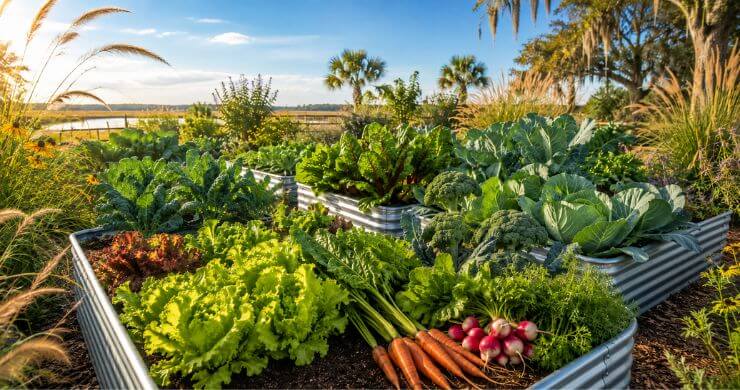
Key takeaways:
- Northeast Florida's Zone 9A/9B climate offers a fall growing window that avoids the heat and pest pressure of spring.
- Cool-season crops such as broccoli, lettuce, carrots, and kale thrive in autumn conditions from September through October.
- Preparation begins in late summer with soil testing, bed refurbishment, and seedling starts indoors.
- UF/IFAS resources confirm that fall often yields stronger, cleaner harvests than spring for most Zone 9A/9B gardens.
Many gardeners in Northeast Florida still treat spring as the default planting season, a habit inherited from cooler climates further north. A closer look at Zone 9A/9B conditions tells a different story: fall vegetable gardening in Northeast Florida often outperforms spring on almost every measure that matters, and UF/IFAS research supports the same conclusion.
Temperatures moderate as summer heat retreats, pest pressure eases, and rainfall patterns become more predictable. The result is a second growing season that produces cleaner leafy greens, sweeter root crops, and a longer harvest window before winter cold arrives. The sections that follow cover the reasons fall works, when to plant, which vegetables perform best, and how to prepare a Northeast Florida garden bed for autumn success.
Why Fall outperforms Spring in Northeast Florida
Northeast Florida's spring window is deceptively short. By late May, daytime temperatures climb quickly and humidity intensifies, which stresses tomatoes, peppers, and other warm-season crops before they can finish producing. Fall offers a longer moderate window in the same USDA Zone 9A/9B climate.
Fall planting takes advantage of cooling nighttime temperatures without the pressure of a fast-approaching summer heat wave. Cool-season crops that struggle through Florida springs settle in comfortably as autumn temperatures drop, giving them the steady conditions they need to produce well.
The UF/IFAS Duval County Extension describes September in Northeast Florida as a transitional month that starts hot and often brings sudden tropical rains, but ends with cooler nights. By October, the region shifts firmly into cool-season conditions with sunny days, lower humidity, and cool nights that most cool-weather vegetables prefer. Pest and disease pressure drops as summer humidity fades, giving fall crops a cleaner environment to establish.
When to Start Fall Vegetable Gardening in Northeast Florida
Timing determines the success of a fall garden more than almost any other factor. Zone 9A/9B enjoys a long, forgiving growing season, which leaves a generous window for cool-season crops from September through the early winter months.
The Florida Vegetable Gardening Guide from UF/IFAS Extension provides the statewide planting calendar most Northeast Florida gardeners use as a reference. Most cool-season vegetables can be direct-sown or transplanted from September through October, with some crops extending into November for later successions. Working backward from the expected first frost helps gardeners choose varieties that will mature in time.
Warm-season holdovers like tomatoes and peppers need an earlier start, often from transplants set out in August or early September. UF/IFAS Duval County Master Gardeners recommend starting cool-season seedlings indoors in early September under fluorescent or LED tube lights. Gardeners then harden off transplants for a week or two before moving them into outdoor beds by October. Waiting too long shortens the harvest window as daylight decreases through November.
Best Vegetables for a Northeast Florida Fall Garden
Cool-season crops define the fall garden in Zone 9A/9B. According to UF/IFAS Gardening Solutions, fall is an excellent time to start a Florida vegetable garden, with broccoli, lettuce, carrots, Brussels sprouts, and radishes among the strongest performers. Leafy greens such as kale, collards, mustard, and Swiss chard also thrive as temperatures drop through October.
Root crops perform especially well in fall because cooler soil sweetens carrots, beets, turnips, and radishes over the growing period. Brassicas including cabbage, broccoli, and cauliflower head up well when nighttime temperatures fall consistently into the 50s and 60s. Onions and leeks can be planted from September onward, per the Florida Vegetable Gardening Guide planting calendar.
Warm-season crops still have a place in early fall if planted from healthy transplants. Tomatoes set out in late August often produce a second harvest before the first frost, and peppers can continue producing well into November. Herbs like parsley, cilantro, and dill perform better in autumn than in the humid summer months. Additional Zone 9 crop guidance appears in the site's gardening articles for home growers.
Setting Up the Garden for a Successful Fall Season
Successful fall gardens start with preparation in July and August, well before planting begins. UF/IFAS Duval County Extension recommends assessing the garden site for at least six to eight hours of direct sunlight per day, since fall's lower sun angle changes shade patterns. Soil pH testing through a local Extension office guides amendment decisions and helps cool-season crops absorb nutrients efficiently.
Compost and organic matter added weeks before planting rebuild the soil biology that hot summer months tend to deplete. Mulching moderates soil temperature during the warm start of the season and slows moisture loss. For pest deterrence, companion planting, row covers, and beneficial insect habitats help protect young seedlings during the transitional weeks of early fall.
Raised beds handle Northeast Florida's late-summer rainfall better than in-ground plots. Building or refurbishing beds ahead of planting season creates good drainage for hurricane-season downpours, which often continue into October. Gardeners planning new beds can size soil volume with a raised bed soil calculator before purchasing amendments.
Frequently Asked Questions
Gardeners preparing for a fall season in Northeast Florida often ask the same handful of questions before they plant.
What vegetables grow best in the fall in Northeast Florida?
Cool-season crops perform strongest in autumn conditions. Broccoli, lettuce, carrots, kale, radishes, and cabbage all handle the region's mild fall temperatures well. Root crops sweeten in cooler soil, and leafy greens produce longer harvests before winter arrives. Warm-season holdovers like tomatoes and peppers can still produce a fall harvest if transplants go out in late August or early September.
When should a fall garden be planted in Northeast Florida?
Most cool-season crops go into the ground between September and October. Seedlings often start indoors in early September, then move outdoors by October after hardening off. Working backward from the expected first frost helps gardeners choose varieties that will mature in time.
Is fall better than spring for vegetable gardening in Florida?
For most vegetable crops in Northeast Florida, yes. Fall brings milder temperatures, reduced pest pressure, and a longer moderate-weather window than spring, which quickly gives way to summer heat. Cool-season crops in particular perform far better in autumn conditions than they do in a Florida spring.
How long does the fall growing season last in Zone 9A/9B?
The fall growing window runs from September through the first frost, which typically arrives in late fall for Zone 9A/9B. A protected garden with cold covers can push some crops into December and January. Cool-season vegetables often continue producing through most of the winter in Zone 9A/9B.
Join the Meadow Community
What does fall vegetable gardening in Northeast Florida look like in your own backyard? I'd love to hear which cool-season crops are working for you this season, so drop a comment and share what's growing in your garden right now.
Leave a Reply