
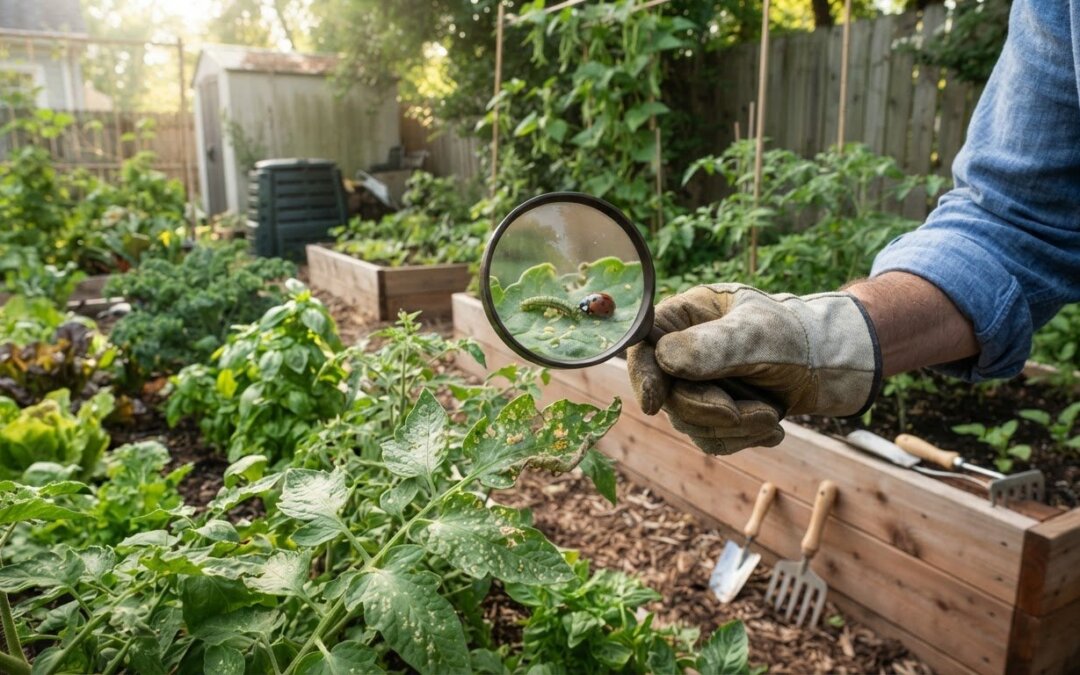
What if the insect on your tomato leaves is helping your garden, not harming it? When leaves are chewed, curled, or speckled, it’s easy to blame the first bug you spot. But similar-looking insects can play very different roles, and plant damage can also come from disease, weather, or other stress. Good garden pest identification starts with a closer look, not a rushed treatment.
Before you act, gather evidence from the plant and the insect. Note which parts are affected, what the damage looks like, and whether you can find eggs, droppings, webbing, or feeding activity nearby. This guide shows how to use those clues to narrow down possible causes, recognize beneficial insects, and decide whether monitoring or a measured response makes sense. You’ll also learn when symptoms may point to disease or growing conditions instead of pests.
Key Takeaways
- Chewed or spotted leaves don’t automatically point to insects; disease and environmental stress can leave similar clues.
- Use feeding patterns, insect appearance, location, and timing to make garden pest identification more reliable.
- Look for eggs and young insects as well as adults, since different life stages can look surprisingly unlike one another.
- Photograph the whole plant and close-up evidence, then monitor changes before deciding whether action is needed.
- Match your response to the certainty of your identification and the ongoing impact, keeping beneficial garden life in mind.
Garden Pest Identification Starts with the Clues on Your Plants
A ragged leaf can make you suspect a caterpillar, but damaged leaves don’t automatically mean an insect is responsible. Wind, disease, or watering stress can leave marks that look similar at first glance. Garden pest identification means matching a possible organism and its evidence to the damage, rather than guessing from one symptom.
Start with three questions: Which plant is affected? What pattern does the damage make? Can you see an organism or residue that fits the pattern? A pest is generally an organism considered harmful in a particular context; the broad overview of Pest (organism) explains why the label depends on its effects. In the garden, the goal is to connect the visitor to the evidence before deciding what to do.
Identifying a possible cause and choosing a response are separate steps. Keeping them separate helps you avoid acting on a guess or disturbing helpful garden life unnecessarily.
What evidence should you look for first?
Look over the whole plant before focusing on its most damaged leaf. Check both sides of leaves, stems, buds, the soil line, and nearby new growth. Some clues are easy to miss without looking closely: eggs, shed skins, fine webbing, frass (insect droppings), or sticky residue. A hand lens can reveal tiny details, while a clear phone photo gives you something to compare later.
Note where damage appears and how it changes. Are fresh leaves affected, or only older growth? Does the damage continue along nearby stems, or stop at one leaf? Are the marks fresh, with clean edges, or old and weathered? These details help you identify a pattern instead of relying on a single clue.
When might the cause not be a garden pest?
Chewed edges may suggest feeding, while stippling, spots, or wilting can have several possible causes. A symptom alone doesn’t settle the question: spots might be linked to disease, and wilting can follow dry soil, waterlogged roots, or heat stress. Look for a matching organism or other signs before deciding that an insect is to blame.
Think back to recent changes, too. Has watering shifted? Did temperatures swing, or was there pruning, cultivation, or another maintenance task near the plant? Disease and environmental stress can resemble pest damage, and more than one factor may be involved. Record the plant, damage pattern, visible clues, and recent conditions to give yourself a steadier starting point for the next identification step.
How to Identify Garden Pests by Their Signs and Life Stages
Once you’ve noted what’s affected, compare several clues: the feeding pattern, the organism’s appearance, where it’s hiding, and when it’s active. A leaf-chewing insect may feed at night and shelter beneath foliage during the day. Fine webbing around a stem or leaf joint points to another clue worth inspecting. Checking the plant at different times can reveal evidence a quick daytime glance misses.
Finding an insect on a damaged plant doesn’t prove that it caused the damage. It may be passing through, feeding on another insect, or using the plant for shelter. Look for a connection between its location, behavior, and the damage pattern before drawing a conclusion.
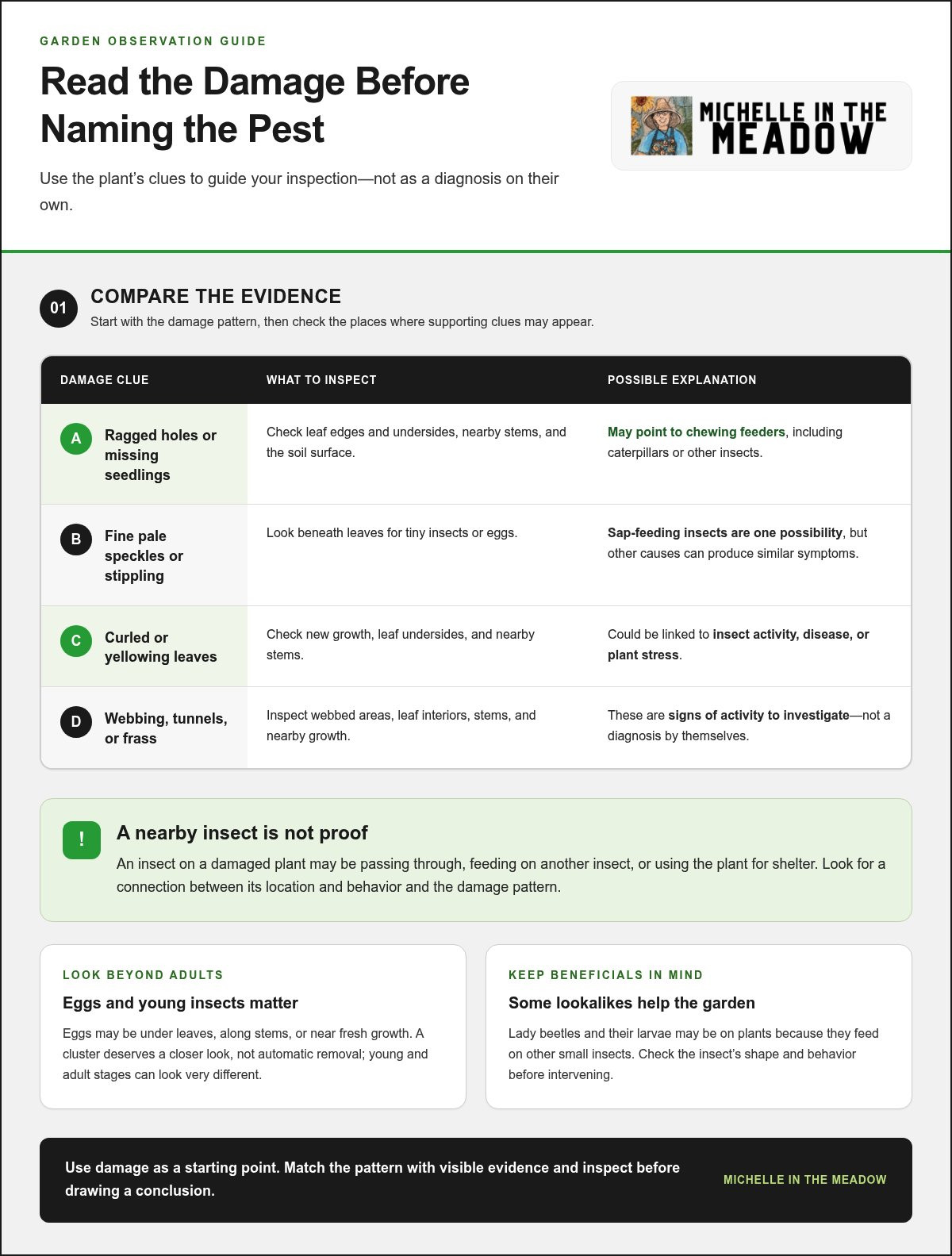
Match common damage patterns to likely pest groups
Use damage as a starting point, not a final diagnosis. Ragged holes or missing seedlings can point toward chewing feeders, but inspect nearby leaves, stems, and soil for additional evidence. Stippling, curling, or yellowing may be associated with sap-feeding insects, yet disease and growing conditions can produce similar symptoms.
Webbing, tunnels inside leaves or stems, and frass are clues to investigate. Check where each appears and whether you can find an organism nearby. Use the comparison below to guide your inspection, then look for evidence that confirms or challenges the possibility.
| Damage clue | What to inspect | Possible explanation |
|---|---|---|
| Ragged holes or missing seedlings | Leaf edges, undersides, nearby stems, and the soil surface | Chewing feeders, including caterpillars or other insects |
| Fine pale speckles or stippling | Leaf undersides for tiny insects or eggs | Sap-feeding insects, though other causes are possible |
| Curled or yellowing leaves | New growth, leaf undersides, and nearby stems | Possible insect activity, disease, or plant stress |
| Webbing, tunnels, or frass | Webbed areas, leaf interiors, stems, and nearby growth | Evidence of activity to investigate, not a diagnosis on its own |
Recognize eggs, larvae, and beneficial lookalikes
Eggs may be tucked under leaves, laid along stems, or clustered near fresh growth. A cluster deserves a closer look, not automatic removal. Its shape, placement, and what hatches can help identify it. A caterpillar-like larva may grow into a moth or butterfly, so the adult can look nothing like the plant-feeding young stage.
Some helpful insects are easy to mistake for pests. Lady beetles and their larvae, for example, may be on plants because they’re feeding on other small insects. Notice the insect’s shape and behavior, and compare images of its life stages before intervening. For more practical gardening tutorials, explore gardening guides and resources as you build your garden pest identification skills.
Pest, Beneficial Insect, or Plant Problem? Compare the Evidence
A garden visitor and damaged foliage can appear together without being connected. The insect may be feeding on something else, while disease or a change in growing conditions causes the plant’s symptoms. For careful garden pest identification, compare the damage pattern with what you see on the plant and what has changed in the garden.
| Possible cause | Clues to look for | Useful context |
|---|---|---|
| Likely pest activity | Chewed edges, holes, stippling, or localized damage; possible insects, eggs, frass, or shed skins nearby | Damage may follow a feeding pattern or appear on particular leaves or new growth. Look for an organism whose location and behavior match the marks. |
| Possible disease | Spots or lesions that enlarge or spread, discoloration, or affected areas that appear across several leaves | Symptoms may continue without visible feeding evidence. Their pattern and progression can offer clues, but a spot alone doesn’t confirm disease. |
| Environmental stress | Wilting, yellowing, scorched edges, or more uniform changes across the plant | Consider watering, temperature shifts, and recent garden care. Stress can affect a plant without any pest being present. |
How can you tell pest damage from disease or stress?
Look at how symptoms are distributed. Feeding often leaves a visible pattern, such as missing tissue or small marks concentrated on certain leaves. Disease may show as spots or lesions that change or spread, while environmental stress can create more uniform symptoms or affect much of the plant at once. These are clues, not rules: causes can overlap, and one observation rarely settles the question.
Keep a short record of what you see and when it changes. Note recent weather, watering, and maintenance, then compare the same plant again. If new marks appear alongside matching feeding evidence, a pest becomes more plausible. If symptoms worsen without that evidence, consider disease or stress instead.
Which garden insects may be helpful instead?
Not every insect on an affected plant is a culprit. Lady beetles and other predators may be visiting to feed on smaller insects, while pollinators may simply be using nearby flowers. Beneficial visitors can share space with a damaged plant, so their presence doesn’t automatically explain the damage.
Before removing an insect or applying a treatment, watch what it does and compare its appearance with reliable identification references. Repeated observations can raise your confidence, even if they don’t guarantee a perfect identification. Taking time to distinguish a pest from a helpful visitor can prevent unnecessary disruption to the garden.
A Step-by-Step Garden Pest Identification Check
A repeatable check turns scattered clues into a useful record. Instead of making a treatment decision from one glance, work through these five steps and let the evidence build.
- Photograph the plant. Take one clear picture of the whole plant, then close-ups of the damage and any insect, egg, webbing, or residue. Include enough detail to compare shapes and patterns later.
- Inspect carefully. Check both sides of leaves, stems, buds, and the soil nearby. A hand lens or phone camera can help with tiny details. Photograph unfamiliar eggs or insects before touching or moving them, so you don’t disturb evidence.
- Compare the clues. Note the plant affected, the date, where damage appears, and what you can see. Compare the pattern and organism with a reliable identification reference, rather than relying on a single symptom.
- Monitor the same area. Revisit the plant and take another photo from a similar angle. Check whether damage is spreading, new growth is affected, or the original marks remain unchanged.
- Decide on a proportionate next step. Consider how certain the identification is, how much of the plant is affected, and whether damage is continuing. If the evidence remains unclear, keep observing before choosing a response.
How to inspect a plant without overlooking clues
Move slowly from the outer leaves toward the stems and buds, then look around the base of the plant. Turn leaves gently to inspect their undersides, where small insects or eggs may be easier to spot. A whole-plant photo shows how widespread the problem is; close-ups preserve details that can be hard to remember. Together, these images make garden pest identification more systematic and give you a useful before-and-after comparison.
What to do when identification is uncertain
Uncertainty is a reason to gather more evidence, not to rush into a broad treatment. Monitor the affected area and compare fresh damage with your original photos. If symptoms change but no matching insect or feeding evidence appears, revisit other possible causes, such as disease or growing conditions. When clues still don’t fit, compare your photos with a reliable gardening or pest identification reference.
For more practical ideas to support your observations and garden planning, explore more practical garden guides.
After Garden Pest Identification: Choose a Thoughtful Next Step
Identifying a likely pest doesn’t mean you need to act immediately. Match your response to how confident you are, how much of the plant is affected, and whether the damage is continuing. A few old marks on a vigorous plant may call for observation, while fresh damage spreading across new growth deserves closer attention.
When is monitoring enough, and when should you act?
Consider the plant’s condition and what’s at stake. Is the damage isolated, or is it appearing on new leaves and nearby plants? Is the plant growing well, or is its health declining? The value of an affected crop can also shape how quickly you respond. There’s no need to treat every small imperfection, especially when the cause is uncertain.
Start with the least disruptive option that fits the evidence. You might continue monitoring, hand-remove a clearly identified pest, or use a physical barrier to protect vulnerable growth. Consider how your response could affect beneficial insects and pollinators. If you choose a product, follow its label directions and take care to protect beneficial organisms. After any action, check the plant again and assess what changed rather than repeating a treatment automatically.
Build a simple garden pest record
A brief record can make future garden pest identification less like guesswork. For each observation, note:
- The date and plant affected
- Where symptoms appear and what they look like
- The suspected organism, if you have one, and the clues supporting that guess
- Any response you took and what you observed afterward
Take repeat photographs from similar angles so you can compare the plant over time. A close-up may show whether a mark is new, while a wider view can reveal whether damage has spread or remains limited. Patterns across the growing season may also help you notice recurring conditions and plan simple prevention, such as protecting vulnerable plants or checking them more closely at a familiar point in their growth.
Keep the process flexible. If the evidence changes, revise your working identification and response. Careful observation is useful even when it doesn’t lead to a certain answer right away; each note gives you a better starting point next time.
Keep learning with Michelle In The Meadow for more practical, approachable guidance as you care for your garden.
Make Your Next Garden Check More Confident
Good garden pest identification comes from connecting the clues, not reacting to one damaged leaf or a single insect. Look at the affected plant, the pattern and progress of the damage, and any signs of an organism. Then consider whether disease or growing conditions could explain what you’re seeing.
Keep observing when the evidence is uncertain, and choose a response that fits the plant’s condition while protecting beneficial garden life. Photos and simple notes can make it easier to spot changes and make steadier decisions next time.
Gardening is a learning process, and a little more knowledge can make each season feel more manageable. Michelle In The Meadow shares gardening education through blog posts and video guides, along with a raised-bed soil calculator to support practical garden planning. Explore practical, earth-friendly garden guides and take your next step with curiosity and care.
Frequently Asked Questions
How do I identify a pest in my garden?
Start with the plant and visible damage. Note which leaves are affected and whether marks are fresh or spreading. Inspect both leaf surfaces, stems, and nearby soil for insects, eggs, webbing, or frass. Take clear whole-plant and close-up photographs, then check for new damage over time. For garden pest identification, one clue rarely proves a diagnosis, so compare several signs before choosing a response.
What is eating holes in my plant leaves?
Holes may come from chewing pests such as caterpillars, beetles, or slugs, but the pattern alone can’t confirm the cause. Look at the age and shape of the damage: fresh, ragged edges may suggest recent feeding, while older holes may have weathered edges. Inspect both sides of leaves and nearby growth for insects, larvae, eggs, or droppings. Weather or physical damage can also tear leaves, so look for an active pest before intervening.
Are all bugs in my garden harmful to plants?
No. Many garden insects are harmless or beneficial, and some predators feed on pests that damage plants. An insect resting on a chewed or spotted leaf may simply be passing through, feeding on another organism, or sheltering there. Notice its appearance and behavior before deciding it’s the cause. Identifying the visitor first is especially helpful before removing insects or using a treatment that could affect pollinators or other beneficial garden life.
Can leaf damage tell me which garden pest is present?
Leaf damage can narrow down possibilities, but rarely identifies a pest on its own. Chewing holes may point to feeding; stippling, curling, or webbing call for a closer look at the plant and nearby evidence. Consider which plant is affected and whether the marks are changing or spreading. Disease and environmental stress can create similar symptoms, so compare several clues rather than treating a damage pattern as proof.
How do I tell a garden pest from a plant disease?
Look for visible feeding signs, such as missing leaf tissue, and check nearby for insects or other evidence. Disease may appear as lesions or spreading discoloration, while broader symptoms can also result from environmental stress. The difference isn’t always obvious, and pest activity and disease can occur together. Photograph symptoms, inspect several parts of the plant, and consider recent care or weather changes before deciding what it may need.
What should I do if I cannot identify a garden pest?
Take a clear photograph of the whole plant and close-ups of the damage or suspected organism. Record the affected plant and date, then monitor for new changes. Compare multiple clues with a reliable identification reference, rather than relying on one symptom. While the cause is uncertain, avoid broad treatments that could affect helpful insects or other garden life. If the evidence remains inconclusive, use a more specific identification resource to guide your next step.
Should I remove insects from my garden plants?
It depends on what the insect is, how much damage is occurring, and whether it may be beneficial. An isolated visitor doesn’t automatically need to be removed; it could be a predator feeding on other insects or simply passing through. Inspect the plant and observe the insect’s behavior before acting. If damage is limited, monitoring may be enough. If it continues and the insect is identified as harmful, consider a targeted response that protects beneficial garden life.