
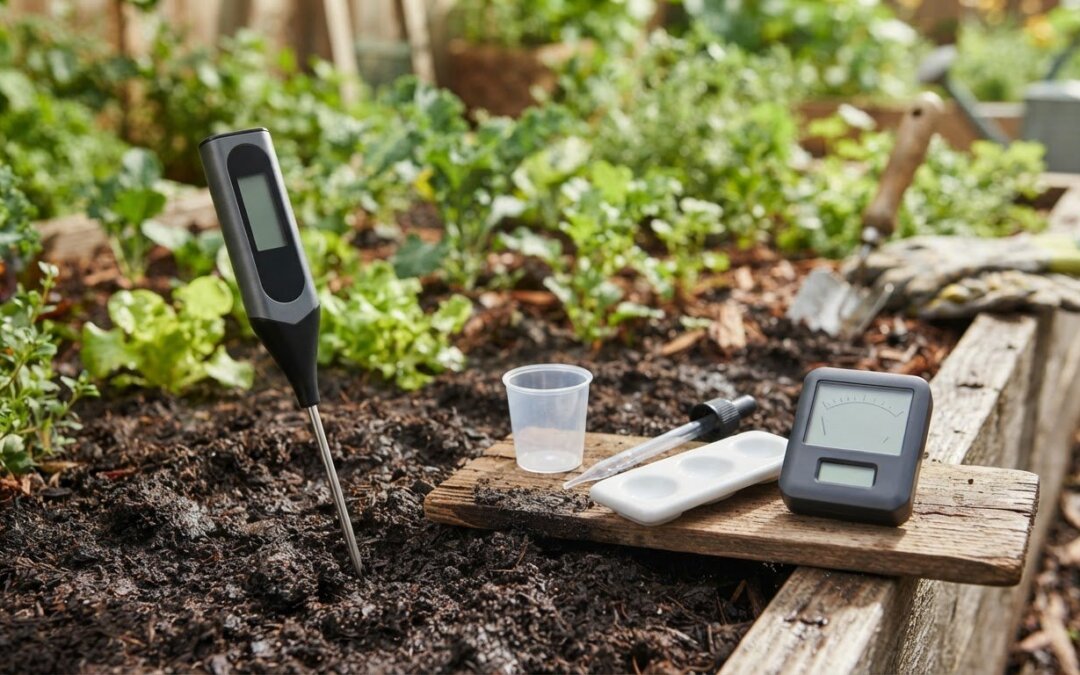
The digital garden soil pH test kit with the most features may not be the best fit for your garden. Some devices use a probe to read soil directly; others use a digital reader to interpret a chemical test. Because the methods differ, a quick number is not automatically a clear or reliable answer.
If you’re deciding between a probe, a sample-based kit, or a meter that also checks moisture or light, start with what you want to learn and how often you’ll test. Your comfort with following instructions matters, too.
This guide compares common digital testing methods, explains what their readings can and can’t tell you, and offers a checklist for choosing a product. You’ll also learn how to use a home test as one source of information and when a more detailed soil analysis may be helpful. The goal is not to buy the device with the longest feature list. It’s to choose a test that helps you make sense of your soil.
Key Takeaways
- Choose a digital garden soil ph test kit based on its testing method and the decisions you need to make, not the number of extra features.
- Check whether a kit tests soil directly or uses a prepared sample, then follow its directions for collecting and testing soil.
- Compare probe meters, digital sample kits, and lab testing by effort, repeat use, and the kind of information each provides.
- Before buying, look for clear instructions, a disclosed testing method, and support details that suit how often you plan to test.
- Record repeat readings and interpret them alongside the plants you’re growing. A home test may not answer every soil question.
What a Digital Garden Soil pH Test Kit Measures, and What It Does Not
A digital soil pH test kit estimates how acidic or alkaline soil is and displays the result electronically. The reading can help you compare soil conditions with the needs of your plants, but it is not a complete soil-health score or a diagnosis of every plant problem.
Soil pH describes the chemical condition of the soil solution. It matters because pH can affect how available certain nutrients are to plants. If a plant is struggling, a pH result may point to something worth investigating, but it cannot tell you on its own whether the cause is nutrient supply, watering, light, pests, or another growing condition. For a foundational overview of Soil pH and its relationship to nutrient availability, see the linked reference.
What does a soil pH reading tell a gardener?
A reading gives you one piece of information to consider before changing your soil. First, check the pH preferences of the specific crop or ornamental plant using reliable, plant-specific guidance. There is no single target that suits every garden. If a reading seems inconsistent with a plant’s needs, investigate further rather than immediately adding an amendment. One reading will not explain every symptom or reveal the full balance of nutrients in your soil.
Digital soil pH testers and multi-function meters are not all alike
“Digital” describes the readout, not necessarily the testing method. A probe-style meter uses a sensor placed in soil according to the manufacturer’s instructions. Another kit may use a prepared soil sample and a chemical reaction, then display or interpret the result with a digital reader. These methods involve different steps, so check how a product works instead of choosing based on its title or feature count.
Also distinguish pH from other measurements. A device may offer moisture or light readings, while a sample-based kit may test nutrients such as nitrogen, phosphorus, or potassium. These readings answer different questions. A moisture result, for example, does not add detail to the pH result itself. A digital garden soil ph test kit only provides measurements supported by its design. Before relying on extra functions, confirm what the model measures, how each result is obtained, and what the instructions say about interpreting it.
How Digital Soil pH Test Kits Work: Probes, Samples, and Instructions
A digital display tells you how a result is shown, not how the soil was tested. A probe-style meter uses a sensor placed in soil under the conditions specified by its maker. A sample-based kit uses a different process: collect soil, prepare it as directed, then use the kit’s testing materials and digital reader to obtain a result. The workflows are not interchangeable. Purdue University Extension explains how pH meters measure pH, including the logarithmic nature of the pH scale.
The product manual is more useful than a general tip from another gardener because requirements vary. One model may specify a particular soil moisture condition; another may require a prepared sample. Insertion depth, wait time, cleaning, and display format can vary, too. Follow the instructions for the exact model rather than assuming every digital garden soil ph test kit works the same way.
How to take a soil reading without skipping the manual
Before testing, check the manufacturer’s directions for soil condition and preparation. Then follow the specified cleaning, insertion or sample steps, wait time, and reading method. To make future comparisons more useful, record where you sampled and any relevant conditions, such as whether the soil was recently watered. A consistent routine helps you tell whether readings differ because the soil changed or because the sampling process did.
A practical routine, once you’ve checked the manual:
- Choose a sampling location and note it.
- Prepare the soil or sample exactly as instructed.
- Clean and use the probe or testing materials as directed.
- Wait for the specified time, then record the reading and relevant conditions.
- Follow the manufacturer’s directions for cleaning and storing the kit.
What calibration and maintenance claims should you check?
Check the product documentation for calibration steps, maintenance needs, and care instructions. Find out how the maker says to clean and store a probe, and whether the kit requires particular testing materials. If replacement parts or supplies may be needed for continued use, review the manufacturer’s information before buying. A digital screen or a long feature list does not prove accuracy. Follow the model-specific guidance and consider the result alongside other information about your garden.
Careful notes make a home test more useful, even if you decide not to buy a meter. For practical help as you plan your garden, explore home gardening education.
Digital Soil pH Test Kit Comparison: Which Testing Approach Fits Your Garden?
The right approach depends on what you need to learn and how often you plan to test. A probe can suit repeat spot checks, while a sample-based kit may work for planned testing with a defined set of materials. Laboratory testing is another option when you need broader analysis. Compare the process and information returned, not just the number of features listed.
| Approach | Method | Effort | Repeat use | Information returned | Instructions to check |
|---|---|---|---|---|---|
| Probe-style meter | Sensor reads soil under the conditions specified by its maker. | Often suited to checking a spot, but soil preparation and handling vary by model. | Can be used again if the model is designed for repeated use and maintained as directed. | Typically a pH reading; other readings depend on the specific device. | Soil condition, insertion, wait time, cleaning, calibration, and storage. |
| Digital sample kit | A prepared soil sample is tested with the kit’s materials and read or interpreted digitally. | Requires collecting and preparing a sample as directed. | Depends on the number and type of tests or materials included. | May include pH and other specified tests; check the kit details. | Sample preparation, test steps, included materials, and how results are interpreted. |
| Laboratory testing | A soil sample is submitted for analysis using the provider’s process. | Requires following the provider’s sampling and submission directions. | Usually chosen for a particular testing need rather than quick spot checks. | Can provide broader or more detailed results, depending on the selected analysis. | Sampling instructions, available analyses, report details, and recommendations provided. |
Probe meter or sample-based kit: what is the practical difference?
A probe may be convenient if you expect to check several spots over time. A sample-based kit may fit planned testing if you are comfortable collecting and preparing soil. Neither method is automatically more useful. The steps, repeat-use limits, and consumables vary by product, so read the manufacturer’s instructions before deciding whether the process suits your habits.
A long feature list does not establish measurement quality or usefulness. For a digital garden soil ph test kit, verify what each function measures and what the maker says about using it. Moisture or light readings do not substitute for pH. Extra functions are worth considering only if they help answer a real gardening question.
When should you consider a laboratory soil test?
Consider lab testing if you need information beyond a home kit’s stated results, or if readings seem inconsistent with plant symptoms or a decision you’re about to make. A lab report may offer broader detail, depending on the analysis selected. That does not mean every home reading needs confirmation. For routine checks, a home meter can be useful if you follow its instructions, keep results in context, and understand its limits.
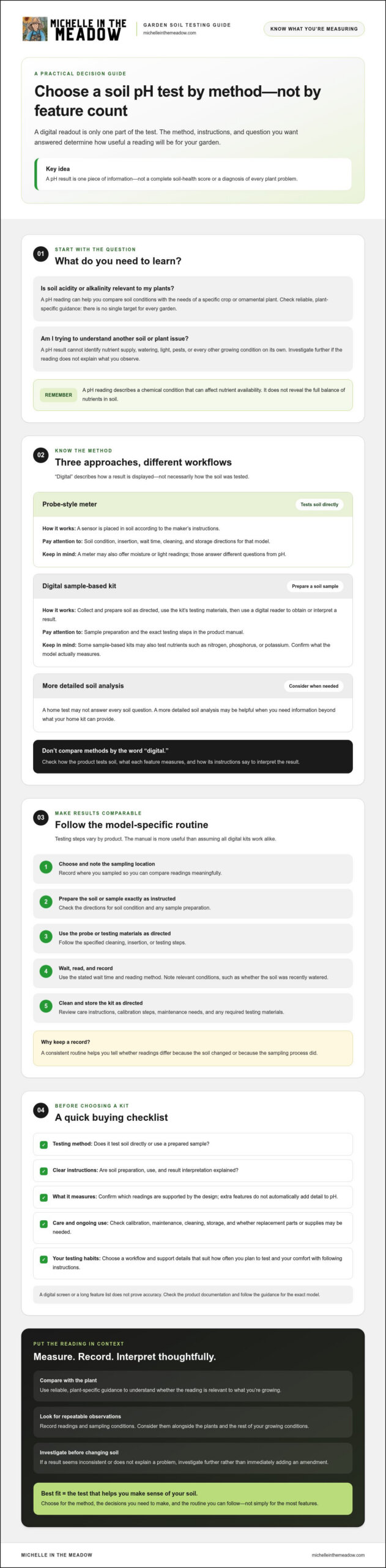
How to Choose a Digital Garden Soil pH Test Kit Before You Buy
Start with the job you need the tester to do. An occasional pH check in a small container garden calls for a different workflow than comparing several garden areas through the season. Consider how often you’ll test, what decisions the result will inform, and whether you’re comfortable preparing samples or maintaining a probe. This can help you avoid paying for features you will not use.
Which features are useful, and which may be unnecessary?
If your main question is whether soil acidity or alkalinity suits a particular plant, a pH-focused tester may be enough. Moisture and light readings can offer separate snapshots of growing conditions, but they do not add detail to a pH measurement. NPK features also need a closer look: check which nutrients are tested, how the test works, and what the instructions say the results mean. A feature count alone does not mean a device provides a complete soil analysis.
A quick checklist for comparing product listings
Before choosing a digital garden soil ph test kit, compare the details that affect how you’ll use and care for it:
- Testing method: Confirm whether it uses a probe in soil or tests a prepared sample. Check the conditions and steps specified by the manufacturer.
- Measurements: Verify that the model supports the readings you need, and distinguish pH from moisture, light, or nutrient tests.
- Instructions and support: Look for clear guidance on taking readings and interpreting results, along with information about contacting the maker for product support.
- Included items and ongoing needs: Check what comes in the package, whether test materials or replacement parts may be needed, and how the product should be cleaned and stored.
- Calibration and warranty: Review the manufacturer’s documentation for calibration or maintenance requirements, along with the warranty terms for that product.
- Buyer feedback: Read current reviews for repeated comments about confusing setup, difficult instructions, or upkeep. Reviews can flag usability concerns, but they do not verify measurement accuracy.
Keep the checklist practical. A digital garden soil ph test kit is a better match when its method, care requirements, and supported readings suit your testing habits, not simply because it promises the most functions.
For more help comparing garden tools and supplies, browse Michelle’s gardening product recommendations.
Use Your Soil pH Kit Results to Make a Thoughtful Buying Decision
A reading is most useful when it helps answer a garden question, not when it sends you straight to the shopping cart or amendment aisle. Before acting, check the preferred soil conditions for the crop you tested. If a result seems unexpected, repeat the test according to the kit’s instructions and compare it with the plant’s growing conditions. One number alone cannot identify every cause of poor growth.
Turn a reading into a garden decision
Keep a simple record of each test. Note the date, garden area, testing method, result, and relevant conditions, such as recent watering. If you test again, use the same method and a comparable sampling routine where possible. That makes it easier to spot a pattern instead of overreacting to one reading.
Do not apply an amendment based on a single result without understanding the amount needed and whether the crop would benefit. Check reliable, crop-specific guidance first. If results remain unusual, conflict with visible plant symptoms, or would lead to a significant soil change, investigate further. A broader soil analysis may answer questions that a pH-only reading cannot. Persistent plant problems may also have causes unrelated to pH, so consider the full growing conditions rather than assuming the meter has found the answer.
Choose a kit, or another test option, with confidence
A reusable probe meter may suit gardeners who expect to make repeated spot checks and are comfortable following its care instructions. A sample-based kit may be a better fit if you prefer planned testing and do not mind preparing soil samples. If you need information beyond pH, compare the available options and confirm what each reports. You may not need a new device if you have only one unresolved question or already have a useful way to test.
Before ordering a digital garden soil ph test kit, verify the product’s current testing method, supported measurements, use conditions, included materials, and maintenance directions. Then match those details to your garden and how you plan to use the result. A practical next step may simply be to record a reading and compare it with guidance for the crop you’re growing.
If you’re still comparing tools, browse Michelle’s gardening product recommendations. Choose a recommendation only if it fits the questions you want to answer in your garden.
Choose a Testing Approach That Works for Your Garden
The best digital garden soil ph test kit is the one that fits the question you want to answer and the way you care for your garden. A probe and a sample-based kit use different testing methods, so check the instructions and supported measurements before choosing. A pH reading is useful information, not a complete diagnosis of soil health or plant problems.
Keep notes on where and how you test, then interpret readings alongside the needs of the plants you’re growing. If results remain puzzling or you need a broader picture of your soil, further testing may help. You do not need to buy a device until you know what you want it to do.
Michelle In The Meadow shares gardening tutorials through articles and videos, a raised-bed soil calculator, and curated product recommendations. Explore Michelle’s practical gardening tips and product recommendations to plan your next step.
Frequently Asked Questions
Is a digital soil pH tester accurate enough for a home garden?
It can be useful for routine home checks, but the result depends on the tester, sampling, and correct use. Follow the manufacturer’s directions and check whether the model requires calibration or particular soil conditions. Treat a reading as practical guidance, not a complete soil diagnosis. If a result would lead to a major change or does not fit what you observe in the garden, consider repeating the test or seeking a more detailed analysis.
Can a digital soil tester measure pH and nutrients at the same time?
Some digital kits offer both pH and nutrient testing, but the method and measurements vary by product. A probe that displays pH does not necessarily test nitrogen, phosphorus, or potassium. Other kits may use separate chemical tests that a digital reader interprets. Check the product documentation to see which nutrients are tested, how each test is performed, and whether the readings are separate. A multi-function label alone does not mean the kit provides a complete soil analysis.
How do you use a digital garden soil pH test kit?
Start with the instructions for the exact model because probe meters and sample-based kits use different steps. Check the required soil condition, then follow the directions for preparation, cleaning, insertion or sample testing, and wait time. Record the result with the date and garden location so you can compare future readings. This helps you use a digital garden soil pH test kit consistently without assuming every device works the same way.
Do digital soil pH meters need to be calibrated?
Some models may require calibration, while others have different maintenance instructions. Check the manufacturer’s manual and product support information rather than assuming all meters need the same process. If calibration is specified, use the materials and steps recommended for that model, and follow any stated schedule. Review the probe cleaning and storage guidance, too. A digital display by itself does not confirm that a meter is calibrated or that a reading is dependable.
What should you do if your soil pH reading seems wrong?
First, check that you followed the model’s instructions, including its soil or sample preparation requirements. Clean and use the device as directed, then repeat the test using a comparable sample or location. Note the method and conditions so you can judge whether the readings are comparable. Check the result against reliable guidance for the crop you’re growing. If readings remain puzzling or conflict with persistent plant problems, investigate further before amending the soil.
Are probe-style soil meters better than digital soil test kits?
Neither is automatically better. The right choice depends on your testing habits and the information you need. A reusable probe may suit frequent spot checks if you’re comfortable with its use and care instructions. A sample-based kit may suit planned testing that involves collecting and preparing soil. Compare each model’s method, supported measurements, included materials, and instructions. Choose a workflow you’ll follow consistently rather than relying on feature counts or the word “digital” alone.
When should you use a laboratory soil test instead of a home kit?
Consider laboratory testing when you need broader or more detailed information than a home kit provides, or when repeated readings do not fit plant symptoms or an important soil decision. Check which analyses the lab offers and follow its sampling directions. A lab test is not necessary to confirm every home reading. For occasional pH checks, a home kit may be useful when used as directed and interpreted alongside crop needs and growing conditions.