
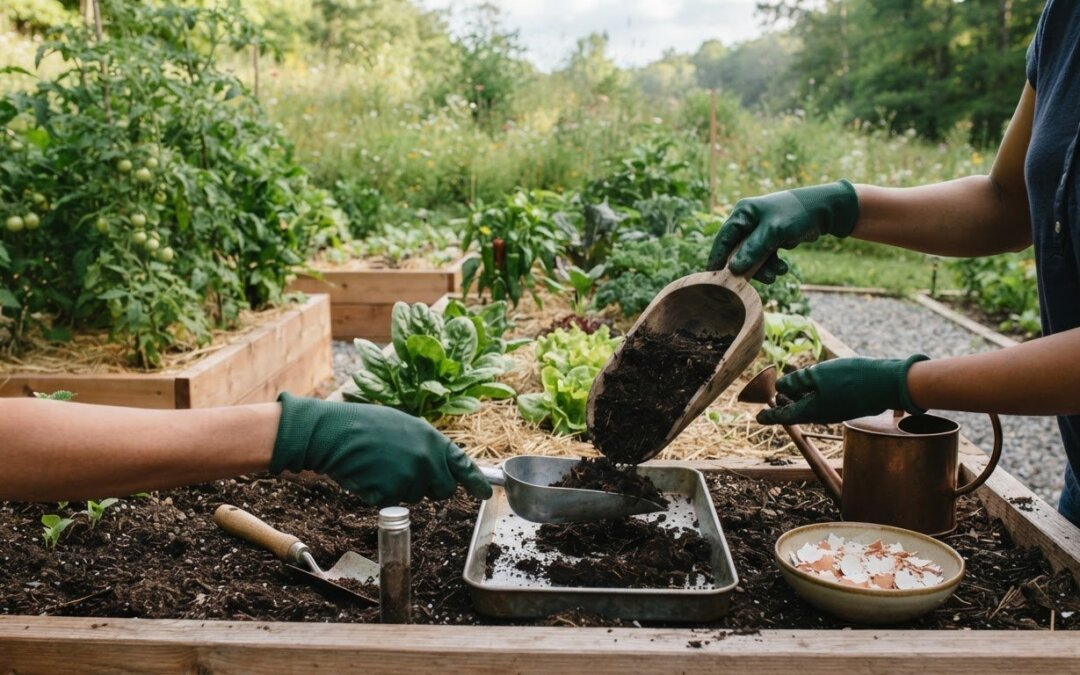
What if the best homemade fertilizer is the one you use only when your vegetables need it? It’s tempting to try every recipe you find, especially when kitchen scraps and garden leftovers seem like easy ways to feed plants. But diy organic fertilizer for vegetables works best as a targeted supplement, not a one-size-fits-all fix.
If conflicting advice has left you wondering whether eggshells, compost, or another homemade mix will help, you’re not alone. The right choice depends on the ingredients and what your soil and crops need. Too much of the wrong material can cause problems, and some mixtures can turn unpleasant quickly.
This guide compares practical homemade ingredients, explains how to choose an option for a specific gardening need, and covers how to apply it carefully. You’ll also learn when a soil test can offer clearer direction, when homemade options may fall short, and why a labeled organic fertilizer can sometimes be more reliable. Start with what your plants need, then feed with care.
Key Takeaways
- Use diy organic fertilizer for vegetables as a targeted supplement. Improving soil and supplying nutrients are related, but they aren’t always the same task.
- Compare compost, worm castings, and other organic ingredients by their likely role. Check reliable references or product labels for nutrient information.
- Consider practical options such as compost top-dressing, incorporating worm castings, or using a liquid product according to its label.
- Before applying anything, consider crop condition and soil-test results. Start carefully and watch how plants respond.
- Choose a fertilizing plan that fits your garden, and know when a soil test or labeled organic product can provide clearer guidance.
What DIY Organic Fertilizer Can, and Cannot, Do for Vegetables
DIY organic fertilizer is a homemade material used to supply plant nutrients or support the soil vegetables grow in. Its effects depend on the ingredients and how they’re used. It can be a practical part of eco friendly weed control and garden care, but no recipe guarantees a particular harvest. Homemade ingredients vary in nutrient content, and some release nutrients more quickly than others. As a result, they can be harder to measure than a labeled fertilizer.
Fertilizer, compost, and soil amendments are not the same thing
Plants need nutrients, including nitrogen, phosphorus, and potassium, to grow. Organic matter, by contrast, helps build and maintain soil. These roles can overlap, but they aren’t interchangeable: a material can add organic matter without supplying a predictable amount of a specific nutrient.
Compost is a familiar example. It adds decomposed organic matter to soil and can support soil structure and moisture-holding capacity. It also contains nutrients, but the amount available to plants varies with the ingredients and how thoroughly they’ve decomposed. For a plain-language overview of ingredients and decomposition, see What is compost. Compost can be a helpful soil amendment, but don’t assume it will meet every vegetable crop’s nutrient needs.
That distinction matters when you compare homemade recipes. A kitchen-scrap mixture or plant-based brew may sound nutrient-rich, but without reliable nutrient information, it shouldn’t be treated as a complete fertilizer. Ingredients vary from batch to batch, and nutrients may not become available to roots at the same pace.
When homemade fertilizer makes sense for a vegetable garden
Homemade materials can make sense when you use finished compost to build soil or supplement it with an ingredient suited to an identified need. Match the material to your garden rather than feeding by habit. If vegetables are growing well, additional fertilizer may not be necessary. Applying more can create an imbalance instead of solving a problem.
Before trying to correct a suspected nutrient shortage, review soil-test results if you have them. A test can help distinguish a nutrient issue from other causes of poor growth, such as watering or growing conditions. Without that information, visible symptoms alone may not show what your soil lacks.
In short, diy organic fertilizer for vegetables is most useful as a considered supplement, not a universal fix. Use homemade materials for the role they can reliably play, and look for better nutrient information when a crop needs more specific support.
Which Organic Fertilizer Ingredients Fit Your Vegetable Garden?
Choose an ingredient for its likely role, not because a homemade recipe sounds impressive. Finished compost and worm castings are commonly used to add organic matter and provide gentle nutrient support. Products made from fish, bone, or blood are more concentrated inputs, so their nutrient analysis and directions matter. Nutrient content can vary in every case. Check the label on packaged products. For homemade materials, consult reliable gardening references rather than assuming a fixed nutrient ratio.
Compost and worm castings for gentle, general soil support
Finished compost and worm castings can contribute organic matter and supply nutrients gradually, but neither should be assumed to meet every vegetable’s needs. Finished compost has decomposed; fresh kitchen scraps and unfinished compost haven’t reached the same state and aren’t interchangeable with a ready-to-use soil amendment. Keep scraps in an active composting process rather than applying them directly around growing vegetables as if they were fertilizer.
Concentrated ingredients and nutrient-specific products
Fish emulsion, bone meal, and blood meal are examples of animal-derived products that may supply particular nutrients. Their nutrient analyses differ, so follow the product label for rates and use. Guessing or measuring casually can lead to misapplication, especially with concentrated inputs. Consider practical fit, too: fish-based products may have a noticeable odor, products need suitable storage, and animal-derived ingredients may not suit every gardener’s preferences.
The table is a starting point, not a substitute for checking product directions or identifying what your garden needs.
| Ingredient | Likely role | Limitations | Handling notes |
|---|---|---|---|
| Finished compost | Adds organic matter and provides variable, gradual nutrient support. | Nutrient content depends on its ingredients and maturity; it may not meet every crop’s needs. | Use finished material. Don’t treat fresh scraps or unfinished compost as ready-to-use fertilizer. |
| Worm castings | Contribute organic matter and gentle nutrient support. | Nutrient levels vary, and they aren’t a guaranteed complete fertilizer. | Use as directed if packaged; avoid assuming a fixed nutrient ratio. |
| Fish emulsion | A packaged, animal-derived nutrient source. | Formulations differ; an incorrect rate may overfeed plants. | Follow the label, store as directed, and consider odor. |
| Bone meal or blood meal | Animal-derived inputs with nutrient profiles that differ by product. | They’re not interchangeable or suitable for every nutrient need or preference. | Check the analysis and directions; store securely and handle as instructed. |
| Raw kitchen scraps | Feedstock for composting, not a predictable ready-to-use fertilizer. | They’re undecomposed and their nutrient availability is uncertain. | Compost them before using the finished material in the garden. |
For a broader garden-planning reference, explore vegetable gardening resources. Matching an ingredient to its role makes diy organic fertilizer for vegetables more practical and helps avoid treating every material as an all-purpose feed.
DIY Organic Fertilizer Recipes for Vegetables Compared
When choosing diy organic fertilizer for vegetables, a dependable approach is often simpler than a complicated kitchen-scrap recipe. Finished compost, worm castings, and a labeled liquid fertilizer each serve different purposes. The first two support the soil gradually; a packaged liquid product provides directions and a nutrient analysis to guide use. Get exact amounts and dilution rates from reliable crop-specific guidance or the product label, not guesswork.
| Approach | Best suited to | How to use | Keep in mind |
|---|---|---|---|
| Finished-compost top-dressing | Adding organic matter and general soil support | Spread mature compost over the soil around plants, keeping it away from stems. | Its nutrient content varies; it isn’t a precise, immediate treatment for a deficiency. |
| Worm-casting incorporation | Gentle soil support when preparing or tending a bed | Mix mature castings into the soil or apply according to reliable crop guidance. | Don’t assume they provide every nutrient a vegetable needs. |
| Labeled liquid fertilizer | Gardeners seeking a specific, measured nutrient product | Dilute and apply exactly as directed on the label. | Formulations differ; more concentrated or frequent use isn’t automatically better. |
A low-fuss compost or worm-casting approach
Use clean, mature compost or worm castings, and spread them on the soil surface or incorporate them gently where appropriate. Keep material from piling against stems, and follow crop-specific guidance, especially around young plants. This approach supports the soil over time; it isn’t a quick rescue treatment for a plant showing symptoms. If you’re unsure whether the material is finished, don’t apply it as though it were ready-to-use fertilizer.
Liquid fertilizer options and common recipe claims
A reputable liquid fertilizer with clear directions is different from liquid made by steeping scraps in water. Follow the label for dilution, application method, and frequency. Don’t transfer a ratio from one product to another. Homemade banana-peel water or eggshell tea shouldn’t be treated as complete fertilizer. The nutrient content of the ingredients and resulting liquid isn’t reliably balanced or measured.
Homemade recipes can’t guarantee a balanced nutrient ratio because their ingredients and nutrient availability vary from batch to batch. Steeping scraps also doesn’t establish that a liquid is safe from pathogens or suitable for application to edible crops. For a nutrient-specific need, rely on soil-test guidance or a labeled product rather than trying to make a predictable fertilizer from scraps.
How to Make and Apply Homemade Vegetable Fertilizer Safely
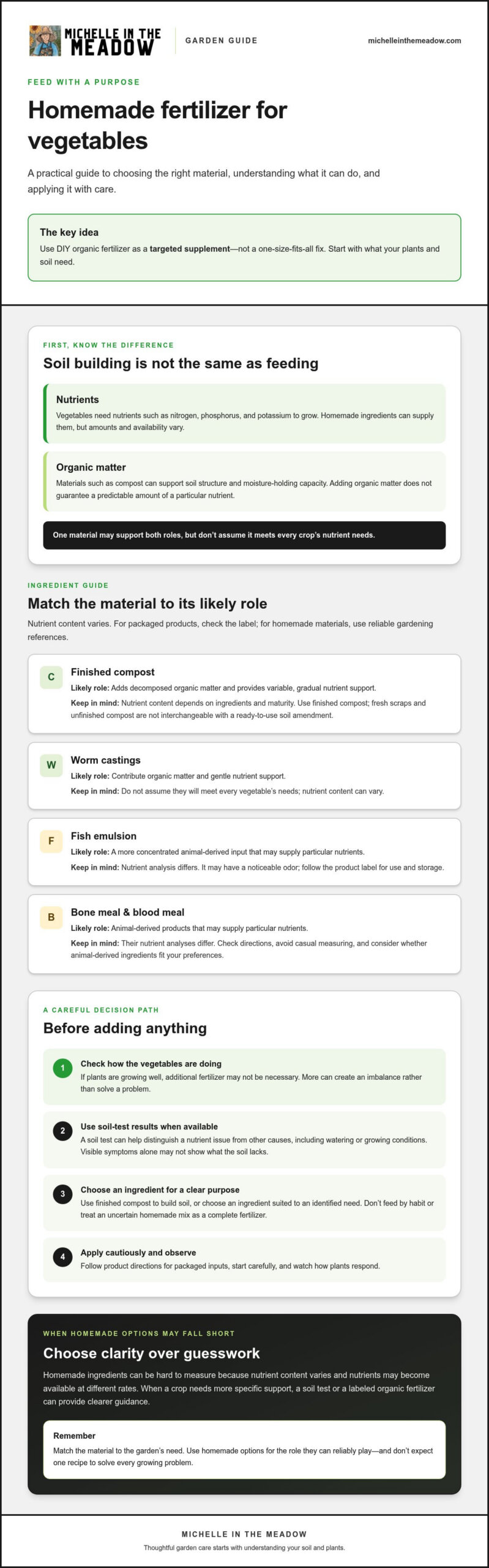
A careful application starts before you mix anything. Consider how the crop is growing and what your soil-test results show. Yellow leaves or slow growth can have causes other than a nutrient shortage, so adding fertilizer without checking may not help. For packaged products, the label guides intended use, dilution, and application rate. Homemade materials don’t replace verified instructions or safe handling.
A simple process for choosing and preparing an input
- Identify the plant and its stage. Note which vegetable is affected and whether it’s a seedling, actively growing, or producing fruit. Look for a specific concern instead of treating every bed the same way.
- Check the evidence. Review soil-test information if available. If the concern is unclear, seek reliable crop-specific guidance before trying to correct a suspected deficiency.
- Choose a suitable material. Use mature, clean compost or worm castings for general soil support. If a specific nutrient input is needed, choose a clearly labeled product suited to that use.
- Prepare it as directed. Use clean containers and tools. Follow label instructions for handling and dilution, and don’t invent a ratio when none is verified. Keep concentrated materials away from stems and roots unless directions specify otherwise.
Applying fertilizer and watching for plant response
Apply the material to the soil in the manner recommended for that input. Don’t assume a mixture should be sprayed on leaves. Use a foliar application only if the product directions and reliable crop guidance support it. Keep compost and other amendments from piling against plant stems, and don’t add more simply because a plant looks stressed.
- Apply modestly. Use the label rate for a packaged product. For homemade materials without a verified rate, avoid concentrated or repeated applications and consult dependable gardening guidance.
- Keep a brief record. Write down the material, amount or label rate, application date, and which plants received it. This makes it easier to avoid accidental repeat feeding.
- Observe before doing more. Watch growth, leaf color, and signs of stress. If symptoms worsen after application, stop adding fertilizer and seek a diagnosis before trying another correction.
A measured approach makes diy organic fertilizer for vegetables easier to evaluate and less likely to become guesswork. For more practical support as you plan a garden, explore vegetable gardening guidance.
Choose a Practical Fertilizing Plan and Know When to Get Help
The best plan is one you can follow consistently, using materials that suit your crops and what you know about your soil. Homemade options can be useful, but they aren’t automatically better than labeled products. Choose based on the task, the time and materials you have, and how much nutrient guidance is available.
How to decide between compost, a DIY input, and a labeled product
- Choose finished compost for broad soil support when you don’t have evidence of a specific nutrient deficiency. It contributes organic matter, but its nutrient content isn’t a precise formula.
- Choose a targeted input only when its nutrient role fits an identified need. If you’re unsure what a material supplies, check a reliable reference instead of relying on a recipe’s reputation.
- Choose a labeled organic product when nutrient analysis and clear application directions are important. Follow its label, and don’t assume products with similar ingredients have the same concentration or use instructions.
There’s no single right choice for every vegetable bed. A gardener with mature compost and a low-input routine may have what they need for general soil care. Someone addressing a confirmed nutrient issue may need a more specific, clearly labeled input and guidance on how to use it.
Troubleshooting and next steps for healthier vegetables
Plant symptoms can be clues, not a diagnosis. Yellowing leaves or slow growth may relate to nutrient availability, but watering problems, pests, disease, or damaged roots can look similar. Before adding fertilizer, check the growing conditions and inspect plants for other signs of stress.
If symptoms persist, affect several plants, or leave you uncertain about what your soil needs, pause repeated amendments and get better information. A soil test can help guide nutrient decisions. For help interpreting a problem or choosing an appropriate next step, contact your Cooperative Extension office or consult its vegetable gardening resources. Avoid trying multiple corrections at once. That makes it harder to tell what helped and may add nutrients your garden doesn’t need.
A practical diy organic fertilizer for vegetables plan starts with observation, uses an input suited to the need, and changes course when the evidence points elsewhere. For more support as you plan and care for your garden, Explore practical gardening guides and tools.
Feed Your Garden With a Plan, Not a Guess
Homemade ingredients can support vegetable gardens, but they aren’t interchangeable. Finished compost and worm castings are useful for general soil support, while a targeted input or labeled organic product may be a better fit when you have a specific, identified nutrient need. Choose deliberately, follow reliable directions, and avoid adding more when you’re unsure what’s causing a plant’s symptoms.
That’s the practical approach to diy organic fertilizer for vegetables: start with your soil and plants, use modest amounts, and observe what happens. If growth problems persist, a soil test or Cooperative Extension guidance can help you decide what to do next.
Ready to keep planning? Michelle In The Meadow shares gardening tutorials and practical educational content, along with a raised-bed soil calculator to help plan garden soil quantities. Explore Michelle’s practical gardening guides and tools to plan your next garden step.
Frequently Asked Questions
What is the best homemade organic fertilizer for vegetables?
There isn’t one best homemade fertilizer for every vegetable garden. Finished compost is a practical choice for general soil support, while worm castings can provide gentle nutrient support. If you’re addressing a specific nutrient need, choose an input that fits and use reliable guidance. The best diy organic fertilizer for vegetables depends on your soil, crop, and available materials, not just on a popular recipe.
Can I use kitchen scraps as fertilizer for my vegetable garden?
Kitchen scraps are better treated as compost ingredients than as ready-to-use fertilizer. Raw scraps haven’t decomposed, and their nutrient availability is unpredictable. Burying them directly near vegetable roots or steeping them in water doesn’t make a balanced, dependable fertilizer. Compost scraps through a suitable process, then use the finished compost as a soil amendment. Keep food-safety and crop-specific guidance in mind, especially when applying materials around edible plants.
How do I make liquid fertilizer for vegetables at home?
For dependable directions, use a clearly labeled liquid fertilizer and follow its instructions for dilution, application, and frequency. Don’t assume directions for one product work for another. Steeping banana peels, eggshells, or other scraps in water doesn’t reliably produce a measured, balanced fertilizer, and the method doesn’t confirm that the liquid is safe for crops. If you make or use any mixture, avoid unsupported ratios and follow trusted horticultural guidance.
How often should I fertilize vegetables with homemade fertilizer?
There’s no universal schedule for homemade fertilizer because materials differ in nutrient content and availability. For a packaged product, follow the label rather than applying it more often to speed up growth. Compost and worm castings are generally used for soil support, not as a precise treatment on a fixed feeding timetable. Consider the crop, soil-test results, and plant response, and avoid repeating an application when you’re unsure whether it’s needed.
Is compost enough fertilizer for a vegetable garden?
Compost may support soil health and contribute nutrients, but it isn’t guaranteed to meet every vegetable’s nutrient needs. Its nutrient content varies with the ingredients and how fully they’ve decomposed. If plants are growing well and soil information doesn’t suggest a shortage, compost may be part of a simple, low-input approach. For a specific concern, use a soil test to guide whether another nutrient source is appropriate rather than assuming compost is always enough or never enough.
Can homemade fertilizer burn or damage vegetable plants?
Yes. Homemade inputs can harm plants if they’re too concentrated, applied in excess, or made from unsuitable or unfinished materials. Use concentrated products according to their labels, and don’t pile amendments against plant stems. Avoid spraying homemade mixtures on leaves unless reliable instructions support that use. If plants show more stress after an application, stop adding fertilizer and investigate other causes before trying another mixture.
Do I need a soil test before using DIY organic fertilizer?
A soil test isn’t necessary before every use of finished compost for general soil support, but it’s a sensible step before trying to correct a suspected nutrient imbalance. Symptoms such as yellowing or slow growth can also result from watering, pests, disease, or root problems. Testing can help you avoid adding nutrients your garden doesn’t need. If results are difficult to interpret or problems persist, ask a Cooperative Extension office for guidance.
