
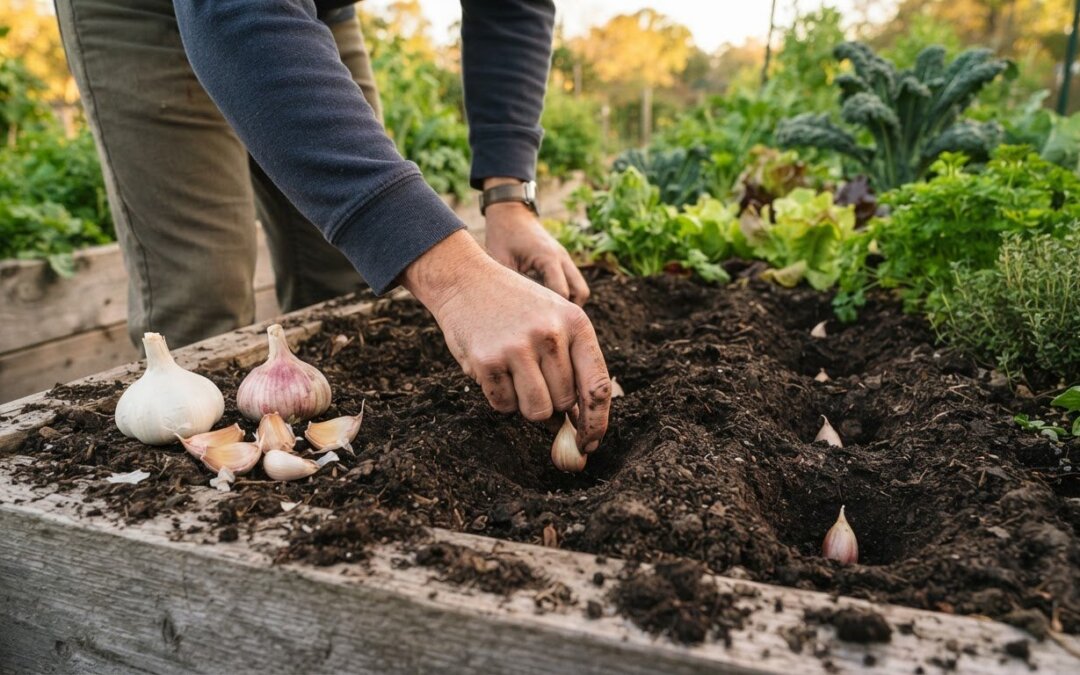
For warm climate garlic varieties to plant in fall, start with softneck and Creole types, which suit warm winters better than many hardnecks. German White, Silver White, Sicilian Artichoke, and heat-loving Lorz Italian are varieties to consider; softneck and Creole garlic are recommended for USDA Zones 8 and 9. In warm climates, pre-chilling garlic before planting can help support bulb development.
Choosing garlic for a mild-winter garden can be tricky: varieties that thrive through cold winters may not form bulbs as expected where winters stay warm. The key is to match the garlic to your local winter conditions, rather than choosing by name alone.
Here, you’ll learn how softneck and hardneck garlic differ, which varieties suit warm winters, and how your growing zone can guide your fall planting choice. We’ll also explain why pre-chilling can matter in warmer climates, so you can choose with more confidence.
Key Takeaways
- Use your winter conditions and USDA hardiness zone to narrow down which garlic types are worth considering for fall planting.
- Compare softneck and hardneck garlic by their growth habits, clove characteristics, and storage qualities.
- Explore warm-climate options such as German White, Sicilian Artichoke, and Lorz Italian, then consider whether pre-chilling fits your conditions.
- Choose seed garlic suited to your local climate; varieties that need a strong cold period may struggle to bulb in mild winters.
Softneck garlic and hardneck garlic characteristics
Garlic type affects how plants handle mild winters, form bulbs, and grow through spring. Comparing softneck and hardneck traits helps narrow fall choices for your climate.
Softneck Traits in Mild-Winter Climates
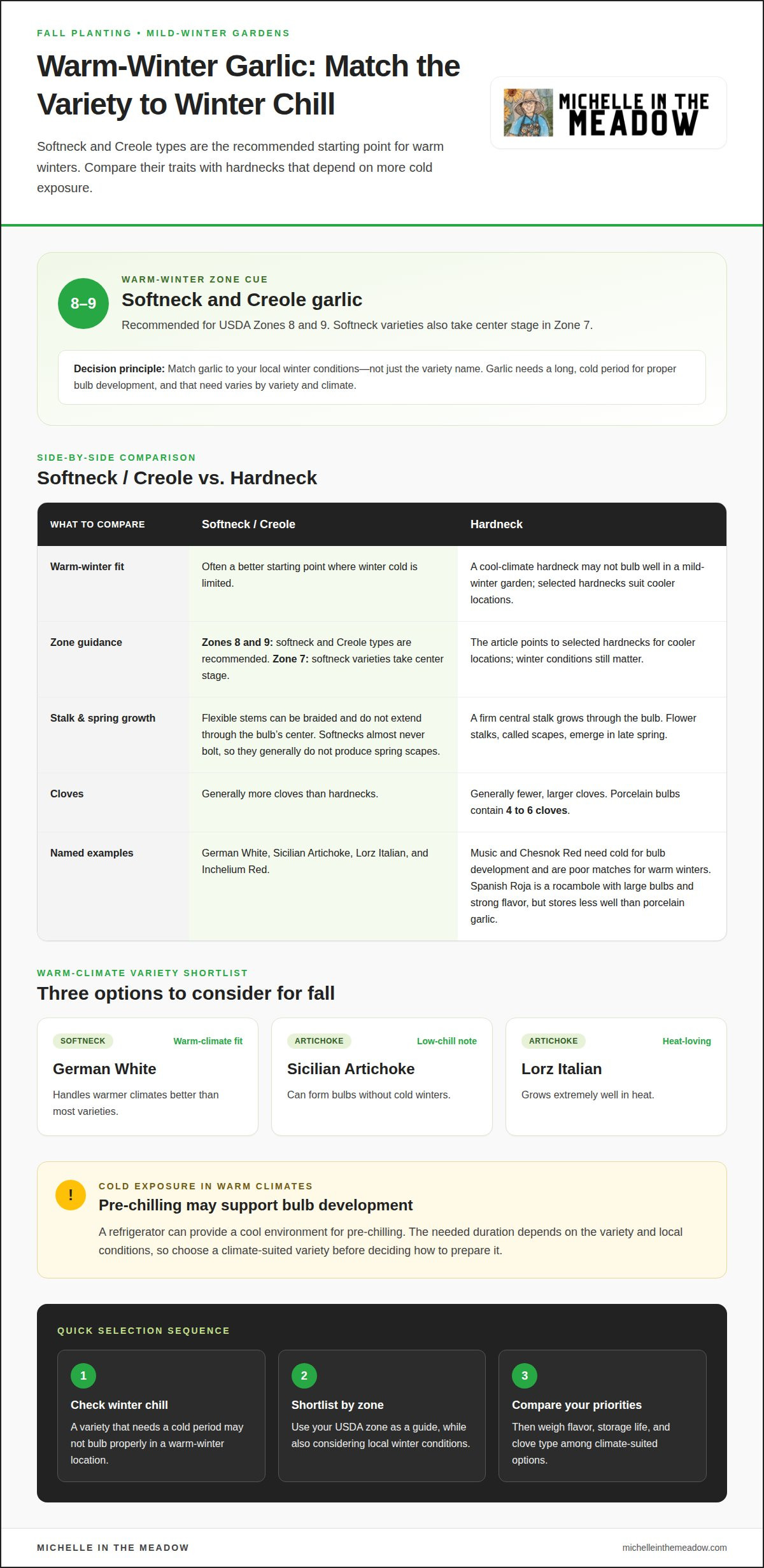
Softneck garlic has a flexible stalk and often suits gardens with mild winters. Softneck and Creole types are recommended for USDA Zones 8 and 9, while softneck varieties take center stage in Zone 7. This matters where winter cold is limited, since garlic needs a long, cold period for proper bulb development.
German White handles warmer climates better than most varieties, and Sicilian Artichoke can form bulbs without cold winters. Inchelium Red is an artichoke type with many small cloves. Softneck stems stay pliable and can be braided; they don’t extend through the bulb’s center. Softnecks almost never bolt, so they generally don’t produce spring scapes.
Hardneck and Softneck Differences
Hardneck garlic grows a firm central stalk, while softneck garlic has a flexible stalk that can be braided. This difference affects spring growth and harvest. Hardnecks generally have fewer, larger cloves than softnecks, and their flower stalks, called scapes, emerge in late spring.
Remove hardneck scapes so the plant doesn’t divert energy from bulb growth. Porcelain hardnecks such as Music and Romanian Red have large cloves; porcelain bulbs contain 4 to 6 cloves. Music needs cold winters for proper bulb development, so it doesn’t suit warm-winter climates. Spanish Roja is a rocambole with large bulbs and strong flavor, but it stores less well than porcelain garlic.
Cold Exposure for Bulb Formation
Garlic needs a long, cold period to develop bulbs, but the length of that period varies by variety and climate. A hardneck suited to cool conditions may not bulb well in a mild-winter garden. Softneck and Creole types are often better starting points for warm winters, while selected hardnecks suit cooler locations.
When planting, set each clove with its root plate down and pointed tip up, then cover it with soil. Leave enough room for the cloves to grow without crowding; spacing depends on the variety and available bed space. A loose soil covering protects the clove while allowing shoots to emerge.
Choosing garlic seed suited to local conditions
Choose seed garlic by matching its cold requirements to your winter climate and USDA zone. Then narrow your options by considering flavor, storage life, and clove type.
Selecting Seed Garlic Varieties
Choose garlic varieties whose cold requirements fit your garden’s winter conditions. A variety that needs a cold period may not bulb properly in a warm-winter location. Music and Chesnok Red are poor matches for warm winters because both need cold for bulb development. In a mild-winter garden, prioritize varieties suited to warmer conditions, then compare flavor and storage traits. Inchelium Red is an artichoke type to consider, though its performance can vary by location.
Your USDA zone can help frame the decision, but local winter conditions matter too. Softneck and Creole types suit Zones 8 and 9; selected hardnecks can perform in Zone 7. Use those distinctions to shortlist varieties before buying, rather than choosing only by a favorite name. A garlic planting calendar covering Zones 3 through 10 can help place your region within the broader growing range.
Buying Seed Garlic from Suppliers
Seed garlic is garlic selected for planting, and growers and suppliers offer named varieties suited to different conditions. A clear variety name makes it easier to match the seed to your climate and goals. Choose varieties in late summer, when seed garlic can be preordered for fall planting. Avoid grocery-store garlic, which may have been treated with an anti-sprouting agent.
For bulk seed, estimate planting needs by garlic type, since cloves per pound vary. One pound of artichoke seed can plant about 65 plants; Silverskin can plant 70 to 120. Porcelain yields about 40 plants per pound, while Rocambole can yield about 60 to 80. Purple Stripe can yield 60 to 90 plants per pound. These differences help you plan bed space before ordering. Gardening educational content can support your next seed and planting decisions.
Garlic types suited to warm climates
Warm climate garlic varieties to plant in fall include types suited to mild winters, such as softneck and Creole garlic. Lorz Italian is an artichoke garlic that grows extremely well in heat. German White handles warmer climates better than most varieties, and Sicilian Artichoke can form bulbs without cold winters. These varieties offer southern gardeners a starting point for fall planting.
In warm climates, preparation may need to account for garlic’s need for cold exposure. A refrigerator can provide a cool environment for this step, but the needed duration depends on the variety and local conditions. Music, for example, needs cold winters for proper bulb development and is unsuitable for warm-winter climates. Choose a variety suited to your conditions before deciding how to prepare it.
During the growing season, water when the soil begins to dry, and avoid leaving cloves in waterlogged ground. Follow the fertilizer label, since the appropriate amount depends on the product. In warm, humid weather, inspect garlic leaves for changes and keep the planting area free of plant debris. Regular observation can help you notice problems early without assuming every yellowing leaf signals disease.
Harvest timing depends on plant growth, not one calendar date for every warm region. Watch the foliage and inspect a bulb to judge whether it has developed. Warm climate garlic varieties to plant in fall may mature at different times, so checking a test bulb can help you decide when to harvest the rest. Handle lifted bulbs gently to avoid damaging their outer layers.
For gardeners choosing garlic in a southern climate, match the variety to winter chill first, then consider flavor, bulb type, and storage. Lorz Italian suits heat, while softneck and Creole types are recommended for warm winters. In Zone 10, pre-chilling is suggested as a technique for growing flavorful bulbs. These distinctions help make variety selection more deliberate for each garden.
Garlic varieties for southern and warm-winter climates
For southern gardens, start with varieties suited to mild winters, then consider bulb size, clove count, and storage. Silverskin grows well in California and other southern states, while Blossom performs best where winters are mild. In Zone 10, garlic growing is especially challenging, so pre-chilling is suggested to help produce flavorful bulbs.
Lorz Italian is an artichoke variety that grows extremely well in heat. Its bulbs typically contain 12 to 19 cloves, giving gardeners a useful option when warm conditions narrow the choices. Artichoke garlic bulbs generally have 10 to 14 cloves, though some can contain up to 22. That range can help you estimate how many cloves each bulb may provide for planting or cooking.
Silverskin is another softneck type suited to southern conditions, and it can store for upwards of a year. Blossom offers a different fit: it performs best in mild-winter areas and can tolerate some cold when mulched properly. In USDA Zones 8 and 9, softneck and Creole varieties are recommended for warm winters. These examples make the local winter pattern a better starting point than a variety’s name or reputation alone.
For a Zone 10 garden, treat pre-chilling as part of your fall planting plan, especially when selecting garlic for flavorful bulbs. In milder southern areas, compare Silverskin, Blossom, and Lorz Italian by the traits that matter most: storage, cold tolerance, and cloves per bulb. Then choose a variety that fits your winters and planting goals. Explore garlic-growing guidance for your fall garden as you narrow down your choices.
Michelle In The Meadow
Michelle In The Meadow shares gardening education and curated product recommendations to help home gardeners turn variety choices into practical growing plans. If warm winters make it hard to choose seed garlic or plan a fall bed, explore the gardening content for ideas on local conditions, planting needs, and next steps. The Soil Calculator for Raised Beds can help estimate soil needs as you prepare your planting space.
Use these resources to compare suitable varieties, organize fall planting, and adapt your approach to your garden. Explore Michelle In The Meadow’s gardening content and product recommendations to find a useful next step.
Let Your Next Planting Build on This One
Choosing warm climate garlic varieties to plant in fall is a starting point, not a fixed recipe. Your garden’s results can shape your choices next season. Keep a simple record of the varieties you planted, how they grew, and which bulbs worked well in your kitchen. Those observations can make future decisions more personal and practical.
If you’d like a little guidance as you plan what comes next, contact Michelle In The Meadow. Bring your questions about your garden and the choices you’re weighing, and use the conversation to find a helpful next step.
Every season offers a chance to learn. Start with the conditions you have, notice what grows well, and let your garden guide your next round of planting.
Frequently Asked Questions
What Kind of Garlic Varieties Should You Plant?
Choose seed garlic suited to your winter conditions, then weigh flavor, clove size, and storage life. For a warm-winter garden, options include German White, Sicilian Artichoke, and Lorz Italian. When choosing between varieties, start with climate fit rather than the name that sounds most appealing. Buy planting garlic by its variety name, not as an unidentified cooking bulb.
Which garlic varieties grow best in warm climates?
German White, Sicilian Artichoke, and Lorz Italian are useful warm-climate choices, each with a different growing profile. German White handles warmth better than most varieties, while Sicilian Artichoke can form bulbs without cold winters. Lorz Italian is an artichoke type that grows extremely well in heat. In warm regions, pre-chilling garlic before planting can support bulb development.
Are softneck or hardneck garlic varieties better for mild winters?
Softneck garlic is generally the better starting point for mild winters, especially in USDA Zones 8 and 9. Creole types are another option for warm-winter gardens. Hardneck garlic favors cooler conditions, although selected varieties can suit Zone 7. Consider your winter pattern first, then choose based on qualities such as flavor, clove size, or how long you want bulbs to store.
When should I plant garlic in fall in warm climates?
Plant garlic in fall so it has time to establish before the following summer harvest. The best timing depends on local seasonal conditions, so use your region’s planting calendar rather than copying dates from a colder climate. First-time growers should plan to have seed garlic by October. Nootka Rose is commonly planted in late September and October in most regions.
What garlic varieties are adapted to USDA zones 8, 9, and 10?
Softneck and Creole garlic are recommended for USDA Zones 8 and 9, where winters are mild or warm. German White, Silver White, and Sicilian Artichoke are softneck options to consider, alongside heat-loving Lorz Italian. Zone 10 is especially challenging for garlic. Pre-chilling is suggested there to help produce flavorful bulbs, while variety choice should still reflect local winter conditions.
Where can I buy warm-climate garlic seed bulbs, and what do they cost?
Look for named seed garlic from garlic growers, farmers, or suppliers that identify each variety. Avoid grocery-store garlic, which may have been treated with an anti-sprouting agent. Prices vary by variety, bulb size, and quantity, so there isn’t one dependable cost to apply across all orders. Compare the amount of planting stock offered with the space you plan to grow.