
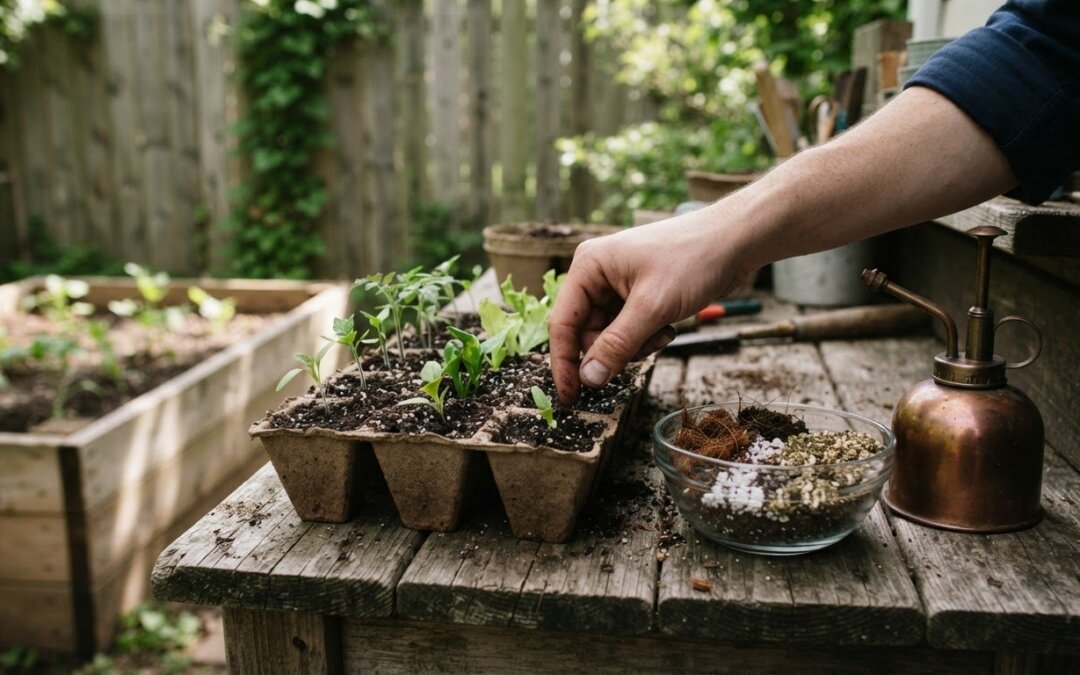
The richest, most nutrient-dense compost in your shed might actually be the quickest way to kill a tender sprout. If you have ever watched healthy green stems suddenly collapse from damping off, or wrestled with a cloud of indoor fungus gnats after opening a cheap bag of dirt, you know how heartbreaking that early loss feels. Finding the best potting soil for seedlings can be genuinely confusing, especially when store shelves blur the line between heavy, fertilized potting dirt and light, soilless starter mixes.
Delicate baby roots don’t crave heavy doses of plant food; they need gentle structure, oxygen, and steady moisture balance. You will discover the ideal potting soil and seed starting mixes to nurture strong root systems without risking rot or stunted growth. We will break down the essential ingredients behind thriving germination, highlight top blends for this season, and share a balanced DIY recipe to give your garden an effortless, resilient start.
Key Takeaways
- Understand why choosing the best potting soil for seedlings means prioritizing fine texture and porosity over heavy fertilizers.
- Discover how seeds rely on stored cotyledon energy initially, making sterile, lightweight soilless mediums safer for early root hairs.
- Learn the key ingredient balances that provide steady moisture retention without suffocating baby roots or encouraging fungal damping-off.
- Explore straightforward indoor watering and airflow techniques to prevent pesky fungus gnat infestations right at the soil level.
- Master the smooth progression from seed cell trays to garden beds, ensuring robust root vitality when transplanting outside.
Potting Soil vs Seed Starting Mix: What Fragile Sprouts Actually Need
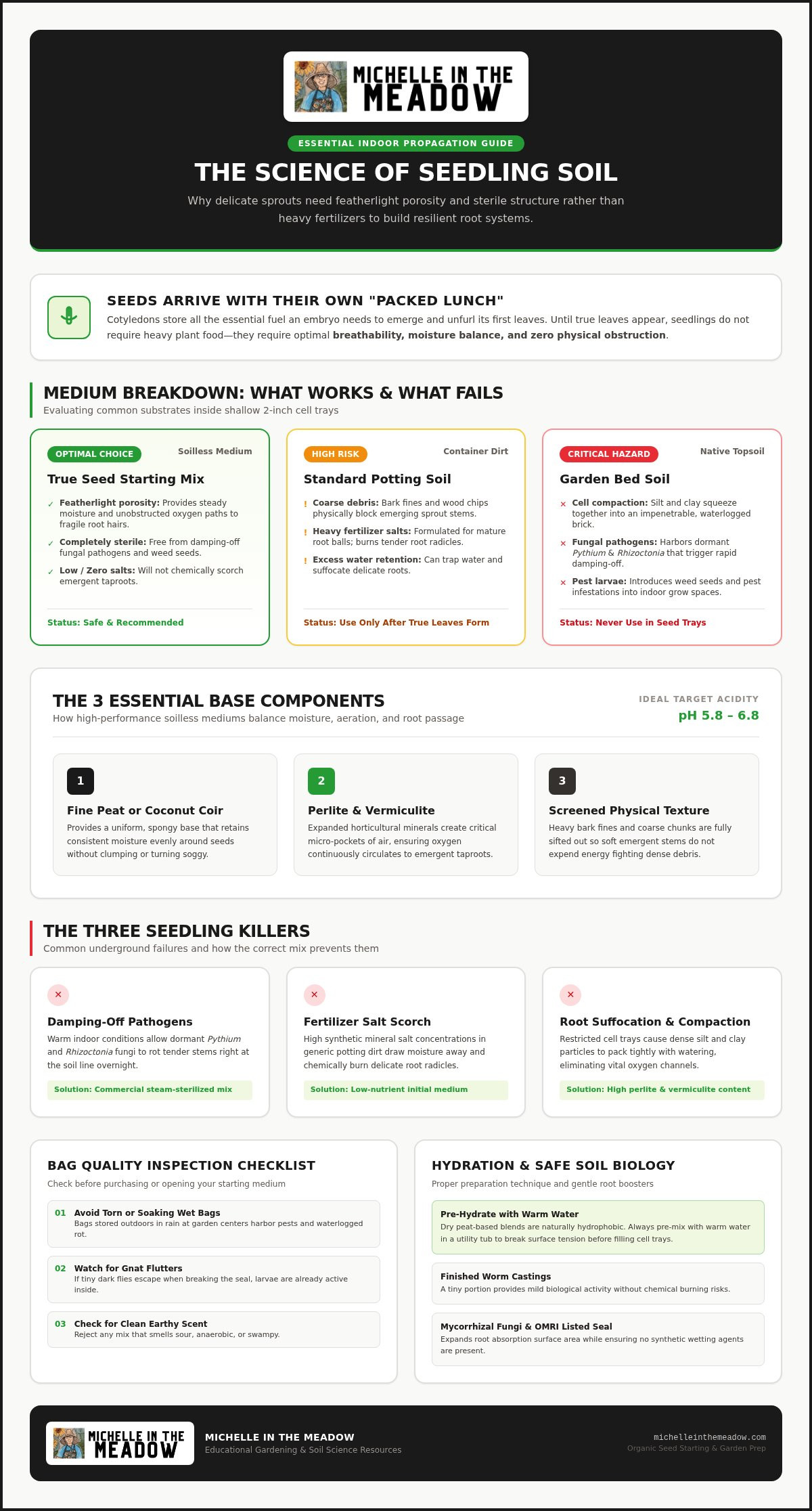
Seeds arrive in this world fully equipped with their own packed lunch. Inside the seed coat, the cotyledons store every bit of fuel an embryo needs to crack open, push up toward the light, and unfurl its first set of leaves. Until those true leaves emerge, a seedling doesn’t need external food. What it desperately needs is breathability. Many gardeners searching for the best potting soil for seedlings mistakenly reach for an all-purpose potting dirt, unaware that its heavy texture can trap excess water and suffocate fragile root tips before they even begin.
The Anatomy of a Superior Seed Starting Medium
A true seed starting mix isn’t actually soil at all. While standard potting soil is formulated to support mature root balls in large patio containers, seed starting blends prioritize featherlight physical porosity. They balance moisture and air using three main components:
- Fine-milled peat moss or coconut coir: These base fibers hold steady moisture evenly around the seed without turning soggy or clumping.
- Horticultural perlite and vermiculite: These expanded minerals maintain tiny pockets of air, ensuring oxygen circulates freely to new taproots.
- Screened texture: Coarse wood chips and heavy bark fines are completely sifted out so nothing physically blocks emergent stems.
This fine, open structure gives tiny root hairs an easy pathway to explore and anchor without expending precious energy pushing through dense debris.
Why Garden Soil and Dense Potting Dirt Fail Indoors
Scooping dirt from your outdoor raised beds into a seedling flat might seem economical, but it almost always backfires indoors. Outdoor topsoil lacks structural stability once restricted to a two-inch plastic cell. Each watering compacts the silt and clay particles tightly together, squeezing out oxygen and turning the cell into an impenetrable, waterlogged brick.
Even worse, native garden soil harbors dormant fungal spores. Pathogens like Pythium and Rhizoctonia thrive in warm, sheltered indoor settings, rapidly triggering damping-off that rots tender stems right at the soil line overnight. General potting dirt poses hazards too, as high synthetic fertilizer salt concentrations can chemically scorch soft root radicles. Choosing the best potting soil for seedlings means selecting a gentle, sterile blend that lets your seeds establish strong footing safely.
Key Criteria for Choosing Potting Soil for Seedlings
Evaluating a bag of mix before dropping seeds into cells saves weeks of frustration. Understanding the fundamental difference between potting soil and seed-starting mix is an essential first step. Pinpointing the best potting soil for seedlings comes down to balancing texture, sanitation, and subtle biology. Ideally, your mix should maintain a stable pH between 5.8 and 6.8, ensuring emerging root hairs absorb moisture and trace elements without experiencing chemical lockout.
Texture, Drainage, and Moisture Retention Balance
The ideal seedling medium feels light, fluffy, and spongy when gently squeezed in your palm. It should settle smoothly into cell trays without creating hidden air pockets that leave tender taproots dangling in dry space. Including a fine grade of vermiculite helps hold vital surface moisture around shallowly sown seeds. Keep in mind that dry peat-based blends are naturally hydrophobic. Always blend your mix with warm water in a utility tub before filling your trays; warm water breaks surface tension and hydrates dry fibers evenly.
Sterility and Pest Prevention in Seed Starting Trays
Commercial steam sterilization kills off dormant weed seeds, fungal spores, and lingering pests. However, poor storage can ruin even high-grade bags:
- Storage location: Avoid torn or soaking-wet bags stacked outdoors at big-box garden centers.
- Gnat warning signs: If tiny dark flies flutter out when you break the plastic seal, gnat larvae are already dining inside.
- Pre-planting inspection: Check that the medium smells cleanly earthy rather than sour, anaerobic, or swampy.
Organic Certification and Gentle Soil Biology
Looking for the OMRI Listed seal gives you peace of mind that ingredients meet recognized organic guidelines without synthetic wetting agents. While heavy fertilizers cause trouble early on, gentle biological amendments offer distinct advantages. A tiny portion of finished worm castings provides mild biological support without scorching tender tissues, while mycorrhizal fungi expand root surface area to build vigor. If you are refining your propagation setup for the season ahead, explore the step-by-step growing resources at Michelle In The Meadow to set up your indoor nursery with genuine confidence.
Top Potting Soils and Seed Starting Mix Categories Compared
Every home grower works with a distinct indoor setup, budget, and seed collection. Instead of hunting for a single universal product, finding the best potting soil for seedlings means matching the medium category to how long your plants remain in cell trays before moving to the garden.
Classic Lightweight Soilless Germination Mixes
Traditional soilless blends rely on milled peat moss, perlite, and vermiculite. These sterile, zero-nutrient options offer unbeatable consistency for tiny seeds like snapdragons, brassicas, and tomatoes, which cannot afford coarse barriers during germination. They absorb water smoothly and offer reliable capillary movement. Because they contain zero residual fertility, you must introduce a diluted organic liquid feed once seedlings develop their first true leaves.
Enriched Organic Blends with Living Microbes
Enriched mixes blend a porous soilless base with aged compost, worm castings, and mycorrhizal inoculants. These work wonderfully for slow-growing, heavy-feeding varieties such as hot peppers, eggplants, and perennial flowers that stay in trays for eight to ten weeks. The living biology steadily unlocks micronutrients without scorching fragile roots. Just be sure any compost in the mix is completely cured; unaged organic matter can starve roots of nitrogen and invite fungal decay.
Sustainable Peat-Free and Compressed Coir Options
Starting seeds indoors with compressed coconut coir bricks offers an earth-friendly, renewable path that bypasses peat extraction. Coir rehydrates quickly, distributes moisture evenly, and boasts a naturally near-neutral pH around 6.0. By itself, straight coir holds moisture tightly, so always mix in horticultural perlite at roughly a three-to-one ratio to safeguard air space.
Choosing among these options comes down to convenience versus hands-on customization:
- Commercial pre-bagged mixes: Perfect for plug-and-play ease with guaranteed sifting and clean sterilization.
- DIY coir and perlite blends: Highly cost-effective for large nurseries, giving you total control over moisture balance.
- Microbial living soils: Ideal for gardeners who prefer to skip liquid fertilizing steps during early indoor stages.
Whether you mix your own recipe or grab a reliable organic bag, the best potting soil for seedlings creates a welcoming nursery where roots can breathe freely.
How to Prevent Common Seedling Soil Problems Indoors
Even when you choose the best potting soil for seedlings, indoor growing spaces lack natural wind, direct sun, and predatory insects. Without these natural balances, moisture can linger far too long under grow lights. Preventing common indoor growing headaches comes down to fine-tuning your watering habits and keeping air moving through your trays. For gardeners in humid climates, this Florida seed starting humidity survival guide offers additional tips for managing moisture and airflow.
Combating Damping-Off and Surface Mold
Few sights frustrate a gardener more than finding healthy shoots suddenly pinched thin at the soil line, falling limp across the cell. Damping-off strikes when stagnant moisture encourages soil-borne fungi to attack tender stems. Wash and scrub your cell trays thoroughly each spring before sowing. After pressing your seeds into place, dust a thin layer of horticultural vermiculite across the top of the cells. Vermiculite dries quickly on the immediate surface, while a small oscillating fan running on low keeps fresh air circulating to prevent mold from gaining a foothold.
Fungus Gnat Management Without Harsh Chemicals
Fungus gnats don’t arrive by chance; they multiply rapidly wherever warm potting mix stays persistently wet. While adult gnats are simply annoying as they fly around your living room, their subterranean larvae feed directly on delicate root hairs.
- Bottom watering: Pour water into the solid bottom nursery tray, letting cells wick moisture upward for twenty minutes before dumping any pooled runoff.
- Yellow sticky cards: Stake small cards at soil level to trap breeding adults before they lay eggs.
- Biological controls: Dissolve Bacillus thuringiensis israelensis (BTI) into your watering can to eliminate developing larvae without harming fragile root caps.
When and How to Introduce First Plant Nutrients
Patience pays huge dividends when feeding young starts. The rounded cotyledon leaves contain everything a sprout needs during its first week or two. Wait until your plants produce their first genuine set of serrated true leaves before introducing external fertility. Feed them with a quarter-strength dilution of organic cold-processed fish hydrolysate or liquid kelp. Heavy synthetic fertilizers spike soil salinity, scorching sensitive root tips and causing spindly top growth. Pair gentle organic nutrition with bright grow lights positioned just a few inches above the canopy to build thick, stocky stems. To master every stage of starting resilient transplants indoors, explore practical educational gardening tutorials at Michelle In The Meadow.
Transitioning Seedlings: From Indoor Trays to Raised Garden Beds
Growing vigorous green starts in the best potting soil for seedlings is a huge milestone, but it is only half the journey. The true test arrives when those sheltered plants face direct sunlight, wind gusts, and chilly evening temperatures. Moving fragile root plugs out of nursery trays and into outdoor soil requires a calm, gradual transition to avoid setback or shock.
Hardening Off and Potting Up Strategies
Sudden outdoor exposure can bleach tender foliage and stall growth overnight. A simple seven-day hardening-off schedule bridges the gap smoothly:
- Days 1 to 2: Place trays outside in deep shade and sheltered from wind for two to three hours before bringing them back inside.
- Days 3 to 4: Introduce your starts to gentle morning sun for four to five hours, keeping the soil evenly hydrated.
- Days 5 to 7: Expose them to full daytime sun and leave them outdoors overnight, provided frost is not in the forecast.
If your seedlings fill their plug trays weeks before the final spring frost, pot them up into four-inch containers using a balanced potting mix. This step prevents tangled root-bound coils and keeps plant vigor high. When repotting, cradle plants by their root balls or leaves, never by their delicate central stems.
Preparing Your Raised Bed Soil for Transplants
The featherlight porosity that defines the best potting soil for seedlings cannot sustain mature vegetable roots through a hot summer. Outdoor raised beds need deep structural body and active biology. Blend your raised bed soil with plenty of well-aged compost, shredded leaf mulch, and balanced organic amendments to feed the soil web all season long.
Avoid discovering you are short on soil when your hardened transplants are sitting on the patio waiting to go into the ground. Plan ahead and measure your garden space with our Soil Calculator for Raised Beds. Calculating your soil volume accurately makes planting day completely stress-free, giving your homegrown starts the deep, nourishing foundation they deserve.
Cultivating Strong Roots from Seed to Harvest
Selecting the best potting soil for seedlings isn’t about loading up on heavy synthetic plant food. Delicate sprouts thrive when given breathable porosity, gentle moisture balance, and a clean, sterile growing medium. Grounded in tested earth-friendly methods for healthy seedling starts and transparent product comparisons driven by real backyard growing experience, you now have the tools to bypass common indoor pitfalls like damping-off, soil compaction, and fungus gnats.
Every rewarding harvest traces back to a vigorous root system established during those very first weeks in cell flats. Once your trays fill out and spring days warm up, make sure your garden beds are fully prepared to welcome them. Plan your garden beds with our Soil Calculator for Raised Beds to ensure an effortless, perfectly measured transition outdoors. Take it one tray at a time, trust the quiet rhythm of the season, and enjoy watching your garden come to life.
Frequently Asked Questions
Can I use regular potting soil instead of seed starting mix for seedlings?
You can, but it is not ideal for tiny seeds. Regular potting soil often contains coarse bark chunks that physically block sprouting stems, along with heavy fertilizers that can burn tender young radicles. If you must use it, run the dirt through a quarter-inch wire mesh screen to remove large debris, and mix in extra perlite to improve drainage and prevent compaction.
Do seedlings need fertilizer in their potting soil right after germination?
No, newly germinated seedlings do not need fertilizer immediately. The seed’s cotyledons provide all the initial carbohydrates and nutrients needed to unfurl the first growth. Adding plant food too early spikes soil salinity and can stunt root caps. Wait until your starts produce at least one full set of true leaves before introducing light, organic liquid feedings.
How do I sterilize potting soil at home to prevent damping-off disease?
You can pasteurize potting soil by baking it in your oven at 180 degrees Fahrenheit for 30 minutes. Place damp mix in a covered, oven-safe roasting pan with a meat thermometer in the center to monitor heat. Keeping the temperature under 200 degrees kills fungal pathogens and gnat eggs without burning the organic components or producing harsh sulfur fumes.
Why is my seed starting soil growing white mold on the surface?
White fuzzy mold is harmless saprophytic fungus thriving on stagnant surface moisture and stale indoor air. It signals that your humidity domes stayed on too long or that the soil surface isn’t drying out between waterings. Remove humidity domes as soon as seeds sprout, run a gentle oscillating fan nearby, and sprinkle a light dusting of dry vermiculite across the cells.
Is coconut coir better than peat moss for starting vegetable seeds?
Coconut coir offers several practical and environmental advantages over peat moss. It rehydrates effortlessly without warm water, maintains a near-neutral pH naturally, and serves as a renewable resource. Many gardeners consider coir-based blends among the best potting soil for seedlings because they wet evenly and resist shrinking away from the plastic tray edges when moisture levels drop. Just remember to amend coir with perlite for proper airflow.
How wet should potting soil be before dropping seeds into trays?
Your seedling medium should have the moisture level of a wrung-out kitchen sponge. When you squeeze a fistful of mix firmly, it should hold together in a loose ball without dripping excess water through your fingers. Pre-moistening your soil to this level before dropping seeds protects dry seeds from getting dislodged or buried too deeply during their initial watering.
What causes tiny black flies to emerge from my seedling potting mix?
Those tiny flies are fungus gnats, which hatch from microscopic eggs already present in poorly stored commercial soil bags. Finding the best potting soil for seedlings means inspecting bags for tears and keeping trays free of pooling water. Overly wet topsoil provides an ideal breeding habitat where gnat larvae feed on tender roots. Bottom watering quickly breaks their reproductive cycle.
